
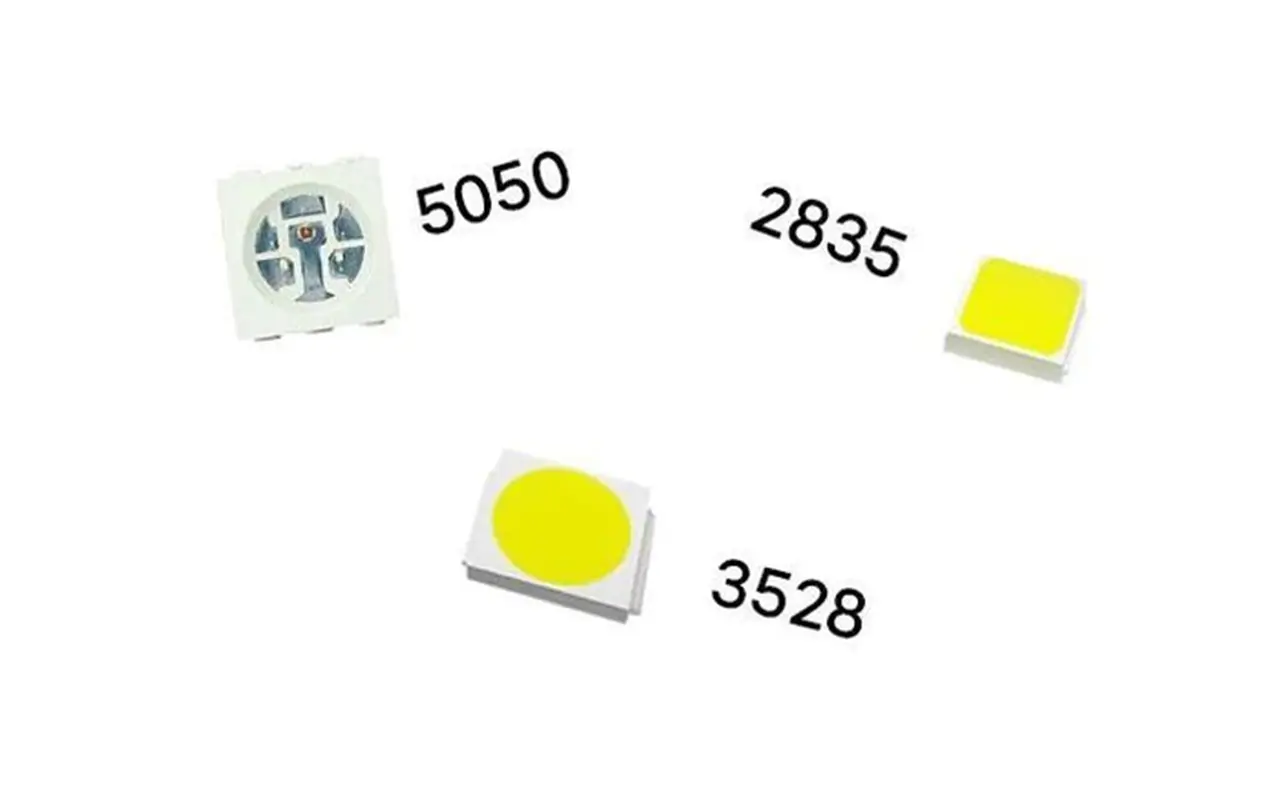
LEDs have completely changed how we light our spaces. They are brighter, use less energy, and are better for the environment than old-fashioned bulbs. The terms 2835, 3528, and 5050 often appear in LED specs, but what do they mean?
This blog post is a detailed guide. It explains enigmatic numbers and how they can help you find the perfect LED solution for your needs.
Why LED Numbers Matter?
At first, the numbers may seem confusing, but they are not random or meaningless. The numbers are important because they show how well an LED works and what it can be used for. Additionally, the SMD technology that these LEDs use connects to these numbers.
What Does SMD Stand For?
SMD stands for Surface-Mount Device. LEDs have small electronic parts attached to printed circuit boards (PCBs). The way an LED is built affects how bright, efficient, and reliable it is. The SMD holds the LED’s semiconductor material, which is the most important part of the LED. This determines how well the LED works and how bright it is.
The Nuts and Bolts of LED Numbering
You’re not alone if you are baffled by the sequence of numbers assigned to LEDs. These numbers serve a purpose; they indicate the physical dimensions of the LED chip. That’s right; the numbers are size specifications measured in millimeters. This important information can greatly affect your decision-making. It helps you choose the right LED for your needs.
The Role of LED Chip Size
The chip size is no small matter; it’s a significant performance indicator. A bigger LED chip can make more light, so it’s great for things that need to be very bright. However, the catch is that a bigger chip size usually demands more power to operate. When choosing lights, think about what you want. Do you want to brighten a big space or make a cozy, energy-saving atmosphere?
Unpacking 2835 LEDs

The 2835 LEDs are a popular option for people who want a bright and efficient LED. These small LEDs, measuring 2.8×3.5 mm, work well and don’t need a lot of energy. These LEDs are great for homes and businesses that need medium brightness. They work well and are energy-efficient.
Specs of 2835 LEDs
With dimensions of 2.8×3.5 mm, these LEDs boast a luminosity range of 20-34 lumens and typically consume 0.2-0.5 W of power. Their relatively small size makes them versatile. These lights work inside or outside, like in the garden or under cabinets in kitchens.
All About 3528 LEDs
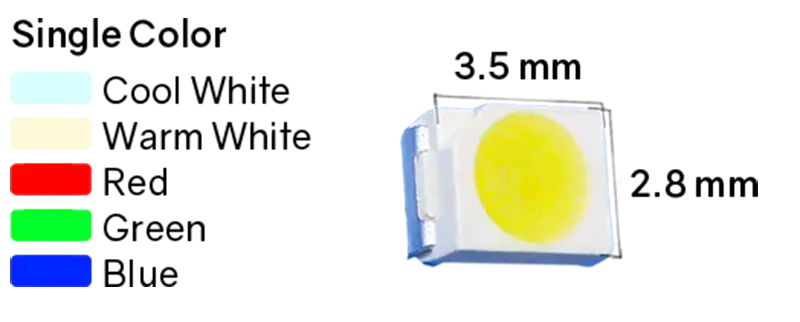
Ah, the 3528 LEDs, the pioneers in the LED industry! Their dimensions, 3.5×2.8 mm, may be similar to 2835 LEDs but flip-flopped. Although they are reliable and have been tested over time, they are not as bright as newer models. These options are perfect for applications that don’t require bright light, such as mood or accent lighting.
3528 LED Essentials
The 3528 LEDs come in at dimensions of 3.5×2.8 mm. They are less luminous than 2835s, with 7-8 lumens. Their power consumption is very low, only 0.08 W. This makes them a popular choice for energy efficiency.
The 5050 LED Phenomenon
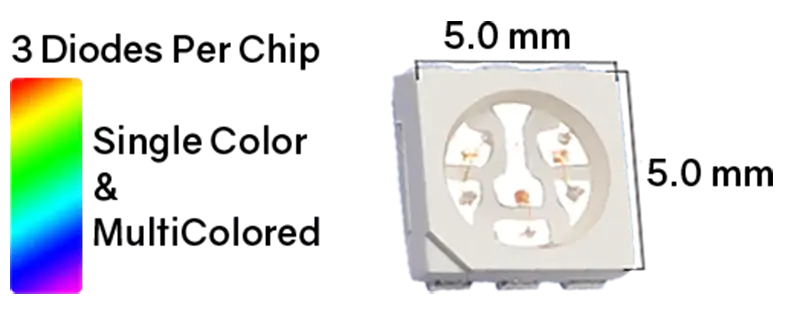
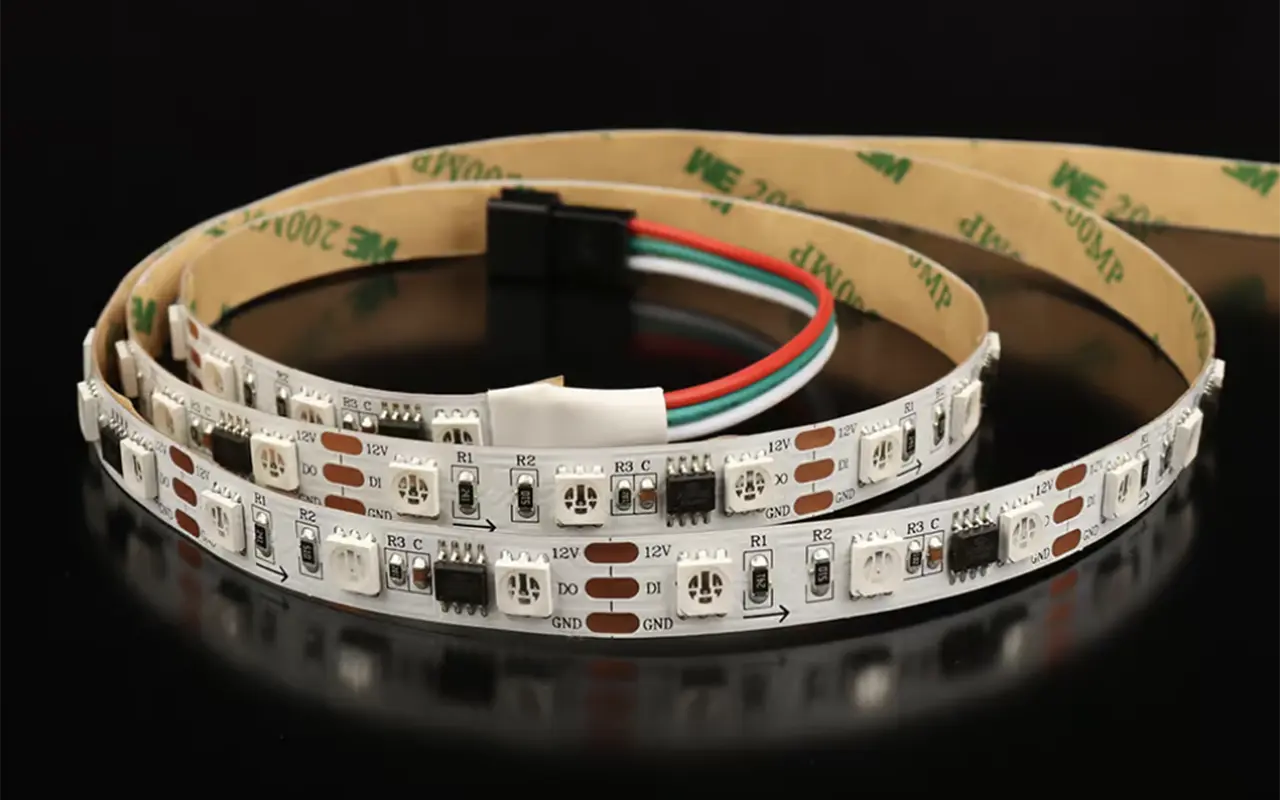
Meet the heavyweights of the LED world, the 5050 LEDs. These LEDs are 5.0×5.0 mm and have high brightness and great versatility. They are perfect for applications demanding vibrant color displays and exceptional brightness. However, they can be more expensive than their smaller counterparts.
What Makes 5050 Unique?
What sets the 5050 LEDs apart is their capability to offer RGB features, allowing for a vast array of colors. Their brightness can go up to 22 lumens per chip, which is considerable. However, being versatile and bright is expensive in terms of money and energy.
Comparative Analysis
Choosing the right LED is easier when you compare different types and understand their differences.
2835 vs 3528: Battle of Efficiency
In the clash between 2835 and 3528 LEDs, the 2835 comes out on top in terms of brightness. However, the 3528 is a clear winner in energy efficiency. If your project focuses on using less energy, such as a solar-powered garden light, the 3528 could be a good choice for you.
3528 vs 5050: Clash of the Titans
The 5050 LEDs offer the full RGB spectrum and significantly higher brightness but are generally more expensive. The 3528 LEDs are cost-effective for simpler lighting, especially when vibrant colors aren’t a priority.
2835 vs 5050: The Final Face-off
In the duel between 2835 and 5050 LEDs, the 2835 serves as the middle ground—offering reasonable brightness at a moderate cost. For stage lighting or architectural projects that need bright light and all colors, the 5050 LED is best.
Other LED Numbers You Should Know
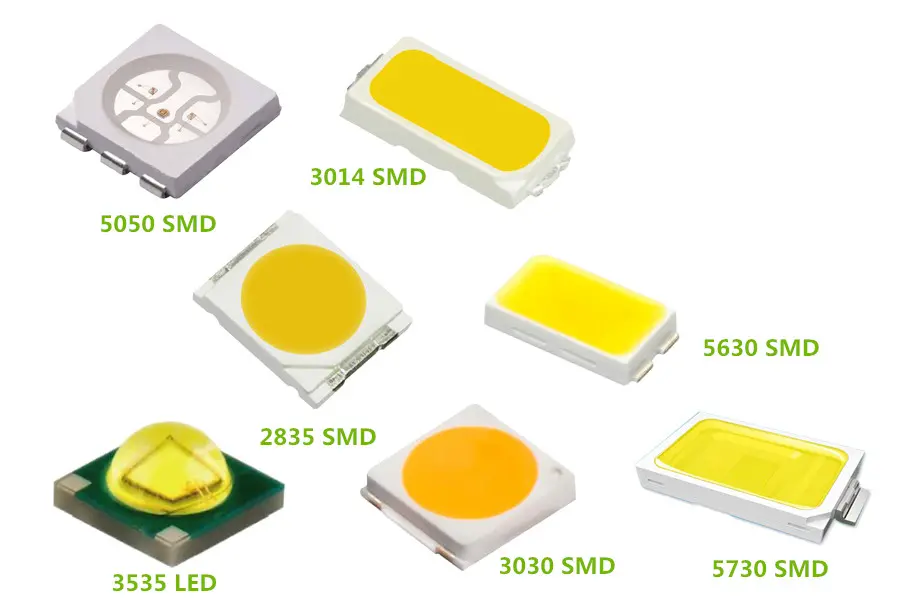
Beyond the commonly discussed 2835, 3528, and 5050 LEDs, there are other variants like the 5730, 3014, 5630 and etc. Every model has different sizes and features, making your decision harder but giving you more choices for different uses.
Unique Characteristics of Lesser-Known LEDs
The 5730 LEDs are known for their high luminous efficacy, often exceeding 2835 LEDs. The 3014 LEDs are small and flexible, making them perfect for cramped spaces. Finally, the 5630 LEDs can offer brightness close to 5050 LEDs but often with better energy efficiency.
Energy Consumption and LED Types
It’s a common misconception that larger LED chips will always consume more energy. The reality is nuanced. Energy consumption is more about LED design, efficiency, and application than just the chip size.
LED Density vs Chip Size: Which Is Better?
If you have to choose between a high-density LED setup and large LED chips, remember that a high-density configuration uses more power. It comes down to application and necessity. For example, a bright LED might be better for stores because it uses more electricity. On the other hand, for ambient home lighting, a large-chip setup could provide sufficient brightness with less energy usage.
How to Pick the Right LED for Your Needs?
Selecting the ideal LED is not a one-size-fits-all process. When making your decision, consider factors like how bright you need it to be, how much energy it uses, and your budget.
LED Buying Checklist
Start by assessing your brightness needs. Will this LED serve as a main light source, or is it for aesthetic accents? Next, calculate the power consumption. Consider how long the LED will be on and how that translates into your electricity bill. Finally, set a budget. High-quality LEDs may perform better but usually cost more upfront. Make sure you’re getting the most value for your money.
Frequently Asked Questions (FAQs)
What Does SMD Stand For in LED Technology?
SMD stands for Surface-Mount Device. It’s a crucial term related to the components of an LED. Understanding SMD helps you grasp the LED’s efficiency, brightness, and performance capabilities.
Is it True That Bigger LEDs Always Use More Energy?
Contrary to popular belief, larger LED chips sometimes consume less power. Energy usage is more complex, influenced by the LED’s design, efficiency, and how it’s deployed.
What Do Four-Digit Numbers Like 2835 and 5050 Mean on LED Strips?
These numbers aren’t just arbitrary. They represent the dimensions of the LED chip in millimeters. For example, a 2835 LED would measure 2.8×3.5 mm. These dimensions can give you a quick insight into an LED’s performance and application.
Which SMD LED is Considered the Best?
There’s no one-size-fits-all answer here. The “best” SMD LED depends on what you need it for. 5730 LEDs are very bright and perfect for certain applications that require high brightness.
SMD LED vs. COB LED: Which One Takes the Cake?
Both have their merits. SMD LEDs offer versatility and are generally easier to work with for custom setups. COB LEDs, on the other hand, are known for their high-density light output. Your choice would depend on your specific lighting needs.
Which Shines Brighter: LED 3528 or 5050?
LED 5050 takes the lead in brightness, capable of offering up to 22 lumens per chip. LED 3528 typically offers 7-8 lumens, making it reliable but less bright than its 5050 counterpart.
What’s the Absolute Brightest LED Type Available?
While it may change as technology evolves, 5050 LEDs and some specific types like 5730 LEDs are among the brightest options available. They are well-suited for applications requiring high luminosity.
Are 2835 LEDs More Energy-Efficient Than Their Counterparts?
The 2835 LEDs generally offer a good balance between brightness and energy efficiency. However, other types, like 5630, may provide similar brightness levels but with better energy efficiency.
What Are the Common Uses for 5050 LEDs?
The 5050 LEDs are very flexible and frequently used in applications that need bright light and different colors. They are popular for stage lighting, commercial signs, and fancy home lighting setups.
How Do I Choose the Right LED for My Specific Needs?
Begin by assessing your luminosity requirements and calculating the projected power consumption. Finally, establish a budget that considers both upfront and long-term costs. The right LED will meet your needs without breaking the bank.
Conclusion
Knowing LED numbers, such as 2835, 3528, and 5050, can help you choose the right lighting. With this knowledge, you’re now equipped to navigate the bright world of LEDs. Choose wisely.
Navigating the world of LEDs can be complex, but it doesn’t have to be. If you’re still looking for the perfect LED solution, check out Unitop. We are one of China’s top LED strip lights and LED neon flex manufacturers. We have unrivaled expertise and innovation in the LED industry. Don’t hesitate to contact us for any further questions or tailored lighting solutions. With Unitop, you’re choosing a brighter, smarter, and more efficient future.

Tom is now the Sales Manager of Unitop (China) Co., Limited. He has been in the LED Lighting industry ever since 2005. He is an expert in sales & marketing, and factory management. He likes bodybuilding, and he is also a crazy Apple Fan! He is a hard-working guy and loves to learn and try new things.
Email: tom@unitopledstrip.com WhatsApp: +86-18680307140



Leave a Reply
Want to join the discussion?Feel free to contribute!