
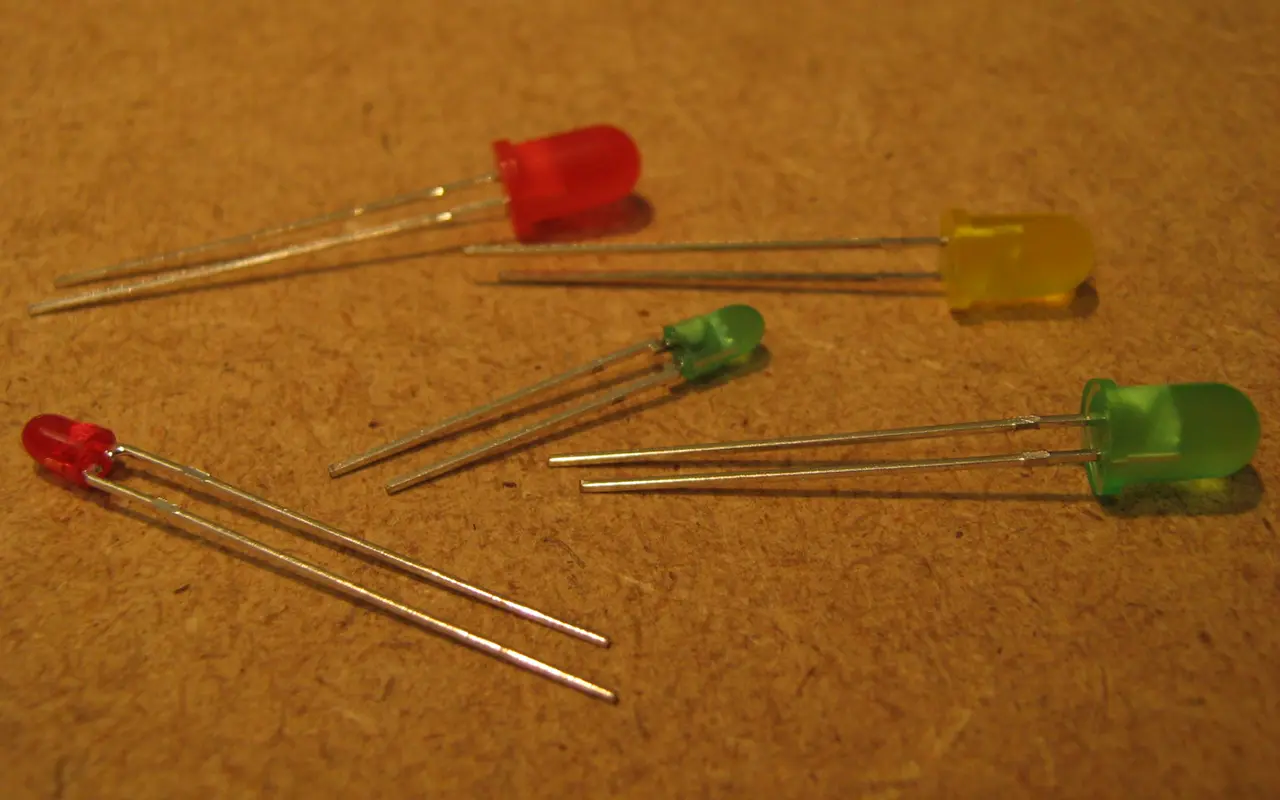
Many people think LEDs work the same no matter how you plug them in, but this is not true. This notion couldn’t be further from the truth. LEDs require a specific connection to function optimally, and their characteristics are nuanced. The heart of this is a little-known but critical concept called ‘polarity.’
LED polarity is essential for electrical engineers and home enthusiasts working on lighting projects. Not paying attention to polarity can cause problems and stop your project completely.
When you get the polarity wrong, LEDs either perform sub-optimally or not at all. Even worse, the LED can get permanently damaged, causing a blow to your schedule and budget. To keep your project on track and make the LED last longer, it’s important to understand polarity.
Quick FAQ Overview
What are LEDs?
Light Emitting Diodes (LEDs) are more than just small light bulbs. They are semiconductors that emit photons (light) when an electric current traverses them. LEDs have brought about a lighting revolution. They are energy efficient and last longer than traditional lights.
What Does “Polarity of LED” Mean?
In simple terms, polarity refers to the orientation of electrical or magnetic fields. When using LEDs, it is very important to know the polarity. To determine polarity, connect the anode to the power source and the cathode to the ground. Reverse this, and your LED won’t just stay dark; it might even go “poof!”
The Fundamentals of LED Anatomy
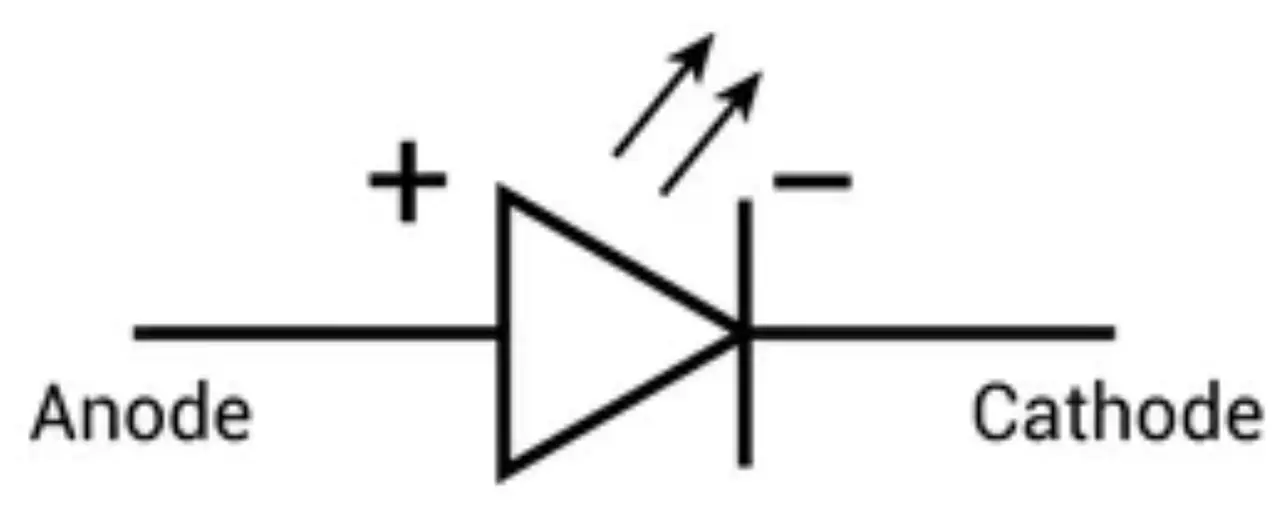
The Basics: Anode and Cathode
The anode and cathode aren’t just random terms but the heart and soul of an LED’s structure. The anode is the positive terminal, and the cathode is the negative. When the components are connected in a circuit, they allow electric current to flow and power the LED. Get this wrong, and your LED remains nothing more than an expensive piece of silicon.
Importance of Polarity in LED Functionality
Think about something as critical as the traffic lights controlling a busy intersection. Often LED-based, these traffic lights are designed to maximize visibility and energy efficiency. Now, imagine the polarity is reversed during installation. The outcome? A dark set of traffic lights results in chaos, gridlock, and a serious threat to public safety. And that’s just one application. LEDs, light bulbs, and electronics need the correct polarity to work well.
4 Proven Methods to Determine LED Polarity
Visual Clues: Length–Looking at the LED’s Physical Characteristics
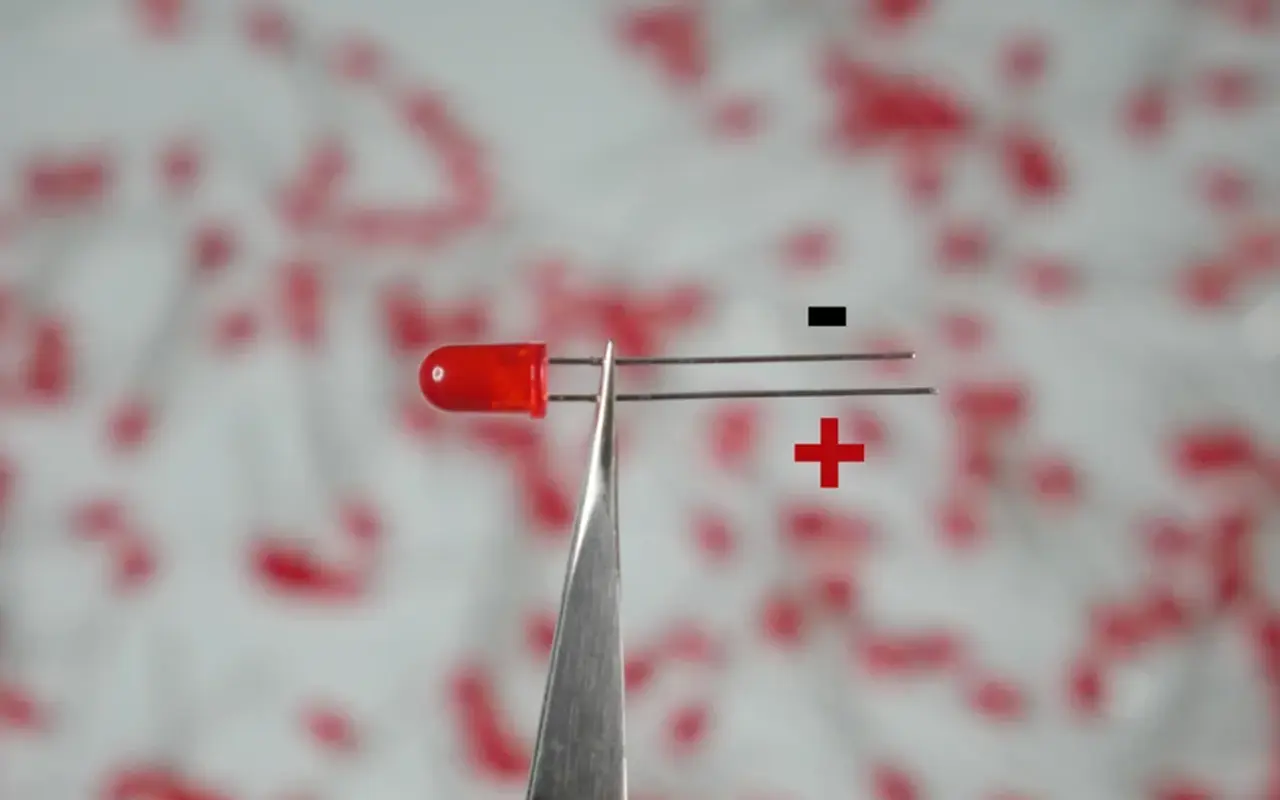
To find an LED’s polarity, just look at its physical features. The LED usually has leads of different lengths. The longer lead is positive (anode), and the shorter one is negative (cathode). You can easily tell which way an LED goes by looking at certain signs. No special tools needed.
Tool-Assisted Checks: Multimeter–Utilizing a Multimeter for Confirmation
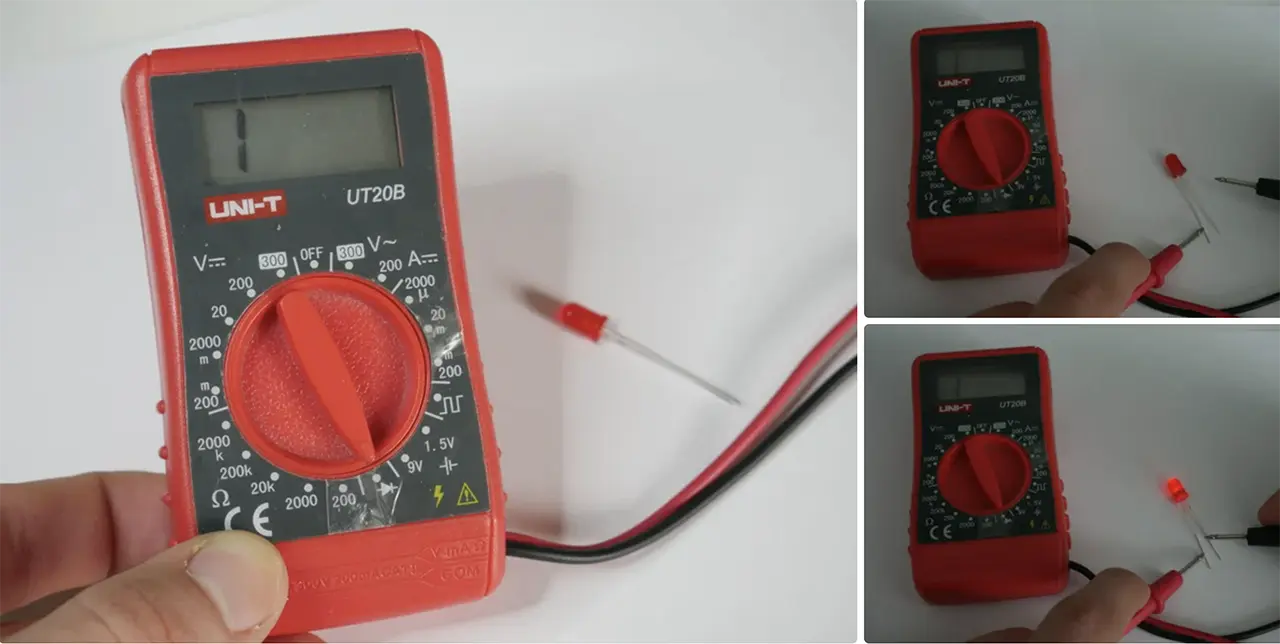
A more precise way to identify LED polarity is by using a multimeter. For this, set your multimeter to the diode setting. Gently use the red probe to touch the LED’s anode and the black probe for the cathode. If the LED doesn’t illuminate, you’ve likely reversed the probes. Swap them and try again. Using a multimeter is important to avoid mistakes, especially in professional situations.
Coin Cell Battery Test–Simple Test Using a Coin Cell Battery
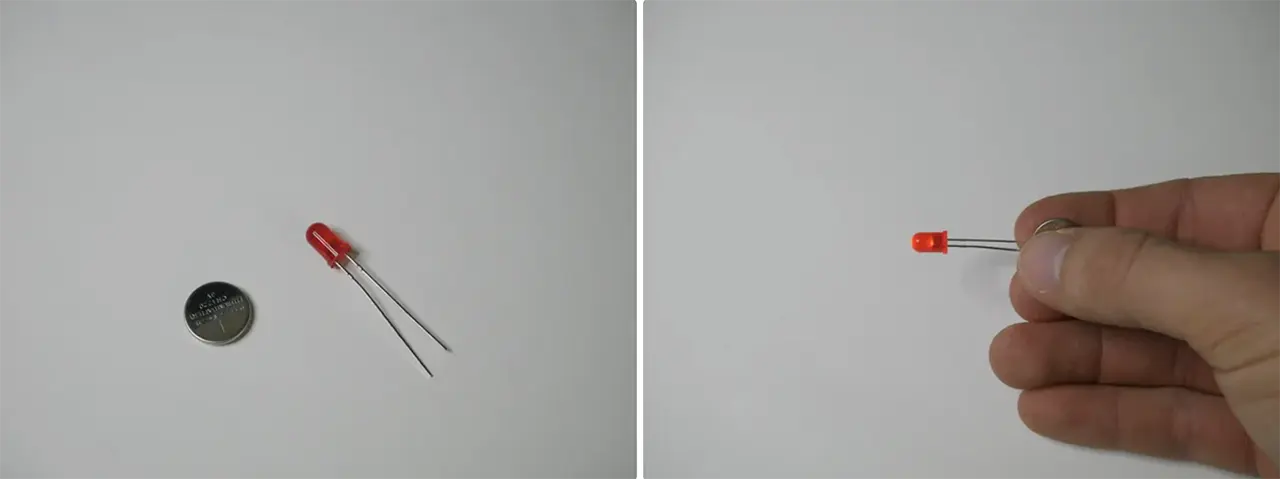
Another quick-and-dirty method for polarity testing involves a coin cell battery. Because they are small, these batteries can fit between an LED’s leads. This allows for a quick way to check polarity. If the LED illuminates, you’ve got the polarity right; if not, reverse the connections. Though not the most precise method, it’s convenient for quick verifications.
The LED Flat Side Polarity Technique
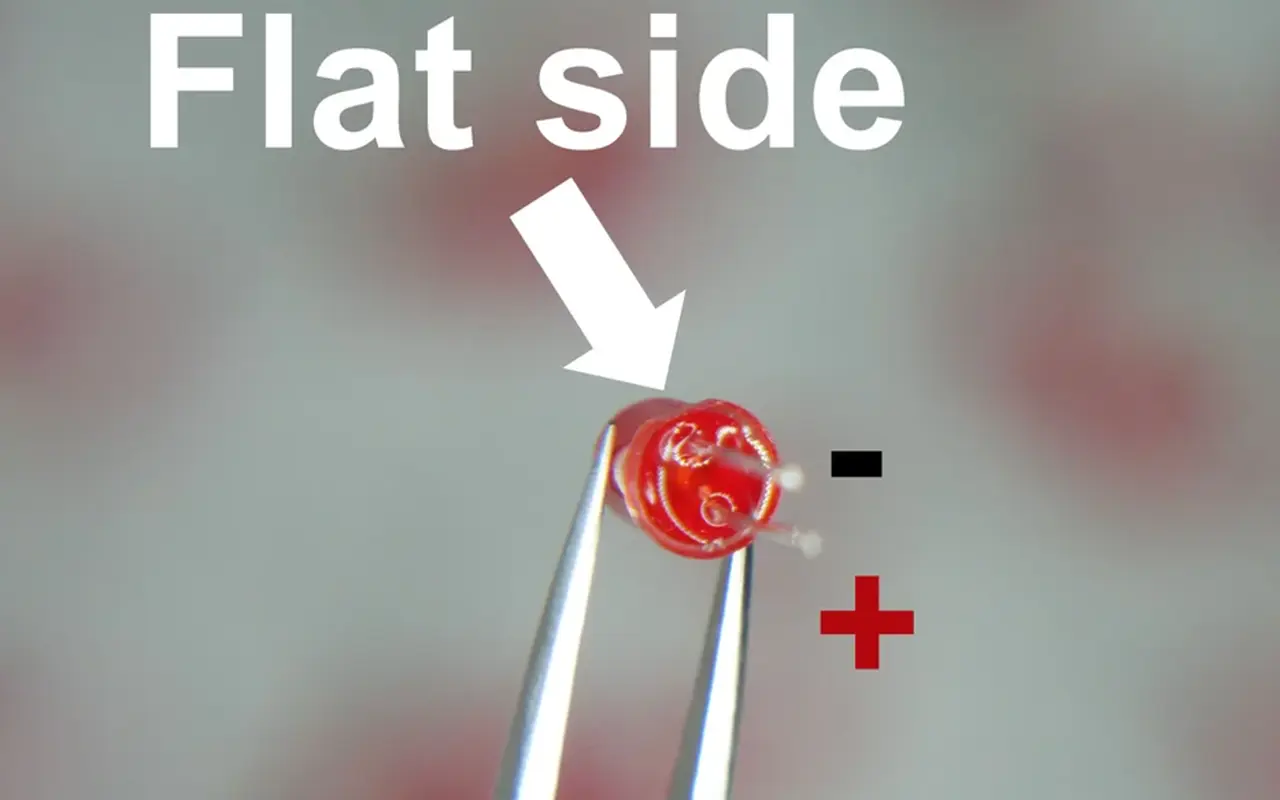
The LED flat side polarity technique refers to identifying the cathode (negative terminal) of an LED by looking for a flattened side on the base of the LED. This is a physical feature used to distinguish the cathode from the anode (positive terminal), aiding in correct LED orientation during installation.
Common Myths and Misunderstandings
Myth 1: All LEDs Are Created Equal
Why This is Misleading: A widespread misconception is that all LEDs are interchangeable, operating under the same voltage and current. However, this couldn’t be further from the truth. LEDs of varying types, such as high-intensity or miniature, have different voltage and current needs. This means they also have different polarity considerations. Understanding these specifications is essential for maximizing LED lifespan and performance.
Myth 2: Polarity Has No Impact on Performance
The Truth About Performance Implications: Another dangerous myth is that reversing the polarity of an LED won’t affect its performance. Incorrect polarity can instantly damage the LED or degrade its efficiency over time. If the LED gets damaged, it could harm the whole circuit or device it’s in.
Real-world Implications of LED Polarity
The Electronics Landscape
Why Polarity is Important in Consumer Electronics? Polarity is more than just a theory. It actually affects consumer electronics. If the LED polarity is wrong, LED TVs and smart home lighting can fail or catch fire. Knowing and using the correct LED polarity is crucial for safety, not just a good idea.
On the Road: LEDs in Vehicles
How Polarity is Crucial in Automotive Lighting and Safety? In the car industry, polarity is very important. LEDs are used more and more for lights. Tesla and other companies are very careful about the way they use LEDs. They do this to make sure that the lights work well and keep people safe on the road. If an LED is polarized incorrectly, it can cause a headlight to not work. This is dangerous for drivers and pedestrians.
Troubleshooting LED Polarity: Quick Fixes
Symptoms of Wrong Polarity
Common Issues from Incorrect Polarity: If you’ve installed an LED and it either doesn’t light up or flickers intermittently, chances are the polarity is reversed. These symptoms can often be mistaken for a faulty LED or weak power supply. However, before you throw that ‘defective’ LED away, check the polarity.
Solutions: Making it Right
Addressing polarity issues doesn’t have to be complicated. You can easily find the anode and cathode by using a multimeter or looking closely. After you determine the correct polarity, reconnect the LED. Make sure the longer lead is connected to the positive terminal and the shorter lead to the negative. This simple check and adjustment can save both time and resources.
FAQs on Troubleshooting
Can reverse polarity destroy an LED?
Yes, it can. Reverse polarity can irreparably damage an LED. The semiconductor material within the LED is sensitive to electrical orientation. If you send current in the wrong direction, the semiconductor can get burned out. This will make the LED useless.
Can I fix an LED with reversed polarity?
Not if it’s damaged, but you can correct the wiring. If you connected an LED with the wrong polarity but it still works, you’re lucky. The LED itself can’t be “fixed” if damaged. Still, incorrect wiring can and should be corrected immediately to prevent further issues.
Why Polarity Matters: A Closer Look
Power Consumption Factors
Impact of Incorrect Polarity on Energy Use: You might think a flickering LED is just an annoyance. LEDs use more power and become less efficient if the polarity is wrong. This increases energy bills. This is particularly vital in industrial settings where multiple LEDs are used.
Safety Concerns
Importance of Getting Polarity Right for Safe Operation: Incorrect polarity can lead to overheating, posing fire risks in enclosed spaces or near flammable materials. This isn’t a small mistake. It’s a big problem that could be very dangerous in homes and factories.
Conclusion: Takeaways and Next Steps
It’s important to know the correct LED polarity for performance, safety, and efficiency. Ignorance is not bliss when it comes to electrical installations.
Always check polarity before installing LEDs. Not doing so is like playing Russian roulette with your electrical system. Always check and double-check if you have to to avoid complications down the line.
Use tools like multimeters for precise measurement. Why guess when you can measure? Using a multimeter removes any doubt and ensures you connect your LEDs correctly.
Reversed polarity can lead to significant issues, including safety risks. A small polarity mistake can cause a chain reaction, leading to big damage or harm to people.
There you have it—an in-depth, comprehensive guide to understanding LED polarity. With this knowledge, may your path be bright and free from the dangers of wrong polarity!
In the labyrinth of LED technology, polarity is your guiding light. If this comprehensive guide leaves you yearning for more expert insights, look no further than Unitop, one of China’s leading manufacturers of LED strip lights and LED neon flex. With unparalleled expertise in the LED industry, we’re here to illuminate your every need. Questions? Requirements? Don’t hesitate—contact us now and let Unitop bring clarity to your LED endeavors.

Tom is now the Sales Manager of Unitop (China) Co., Limited. He has been in the LED Lighting industry ever since 2005. He is an expert in sales & marketing, and factory management. He likes bodybuilding, and he is also a crazy Apple Fan! He is a hard-working guy and loves to learn and try new things.
Email: tom@unitopledstrip.com WhatsApp: +86-18680307140



Leave a Reply
Want to join the discussion?Feel free to contribute!