
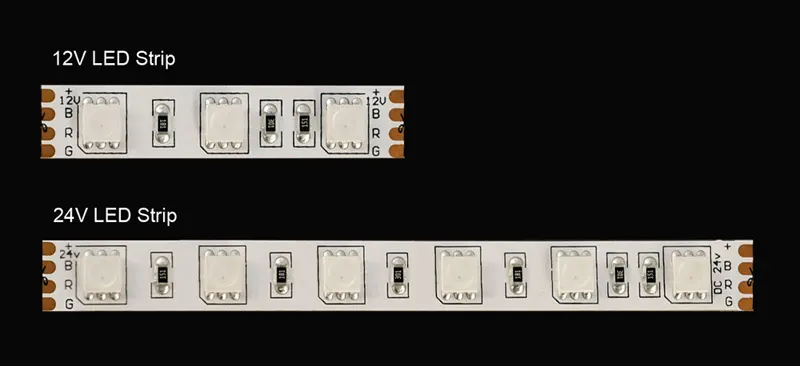
LED strip lights are not just for decoration. You can use them in homes, vehicles, and commercial spaces because they are versatile. There are various types and power options, like 12V and 24V, which can make it difficult to decide. In this guide, we’ll unearth the mysteries of these two voltage options.
The selection between 12V and 24V goes beyond mere numbers. It’s about efficiency, flexibility, application range, and more. We’ll explore how these two compare and when one might prefer one over the other.
We aim to empower you to select the ideal LED strip light for your project. This guide will help you choose the right voltage. It has lots of helpful information.
Understanding LED Voltage
What is Voltage?
Brief Explanation of Voltage: Voltage, or electric potential difference, causes electric current to flow in circuits. Think of it as the push or pressure behind the electrical flow. To design electrical systems well, it’s important to understand voltage. Voltage affects efficiency and performance. If the voltage is incorrect, a circuit won’t work well and might fail.
Importance in LED Lighting: In LED lighting, voltage is crucial. It’s not just a technical term; it’s the system’s backbone. To make LED strips work their best and last long enough, use the right voltage. Voltage directly affects how the LEDs emit light, color consistency, and lifespan. To prevent issues with performance or LED strip failure, it’s important to choose the right voltage.
Voltage Drop, Max Run, and Common Misunderstandings
What Is Voltage Drop? Voltage drop is the gradual decrease in electrical pressure as it moves along a circuit. LED strips may not be equally bright and may seem dimmer when further from the power source. When you install LED strips, you need to think about resistance in wires and connectors. To keep the brightness the same, choose the right wire size and understand the LED system. This will help reduce the loss of voltage.
What Is Max Run? The Max Run is the longest distance an LED strip can go without a drop in power affecting how well it works. In other words, it’s the point where voltage drop becomes noticeable and problematic. The maximum distance a LED strip can run is different for each type. It depends on things like voltage, wire size, and how many LEDs there are. To create a good LED strip layout, it’s important to know the maximum run length.
How Does Voltage Affect Strips? Voltage is more than just a number on a power supply. It actually shapes how LED strips work. Different voltages lead to varied max runs, efficiency levels, and applications. For example, a 12V LED strip may suit shorter runs and smaller installations. A 24V system might provide better efficiency for longer runs. When selecting LED strips, think about how voltage impacts their performance and lifespan. This includes their maximum run, brightness consistency, and energy efficiency. Professionals and enthusiasts need this information because misunderstandings can lead to bad decisions.
Difference Between 12V and 24V LED Strips
When planning an LED lighting installation, it’s crucial to understand the differences between 12V and 24V LED strips. Choosing the correct voltage is vital for your lighting project, as it caters to various needs. Let’s delve into the characteristics of both to see which might be the best fit for your situation.
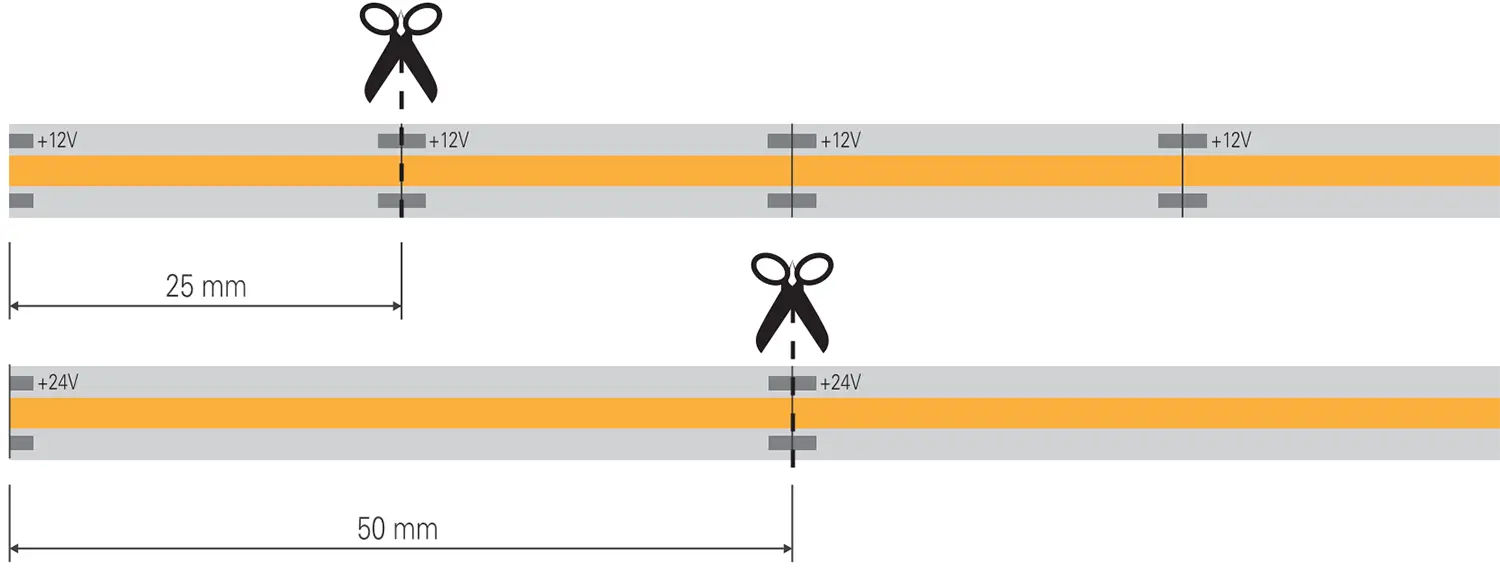
Overview of 12V LED Strips: 12V LED strips are often recognized as the go-to option for smaller installations. These strips are flexible and efficient. They work well in tight spaces, intricate designs, or places needing frequent cuts. The shorter intervals help you make special shapes and patterns that fit your style. Although they can be used for a variety of purposes, these lights can only run up to 5 meters. This makes them better for small projects or places with easy access to power.
Overview of 24V LED Strips: On the other hand, 24V LED strips are tailored for more extensive applications. These strips are made for longer runs. They can light up for up more than 5 meters without interruption. This means they can illuminate over longer distances without any breaks. Their longer cut intervals may reduce the customization in some scenarios. Still, the overall design is more energy-efficient, with lower energy waste. Commercial spaces, large rooms, or areas needing longer linear runs often choose them.
| Feature | 12V LED Strips | 24V LED Strips |
|---|---|---|
| Cut Interval | Shorter | Longer |
| Max Run Length | 5 meters | more than 5 meters |
| Energy Efficiency | Less | More |
Choosing the Right Voltage for Your Needs
Choosing the right voltage for LED strip lights is not just a technical decision. It’s about finding the solution that meets your needs and goals. To make a smart choice, let’s analyze the features, advantages, and downsides of 12V and 24V LED strips.
When to Choose 12V LED Strips
Applications and Use Cases: 12V LED strips are popular for personal use in cars, boats, RVs, and smaller homes. Their popularity stems from their adaptability in confined spaces and unique design requirements.
Pros and Cons:
Pros:
Flexible in Tight Spaces: Ideal for creating detailed patterns or fitting into small niches.
Shorter Cut Length: Shorter cuts are better for detailed designs because they allow for more precision.
Cons:
Less Efficient: 12V systems often waste more energy than heat.
Shorter Run Length: Limited to runs of 5 meters or less, restricting their use in more expansive areas.
Shorter Cut Length Explored: The 12V LED strips have a shorter cut length, which allows for more creative flexibility. This is especially useful when customization and precise fitting are important. You can cut the LED strip into smaller pieces to fit accent lighting or architectural projects.
When to Choose 24V LED Strips
Applications and Use Cases: There are many applications for 24V LED strips. They are commonly used in industrial lighting, signage, and linear lighting. They are also great for extensive surface coverage. They are commonly found in commercial settings, shopping malls, and large outdoor displays.
Pros and Cons:
Pros:
Longer Run Length: The longer run length is up to more than 5 meters. It provides continuous illumination over long distances.
Higher Efficiency: Using less energy as heat means consuming energy more efficiently.
Cons:
Less Flexible in Tight Spaces: The longer cutting intervals make it harder to customize smaller, intricate designs.
Longer Linear Run Explained: 24V LED strip lights’ ability to cover up to more than 5 meters without significant voltage drop means they are ideal for large areas requiring uninterrupted linear lighting. This feature is helpful for lighting up long hallways, big outdoor areas, or making interesting visuals in stores.
Higher Efficiency Insights: The 24V LED strips’ efficiency advantage is remarkable. While only 12% of the voltage energy in a 24V system is lost as heat, this figure jumps to 25% in a 12V system. The efficiency of the lighting lowers energy bills and makes it more sustainable and eco-friendly.
Electrical Circuit Design and Current Flow
Electrical circuit design is a critical consideration in LED lighting. It’s not just about hooking up wires; it’s about efficiency, luminosity, and customization. To ensure your lighting installation is successful, it’s important to know the difference between 12V and 24V systems. Let’s delve into the specifics.
12V vs 24V – An In-Depth Look
Current Flow Analysis: The decision between using 12V or 24V systems affects current flow and efficiency during installation.
24V Systems: These are typically more efficient because they draw half the current of a 12V system for the same power output. This reduced current flow means thinner cables can be used, translating to cost savings and easier installation.
12V Systems: While they may suit smaller projects, they require a more significant current, which can necessitate thicker, more expensive wiring.
In 24V systems, the lower current needed means less resistance and voltage drop. This keeps the illumination consistent over longer distances.
Luminous Efficiency: Efficiency isn’t just about energy savings; it also affects the light’s quality.
24V LED Strips: Generating less heat means more electrical energy is converted into light rather than wasted as heat. This leads to higher luminous efficiency, a brighter and more vibrant light.
12V LED Strips: These may lose more energy to heat, diminishing their overall luminous efficiency.
To achieve eco-friendly lighting in professional settings, it’s important to understand luminous efficiency.
Brightness Levels: The 24V LED strips are slightly brighter, but you might not notice with your eyes. The slight increase in brightness can help with efficiency and saving energy. The slight change in brightness can make the atmosphere or mood just right in certain places.
Cut Interval Insights: The cut interval refers to the length between the points where the strip can be cut to fit specific spaces.
24V Strips: These can generally be cut at 6 or 7 LEDs, allowing longer unbroken runs.
12V Strips: Cuttable at 3 LEDs offers more frequent cutting intervals, providing more customization options but possibly requiring more connections.
Installation and Application Range
LED strip lights are popular because they can light up a room in stylish ways. To ensure they shine their brightest, though, proper installation is crucial. Let’s take a closer look at installing 12V and 24V LED strips and where they work best.
Installation Guide for 12V LED Strips
Step-by-Step Instructions:
Measure and Cut: Measure the surface length you want to cover, then cut the 12V LED strip accordingly. Be mindful of the shorter cut intervals specific to the 12V strips.
Connect to Power Source: Ensure the strip is connected to a compatible 12V power source using connector clips. This step is vital, as using the wrong voltage can damage the strip.
Affix the LED Strip: Depending on your requirements, you can use adhesive or clips to fix the LED strip in the desired location. Make sure the surface is clean for maximum adhesion.
Power On: Lastly, switch on the power, and enjoy your newly installed lighting.
Tools Needed: Cutting tool, connector clips, adhesive (if required), and a multimeter to verify voltage.
Note: Safety comes first. Ensure the power is off during installation; if unsure, consult a professional electrician.
Installation Guide for 24V LED Strips
Step-by-Step Instructions:
Measure and Cut: Similar to 12V, measure the needed length, but remember, 24V strips offer longer cut intervals. Consider this feature to maintain continuous lighting.
Connect to 24V Power Supply: Utilize a compatible 24V power supply, ensuring proper voltage alignment for optimized performance.
Position and Affix: Plan the positioning carefully, and use appropriate adhesives or clips to affix the strips. Precision here enhances the aesthetic appeal.
Switch On: Turn on the power and bask in the radiance of your 24V LED strip.
Tools Needed: Similar to 12V installation, with extra attention to the 24V power supply and longer cut intervals.
Application Range – Where 12V and 24V LED Strips Excel

12V LED Strip Scenarios: With shorter cut intervals and flexibility, 12V LED strips are perfect for mood lighting in bedrooms, under cabinet illumination, and unique automotive applications. Their ability to fit in tight spaces makes them ideal for intricate and personalized lighting solutions.
24V LED Strip Scenarios: Regarding large-scale or commercial projects, 24V LED strips come into their own. The longer cut intervals and enhanced energy efficiency make them suitable for long hallways, expansive staircases, and substantial ambient lighting in vast rooms.
Tips and Considerations
When you buy LED strip lights, for personal or business use, think about more than just how they look. To have a good and lasting LED setup, consider efficiency, cost, safety, and wire gauge. In this section, we will look at how to make LED strips use less energy and be safe. We’ll cover 12V and 24V strips.
Energy Efficiency and Costs – 12V vs 24V
The efficiency of 12V vs 24V LED Strips
Energy efficiency is more than just a buzzword. It’s a crucial factor when evaluating LED strips. Both 12V and 24V strips have different uses, but 24V is more energy efficient. It draws half the current compared to 12V systems, translating into less energy waste as heat. This enhanced efficiency directly contributes to a longer LED lifespan and better performance.
Long-term Cost Comparison
Although 24V LED strips may cost more at first, their high efficiency helps save money in the long run. Saving energy helps cut costs and makes the initial investment worthwhile over time. To understand the true cost, consider more than just the purchase price. This gives a complete view of your investment.
Conductor Gauge Requirement
An unexpected factor to consider is the conductor gauge requirement. The 24V systems, due to their lower current draw, require a smaller conductor gauge. This makes the installation cheaper while still being safe and functional.
Safety Considerations – Protecting Your Investment
Tips for Safe Installation and Use
While user-friendly, LED strips still deal with electricity, necessitating precautions. Always use power supplies that are compatible with the specific voltage of the LED strip, be it 12V or 24V. If you want to be more certain about how it’s installed, you can hire professionals. They’ll make sure it’s safe and follows electrical codes.
Smaller Power Supplies for 24V LED Strip
The ability of 24V systems to draw half the current means that smaller power supplies can be used. This makes them cheaper and easier to install, especially in small spaces. To ensure safety and optimal performance, make sure the power supplies are rated for the load.
Frequently Asked Questions (FAQs)
Can I run a 12V LED strip on 24V?
No, running a 12V LED strip on a 24V power source may cause the strip to burn out or suffer irreversible damage. To ensure your device functions properly and has a long lifespan, adhere to the manufacturer’s voltage guidelines.
What is the best voltage for LED strip lights?
The “best” voltage depends on your specific needs and application. 12V LED strips can be cut more often and work well for small projects, but 24V strips are more efficient and last longer. Assessing your requirements will help you choose the appropriate voltage.
How long can you run a 24V LED strip?
The maximum length of a 24V LED strip can vary due to factors such as LED density, design, and manufacturer. Typically, they allow longer linear runs compared to 12V strips. Always refer to the product specifications for precise details.
Can I use 12V lights on a 24V battery?
Connecting 12V LED lights to a 24V battery may result in overheating and failure of the lights. To avoid accidents, it is important to have the right voltage regulator or converter for the LED.
What’s the primary difference between 12V and 24V LED strips?
12V and 24V LED strips have different uses, but the main difference is their efficiency, cut intervals, and run lengths. 24V strips are great for longer runs and higher efficiency. On the other hand, 12V strips work well for shorter lengths and can be easily cut.
Is there a significant cost difference between 12V and 24V LED strips?
The cost difference might not matter much, but it can change based on quality, brand, and efficiency. However, due to higher efficiency, 24V strips might save energy costs in the long run.
Are 12V and 24V LED strips compatible with each other?
It is not recommended to mix 12V and 24V LED strips in the same circuit. They need different power sources and controllers. Compatibility issues may lead to improper functioning or damage.
How does voltage affect the brightness of LED strip lights?
Voltage doesn’t affect brightness directly, but it does affect current flow and efficiency. Choosing the correct voltage per design ensures optimal brightness without compromising energy consumption.
What are some safety considerations when choosing between 12V and 24V LED strips?
Safety considerations include:
Proper voltage matching.
Correct installation.
Utilization of appropriate tools.
Adherence to manufacturer guidelines.
Considering conductor gauge requirements is also vital in ensuring safe operation.
Can I cut 24V LED strips to a custom length, like 12V strips?
Yes, both 12V and 24V LED strips can be cut at specific intervals. However, 24V strips typically have a longer cut interval compared to 12V. The product manual will provide precise cutting instructions for customization.
Conclusion
This guide will help you choose the right voltage (12V or 24V) for LED strip lights. When selecting the voltage, consider the application, length, efficiency, and brightness requirements. Both options have different strengths. Knowing their features will help you choose the correct LED strip. To successfully install LED lighting, it’s important to understand voltage. This applies to both home mood lighting and large-scale projects. Now you’re ready to choose like a pro!
Unitop, a top LED lights maker in China, makes it easier to understand 12V and 24V LED strips. Our expertise and commitment to quality set us apart. If you have further questions or unique requirements, don’t hesitate to reach out. Choose Unitop as your trusted guide in the LED industry. We can turn your visions into bright realities.

Tom is now the Sales Manager of Unitop (China) Co., Limited. He has been in the LED Lighting industry ever since 2005. He is an expert in sales & marketing, and factory management. He likes bodybuilding, and he is also a crazy Apple Fan! He is a hard-working guy and loves to learn and try new things.
Email: tom@unitopledstrip.com WhatsApp: +86-18680307140




Leave a Reply
Want to join the discussion?Feel free to contribute!