
Choosing between line voltage and low voltage landscape lighting can significantly impact your outdoor spaces’ efficiency, safety, and aesthetics. This guide will help you understand the differences and make an informed decision.
Line voltage landscape lighting uses 120V for bright, extensive illumination, while low voltage lighting uses 12-24V, offering safer, more energy-efficient options for smaller areas and accent lighting.
Explore the detailed differences, benefits, drawbacks, and ideal applications for line- and low-voltage landscape lighting.
What is Line Voltage Landscape Lighting?

Line voltage landscape lighting operates at 120V, the standard voltage for household electrical outlets.
Components of Line Voltage Lighting
- Fixtures: Heavy-duty fixtures designed for higher voltage, often made from durable materials to withstand various weather conditions.
- Wiring: Requires thicker, more robust wiring to safely carry the higher voltage without significant voltage drop.
- Installation Requirements: Needs electrical conduit and junction boxes for safe installation, ensuring that all connections are secure and protected from the elements.
These components make line voltage lighting robust and reliable, suitable for extensive outdoor applications where durability and high illumination are necessary.
Advantages of Line Voltage Lighting
- Brightness: Provides high illumination levels, making it suitable for large areas such as driveways, backyards, and commercial properties.
- Durability: Designed for heavy-duty use, these systems can withstand harsh weather conditions, making them a long-lasting solution for outdoor lighting.
- Versatility: Capable of powering a wide range of lighting fixtures and accessories, from floodlights to spotlights, offering flexibility in design and application.
Line voltage lighting systems excel in applications requiring powerful and reliable illumination, making them ideal for both residential and commercial properties that demand consistent performance.
Disadvantages of Line Voltage Lighting
- Complex Installation: Requires professional installation due to safety regulations and the complexity of handling high voltage, which increases initial costs.
- Higher Costs: More expensive upfront and in terms of energy consumption, as the higher voltage translates to greater energy use.
- Safety Concerns: Higher risk of electrical hazards if not properly installed, necessitating stringent safety measures to prevent accidents.
Despite these drawbacks, line voltage lighting remains a preferred choice for areas where high illumination and durability are paramount.
What is Low Voltage Landscape Lighting?
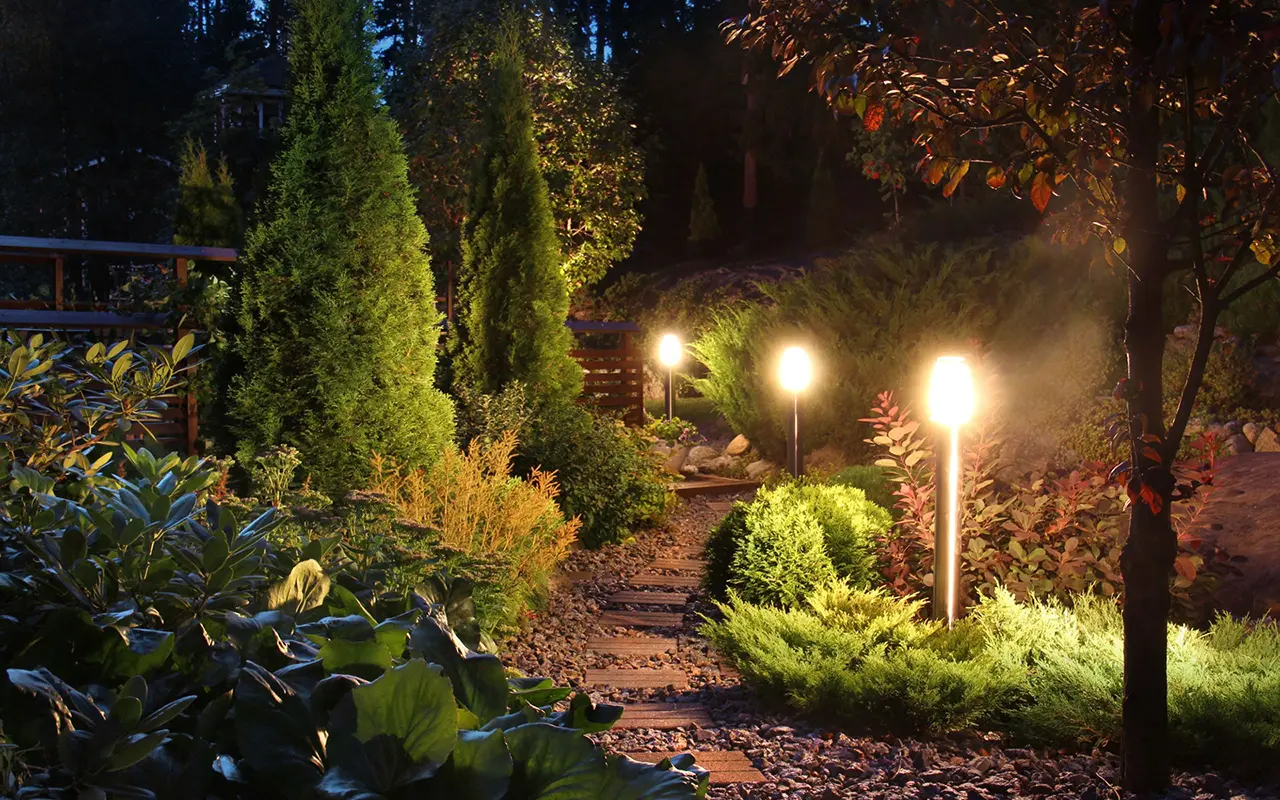
Low voltage landscape lighting operates at 12-24V, stepped down from the standard 120V using a transformer.
Components of Low Voltage Lighting
- Fixtures: Designed for lower voltage, these fixtures are often smaller, more varied in design, and typically easier to install and relocate.
- Wiring: Uses thinner, more flexible wiring that does not need to be deeply buried, reducing installation complexity and cost.
- Transformers: Essential for converting 120V to 12-24V, ensuring safe and efficient operation of low voltage fixtures.
These components make low voltage lighting a flexible and user-friendly option for various residential applications.
Advantages of Low Voltage Lighting
- Safety: Lower voltage reduces the risk of electrical hazards, making it safer for installations where children and pets are present.
- Energy Efficiency: Consumes less power, which translates into lower energy costs and a more environmentally friendly option.
- Ease of Installation: Suitable for DIY projects, allowing homeowners to install and customize their lighting systems without professional help.
Low voltage lighting systems are ideal for creating a safe, efficient, and aesthetically pleasing outdoor environment with minimal hassle.
Disadvantages of Low Voltage Lighting
- Limited Brightness: May not provide sufficient illumination for large areas, making it less suitable for extensive landscapes or commercial applications.
- Voltage Drop: Can experience a drop in voltage over long distances, resulting in dimmer lights at the far end of the circuit unless carefully managed.
- Fixture Limitations: Some high-powered fixtures may not be compatible with low voltage systems, restricting the range of lighting options.
While these limitations exist, low voltage lighting remains a popular choice for residential settings where safety, efficiency, and ease of installation are key considerations.
Line Voltage vs. Low Voltage: Which is Best for Your Space?
Choosing the right type of lighting depends on your specific needs and the characteristics of your outdoor space. Understanding these factors will help you make an informed decision that enhances both the functionality and aesthetics of your landscape.
Considerations for Line Voltage
Line voltage systems are well-suited for projects where high power and durability are essential, providing reliable performance in demanding environments. They are especially effective in scenarios where long-term maintenance and the need for bright, consistent illumination outweigh the initial costs and installation complexities.
- Large Areas: Line voltage lighting is ideal for extensive landscapes needing high brightness and consistent illumination. These systems can efficiently light up large areas such as commercial properties, parking lots, or expansive gardens. The high voltage allows for fewer fixtures to cover more ground, reducing the need for multiple connections and ensuring a uniform distribution of light.
- Professional Installations: Due to the complexity and potential safety hazards associated with line voltage installations, it is best suited for those who can invest in professional installation. This ensures compliance with safety regulations and reduces the risk of electrical issues. Professional installation guarantees that the wiring and fixtures are properly secured and protected from environmental factors.
- Commercial Use: Line voltage is suitable for commercial properties requiring robust and reliable lighting solutions. These systems can handle the demands of commercial environments where lighting needs to be powerful, durable, and capable of withstanding heavy use and exposure to the elements. Applications such as security lighting, large-scale outdoor events, and public spaces benefit greatly from the reliability and strength of line voltage systems.
Considerations for Low Voltage
Low voltage systems are a practical choice for residential areas, offering flexibility, safety, and efficiency for a variety of applications. They are particularly suited for projects where the aesthetic appeal of the lighting is as important as its functionality, allowing for creative and customizable lighting designs that enhance the beauty of the landscape.
- Residential Gardens: Low voltage lighting is perfect for residential gardens and pathways where safety and ease of installation are important. These systems are safer to work with, reducing the risk of electrical shocks and making them suitable for areas where children and pets play. The lower voltage also means that the installation process is less invasive, often not requiring deep trenching for wires.
- DIY Projects: Great for homeowners who prefer to install and customize their own lighting systems without needing professional help. Low voltage systems are more user-friendly and flexible, allowing for easy adjustments and additions. This makes them ideal for DIY enthusiasts looking to enhance their outdoor spaces with minimal professional intervention.
- Energy-Conscious Users: Ideal for those looking to reduce energy consumption and costs, benefiting from the efficiency of low voltage lighting. These systems use less power and can be paired with LED fixtures to maximize energy savings. The lower operational costs make low voltage lighting an attractive option for those aiming to minimize their environmental footprint.
By carefully considering these factors, you can choose the lighting system that best meets your needs, whether it’s the high-powered, durable solution of line voltage or the safe, flexible, and energy-efficient option of low voltage. Each type of lighting has its unique advantages, making it important to match the system to your specific application to achieve the best results.
Applications of Line Voltage and Low Voltage Lighting
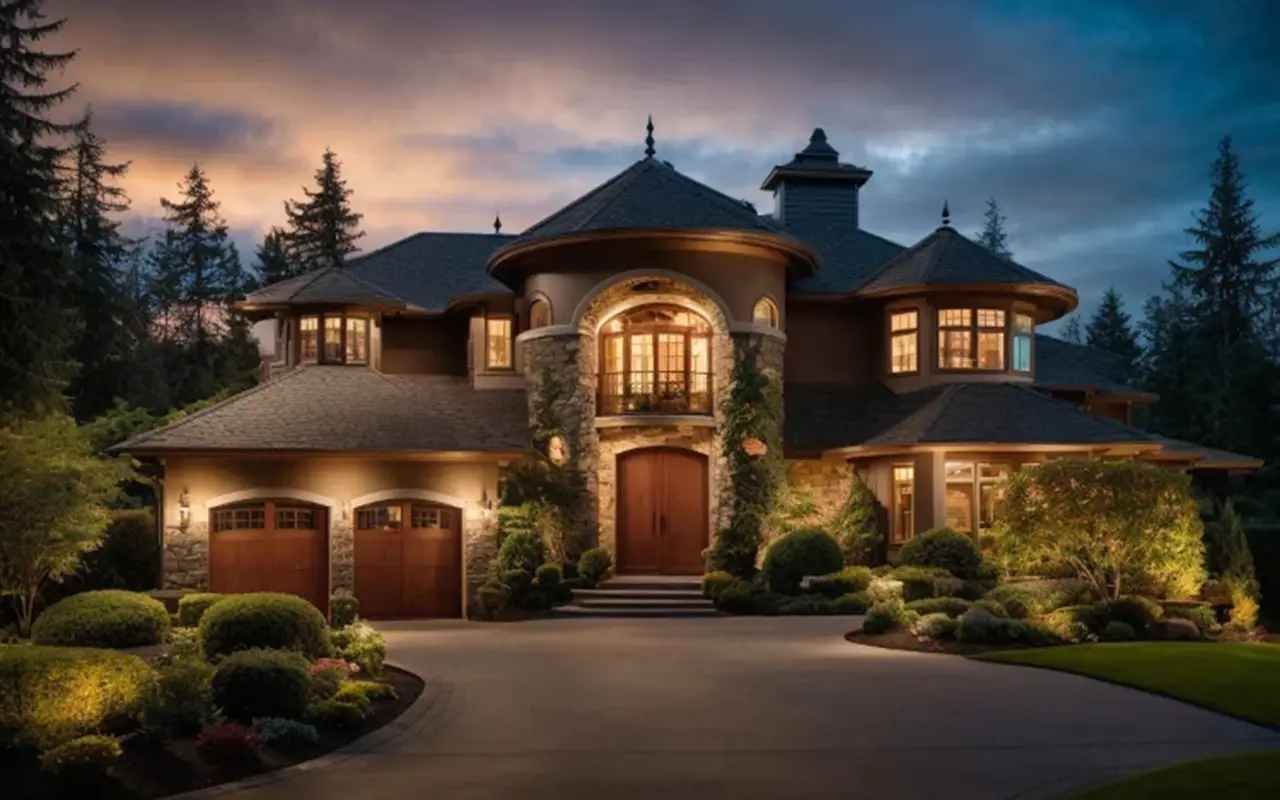
Different lighting types excel in different applications based on their characteristics.
Best Applications for Line Voltage
- Security Lighting: High brightness ensures safety and security around properties, deterring potential intruders.
- Flood Lighting: Effective for illuminating large areas like driveways and backyards, providing ample light coverage.
- Commercial Spaces: Suitable for commercial and public areas needing durable and bright lighting to ensure visibility and safety.
Line voltage systems provide powerful illumination for applications where high brightness and reliability are critical.
Best Applications for Low Voltage
- Accent Lighting: Ideal for highlighting garden features, statues, and plants, creating an inviting and aesthetically pleasing environment.
- Pathway Lighting: Providing safe and attractive illumination for walkways and garden paths, enhancing both functionality and beauty.
- Deck and Patio Lighting: Creating ambiance and safety around outdoor living spaces, making them more enjoyable and usable after dark.
Low-voltage systems offer versatile and efficient solutions for enhancing the beauty and functionality of residential landscapes.
Conclusão
Choosing between line and low-voltage landscape lighting depends on your specific needs, budget, and installation capabilities. Line voltage offers higher brightness and durability for large areas and commercial use, while low voltage provides safer, more energy-efficient options suitable for residential and accent lighting. Evaluate your requirements carefully to select the best lighting solution for your outdoor space.
Unitop, one of China’s leading manufacturers of Fitas de LED e LED neon flex, is here to provide expert guidance and top-quality products for all your lighting needs. If you have further questions or specific requirements, don’t hesitate to contacte-nos. Our team of professionals is ready to help you create the perfect lighting solution for your space, ensuring both functionality and aesthetic appeal. Illuminate your world with Unitop – where innovation and quality meet.

Tom é agora o Gerente de Vendas de Unitop (China) Co., Limitada. Ele tem estado no Iluminação LED indústria desde 2005. Ele é um especialista em vendas & marketing, e gestão de fábricas. Ele gosta de musculação, e é também um fã louco da Apple! Ele é um tipo trabalhador e adora aprender e experimentar coisas novas.
Correio eletrónico: tom@unitopledstrip.com WhatsApp: +86-18680307140



Leave a Reply
Quer juntar-se à discussão?Esteja à vontade para contribuir!