
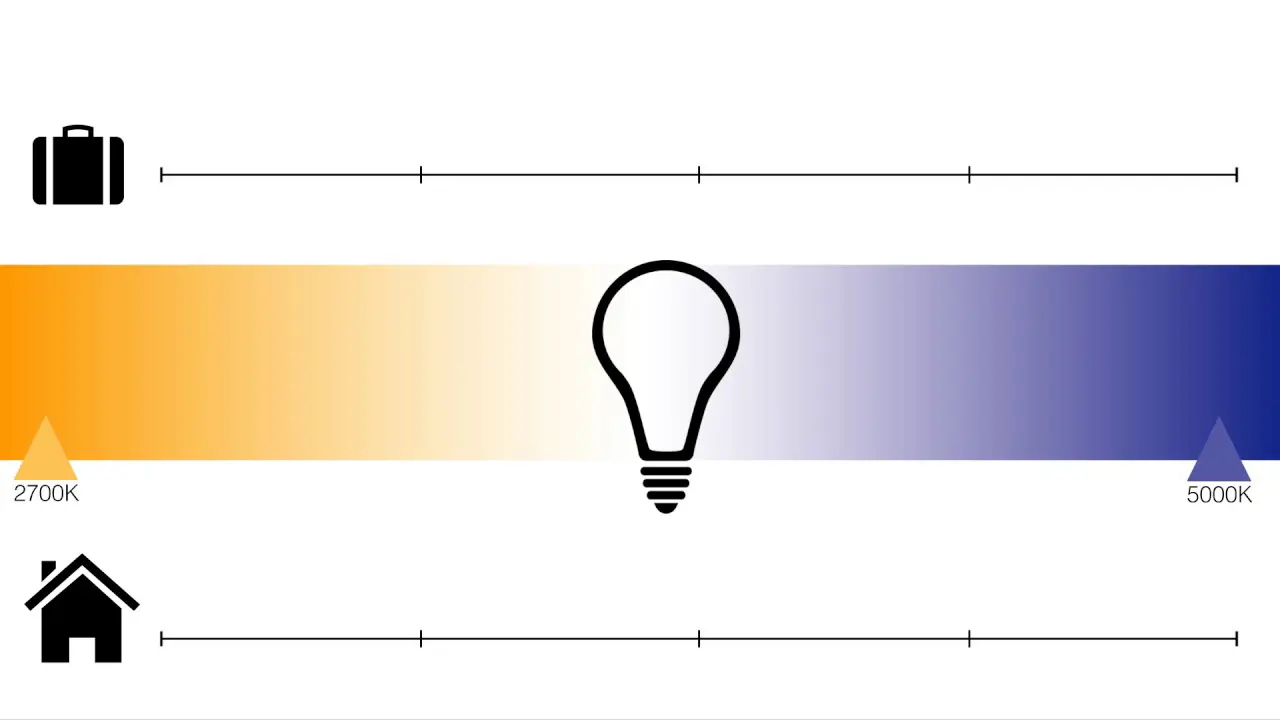
Delve into the vivid realm of color temperatures. Here, we illuminate the contrast between the homey 2700K and the pure 5000K lighting. Ready to discover which light brightens your world?
The main difference between 2700K and 5000K is the type of light they emit. 2700K has a warm, yellow hue that creates a cozy atmosphere. In contrast, 5000K has a cool, blueish light suitable for work areas.
Let’s explore the intricacies of color temperature, its impacts, and the decision-making process.
Unraveling the Kelvin Scale: The Basics of Color Temperature

Origins of the Kelvin scale in lighting.
Lord Kelvin, a famous physicist, named the Kelvin scale. He created it to study blackbody radiation. This scale measures the color of light. It shows the hue of light from a heated black body at different temperatures. This reference is important in lighting. It helps us understand color temperatures for different uses.
The visual spectrum: From warm to cool.
As we move along the Kelvin scale, it’s like seeing the colors of a sunset change to bright daylight. Lights with a color temperature below 3000K give a cozy glow, like a sunset or early evening. This helps you relax. As we go higher, past 4000K, the atmosphere becomes like a bright blue sky, giving us energy and making us feel alive.
The Science Behind 2700K & 5000K
How color temperature impacts the human eye?
Our eyes are more than windows to the world. They are complex systems that respond differently to different light wavelengths. A 2700K light has a gentle yellowish warmth that is easier on the eyes at night, reducing strain. A 5000K light is like daylight and is best for tasks that need focus. It helps your eyes see better.
Mood, perception, and cognitive influences of lighting hues.
Beyond mere visibility, lighting profoundly impacts our mental and emotional well-being. A soft, cozy light can create a relaxing atmosphere for talking, reading, or relaxing. In busy offices, art studios, and detailed spaces, it’s crucial to have cooler lights. These lights should have high Kelvin ratings. They stimulate the brain, increasing attentiveness and improving work quality.
Dive into 2700K Light Color: The Warm White Experience
Benefits of a warmer ambiance: Home, lounges, and relaxation spaces.
The golden embrace of 2700K lighting transforms spaces into sanctuaries of solace. Picture yourself on a soft couch in your living room, surrounded by a warm, cozy light. Imagine a fancy restaurant. The tables are lit to make the dining experience intimate. The 2700K light works well in these places, creating moments of pure relaxation.
The physiological and psychological comforts of 2700K.
The warm 2700K lighting soothes our nervous system, in a physiological sense. It soothes us, reducing stress hormones and bringing us to a calm state. The warm lighting brings back happy memories of old times, making us feel safe and cozy. It’s a hue that speaks to our innate need for comfort and emotional grounding.
Embracing 5000K Light Color: The Cool Daylight Brilliance
Best environments for 5000K: Workspaces, studios, and design areas.
When precision, clarity, and focus are the orders of the day, 5000K stands out as the luminary champion. This cool, crisp shade resembles the midday sun sans its intensity. Architects and designers love this spectrum because it shows textures and colors accurately. The corporate offices have 5000K lights. People feel more alert and their eyes are less tired. These lights are good for places where you need to be very careful.
Daylight emulation for enhanced alertness and productivity.
We all know that our body has an internal clock called circadian rhythm. It’s connected to day and night. The 5000K lighting imitates natural daylight, making us feel alert and energized. Improving thinking skills and creating a setting where individuals tackle tasks enthusiastically. The result? Enhanced productivity, sharper focus, and an omit elevated work experience.
Comparative Analysis: 5000K vs 2700K
Energy efficiency metrics.
Understanding the various light temperatures is vital when discussing energy use. In the past, cooler lights, like ones around 5000K, used a bit less energy. Their ability to emit brighter illumination is often correlated with lower energy consumption. LED technology is improving, making it difficult to distinguish between the two. Today, energy conservation is a top priority with both 2700K and 5000K LED bulbs.
Durability and lifespan contrast.
The robustness of a bulb isn’t just about its physical makeup but also its longevity. Bulbs with 2700K and 5000K have long lives, but it can vary due to brand, usage, and environment. Advancements in LED lighting colors last longer, so you don’t have to replace them as often. This also reduces waste.
Cost and environmental considerations.
At face value, the higher Kelvin bulbs might seem a touch on the pricier side. But, you should weigh this upfront cost against long-term advantages. These cooler lights could save energy and money in the long run. Choosing energy-saving lights, regardless of color, helps the environment and reduces carbon emissions.
Circadian Responses to Light Temperatures
How color temperatures influence our internal body clock.
The dance of light and our body’s internal clock has evolved over thousands of years. Our internal clock, called the circadian rhythm, syncs with outside signals like light. This helps control our sleep, hunger, and emotions. Warm lights, akin to the hues of a setting sun, naturally cue our body to wind down, preparing us for rest. The lights in the cooler have a bright blue color like morning sunlight. This can make you feel awake and focused.
Maximizing health benefits through strategic lighting.
The power of light goes beyond illumination; it can transform our well-being. We can optimize our daily routines by intentionally choosing and balancing light temperatures. One way to create a peaceful night is by using softer lights in the evening. This helps promote better sleep. On the other hand, using cooler lights at work can help you concentrate and be more productive. We can use different colors of lights to create spaces that make us feel better.
Choosing Your Ideal Shade: Making the Decision
Assessing space function, aesthetics, and individual tastes.
When it comes to lighting, one size does not fit all. Every room has its unique function, ambiance, and demands. For instance, a bedroom, a haven for relaxation, might flourish under the cozy, amber glow of a 2700K bulb. However, a home office or study can thrive with bright, clear lighting at 5000K. Furthermore, aesthetic choices and individual preferences also play a crucial role. Some prefer a consistent, uniform look across their homes. In contrast, others might choose varying shades to define different spaces distinctly.
Multi-purpose lighting solutions.
In today’s dynamic world, adaptability is critical. This applies to lighting as well. Adjustable fixtures allow users to easily change the color temperature, giving them flexibility. Imagine a living room that can transform from a cozy dinner setting to a lively party with a single switch. These versatile solutions help spaces change easily to match activities and moods.
Harnessing dimmers and adjustable light fixtures.
Control is at the essence of personalization. Homeowners can adjust the brightness and color of their lights with dimmers and adjustable fixtures. Whether you’re having a movie night or working on a project, these tools give you the right lighting.
Mixing and Matching: 2700K & 5000K in Tandem
Creating dynamic lighting scenarios.
Combining 2700K and 5000K can make a space versatile and visually appealing. In a big living room, warm lights can make seating areas stand out for a cozy feeling. Cooler lights can brighten reading corners or art areas. This layered approach enhances functionality and adds depth and dimension to interiors.
Benefits of diverse lighting in a singular space.
A symphony of lighting can drastically elevate an environment. By integrating warm and cool lights in a single space, one can cater to many tasks and moods. The cozy dinner ends with a lively board game played under dimmer lights. The diversity is for different needs and makes things look better. It gives a sensory experience that changes throughout the day.
LED Evolution: How Modern Bulbs Handle Color Temperature
LED tech and its flexibility in color rendering.
LED technology has revolutionized lighting by offering greater flexibility in color rendering. LEDs can make many colors, unlike traditional lights which have limits. This innovation stems from their unique structure and function. LEDs are devices that emit light when electricity passes through them. They are made of semiconductors. LEDs can emit specific colors and temperatures by changing materials and configurations. It’s easy to find the perfect shade, like warm sunset or bright midday, because it’s so versatile.
Comparing LED efficiency across various color temperatures.
LED bulbs are efficient because they use less energy and work well with different colors. Traditional bulbs use different amounts of energy depending on their color temperature. Some colors need more power. Modern LEDs have a consistent efficiency level, regardless of their Kelvin rating. You can save a lot of energy by using a 2700K or 5000K LED bulb instead of older lights. Additionally, their longevity is noteworthy. With proper care, an LED bulb can last for years, making them an economically sound choice in the long run.
FAQ: Addressing Common Queries
Why is the Kelvin scale used for lighting?
The Kelvin scale measures the color temperature of light. We can use it to describe if a light source looks warm (yellow-orange) or cool (blue-white).
How does 2700K lighting affect my mood at home?
2700K lighting emits a warm, yellowish hue, promoting relaxation and comfort. It’s ideal for lounges and relaxation spaces, making them feel cozy and inviting.
Why prefer 5000K lighting for work or design areas?
5000K provides a bright, natural daylight-like illumination. The cool tone helps you stay alert. It’s great for workspaces, studios, and places that need clear visuals.
How does lighting influence our body’s internal clock?
Different color temperatures can influence our circadian rhythm. Warm lights can make us feel relaxed and ready for sleep, while cool lights can make us more awake and alert.
How can I decide between 2700K and 5000K for a multi-purpose room?
Consider adjustable light fixtures or dimmers. You can change how bright and warm the light is using these tools. This helps set the right mood or match your activity.
Are there any benefits to combining 2700K and 5000K in one space?
Absolutely! Using both can give you flexibility in lighting. You can use warmer lights for relaxed evenings. You can use cooler lights for work or reading sessions. Mixing them can also add depth and character to a room’s design.
How have modern LED bulbs improved in color temperature handling?
Modern LED bulbs offer versatile color rendering capabilities. They can mimic many color temperatures, from warm to cool, and still save energy.
2700k vs 5000k light: which is more energy-efficient?
Energy efficiency is more about the bulb type (e.g., LED, CFL) than color temperature. LEDs usually use less energy than other lights, no matter their Kelvin rating.
Does one color temperature last longer than the other?
The lifespan of a light depends on how it’s made, used, and its type, not its color. Good-quality LED bulbs, whether 2700K or 5000K, typically have a long lifespan.
How do different color temperatures impact environmental considerations?
When it comes to the environment, the type of light is more important than the color temperature. LEDs use less energy and last longer, which reduces waste and energy usage.
Conclusion: Illuminating Choices for Every Space
Navigating the world of color temperatures can initially seem daunting. Still, when broken down, it’s simply about matching light to mood and function. You can choose warm 2700K or bright 5000K lighting. It can create a cozy nook or an energizing workspace. Understanding these temperatures helps you make better decisions. The Kelvin scale has many possibilities for different settings, moods, and requirements. As we’ve studied how LED lights have changed over time and how efficient they are, it becomes clear. There’s a tailored shade for every space.
But the illumination journey doesn’t end with knowledge alone. Lighting, much like art, is subjective and personal. So, as you embark on this luminous adventure, consider stepping out of your comfort zone. Experiment with different bulbs, blend color temperatures or play with adjustable fixtures. You can make your spaces reflect your personality by using old and new techniques. So go on, let your spaces shimmer, shine, and truly resonate with your essence. Out there, you have yet to discover your ideal illumination.
Picking color temperatures is hard, but knowing the facts helps. If you’re looking for top-quality LED lighting, look no further than Unitop. Unitop is a Chinese company that makes LED strip lights and LED neon flex. They are really good at making bright and efficient products. Have more questions or specific lighting needs? Get in touch with Unitop. We’re here to help and offer the best in the LED industry.
Verwante artikelen:
Onthul de geheimen: 4000K vs 5000K verschillen
3000K vs 4000K: Onthulling van de beste keuze voor huisverlichting
Warm of warmer? Een 2700K vs 3000K verlichting confrontatie
5000K vs. 6000K LED Verlichting: Een uitgebreide vergelijkingsgids
Warme verlichting vs. koele verlichting: Wat past bij jouw ruimte?

Tom is nu de Sales Manager van Unitop (China) Co.. Hij is in de LED Verlichting industrie sinds 2005. Hij is een expert in verkoop & marketing, en fabrieksmanagement. Hij houdt van bodybuilding, en hij is ook een gekke Apple-fan! Hij is een hardwerkende man en houdt ervan te leren en nieuwe dingen te proberen.
Email: tom@unitopledstrip.com WhatsApp: +86-18680307140



Leave a Reply
Wil je meedoen aan de discussie?Voel je vrij om bij te dragen!