

The essence of every home is its lighting. An element that is often taken for granted, lighting has the power to transform a room from merely functional to poetic. Today, with a spectrum of choices available, homeowners face a dilemma over the ideal color temperature for their spaces. Two popular contenders in this domain are 3000K and 4000K. Let’s embark on a journey to understand these lighting choices better.
Beginning his journey in 2005, I have become a prominent figure in the LED industry in China, renowned for forward-thinking and dedication to quality. Over the years, I have witnessed the evolution of LED technology, adapting and contributing to the industry’s dynamism. With deep roots in both the technological and market-oriented facets of LED lighting, I bring to the table a holistic perspective, ensuring that every piece of advice is backed by years of hands-on experience and in-depth knowledge.
Now, as I shed light on the ever-pertinent debate between 3000K and 4000K lighting, you are in for a treat of information that’s not only comprehensive but also deeply insightful.
Ready to illuminate your understanding of home lighting choices? Let’s dive in!
The Science Behind Lighting: Delving into Color Temperature
Illumination is far more than just a tool to stave off the darkness. It plays a pivotal role in shaping our daily experiences, influencing our mood, productivity, and even the aesthetics of our spaces. The secret sauce in achieving the desired ambiance lies in understanding color temperature. Let’s venture into this intriguing world of light science.
What Exactly Is Color Temperature?

When we speak about color temperature, we’re not diving into the realms of hot and cold in the tactile sense. Instead, color temperature encapsulates the spectrum of visual warmth or coolness emitted by a light source. At its core, it dictates whether a light source will project hues reminiscent of a warm, golden sunset or the crisp brilliance of a cloudless noon.
Color temperature offers more than just a hint about a bulb’s glow. It provides valuable insights into how a space will feel once illuminated. Whether you’re after the cozy embrace of a living room bathed in warm light or the vibrant energy of a studio space, knowing your color temperature is the key.
The Kelvin Scale Explained
Perusing the lighting aisle, you might’ve noticed numerical values accompanied by the letter ‘K’ on light bulb packages. Far from arbitrary numbers, they represent a bulb’s position on the Kelvin Scale – a universally accepted color temperature metric.
Originating from thermodynamics, the Kelvin scale once solely belonged to physicists, measuring absolute temperature. However, its adoption in lighting transformed it into a beacon for consumers. A lower Kelvin number, like 2000K, signifies a warm, almost reddish tone. As we ascend the scale, reaching numbers like 6500K or 8000K, the light transitions from a neutral white to a cool blue.
So, the next time you evaluate bulb and LED strip options, remember: the Kelvin value isn’t just a number. It’s a roadmap to the ambiance and feel you aim to achieve in your space.
The Impact of Color Temperature on Ambience and Functionality
Why do some rooms feel right while others seem off-kilter? The color temperature of the lighting plays a monumental role. Lighting isn’t just about visibility; it’s about creating experiences.
Picture this: a romantic evening under lights with a 2700K to 3000K range. The result? An atmosphere exudes warmth, comfort, and intimacy. Now, transport yourself to a modern office or a crafts workshop illuminated by 4000K lights. The ambiance shifts dramatically to one of clarity, alertness, and productivity.
By harnessing the power of color temperature, homeowners and designers alike have a potent tool at their disposal. It allows for the crafting of spaces that are not only functional but also emotionally resonant. The distinction between a house and a home, or a workspace and a creative sanctuary, often boils down to the nuanced understanding and application of the correct color temperature.
Remember, lighting forms the backbone of interior design. While furniture, paint, and decor play their roles, the lighting breathes life into spaces with its myriad color temperatures. In this realm, knowledge truly is power – the power to transform, inspire, and elevate.
3000K vs 4000K Light: The Crucial Differences
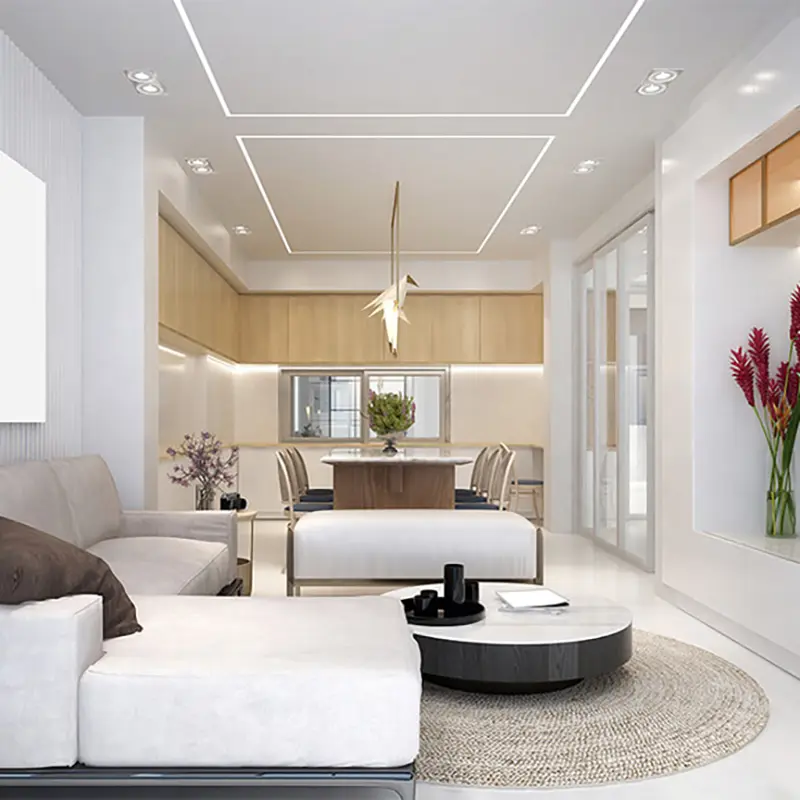
In the lighting world, minor differences can transform spaces, influencing aesthetics and how they’re experienced and perceived. The choice between 3000K and 4000K lighting, though just 1000K apart, offers divergent ambiance and functionality. Let’s demystify these distinctions, clarifying which is ideal for your space.
Unraveling 3000K Lighting
For those yearning for the embrace of an intimate, warm ambiance, 3000K lighting is your trusted ally. This particular temperature mirrors the allure of the early evening sun — the moment when the world seems to be drenched in a soft, golden hue.
Visual Appearance and Warmth
When rooms are bathed in 3000K light, the environment transforms. The amber undertones shine through, making wooden furnishings appear alive and richer. Colors appear more saturated yet softened, giving rooms an almost painterly feel. It’s akin to wrapping your space in a cozy blanket, offering comfort, warmth, and an inviting aura.
Is 3000K Warm or Cool?
There’s no room for ambiguity here — 3000K lighting is unequivocally warm. Its position on the Kelvin scale dictates its character. Such lighting doesn’t just illuminate; it cocoons, fosters relaxation, and exudes tranquility. Hence, it naturally gravitates towards areas where calm and rest are paramount.
Diving Deep into 4000K Lighting
Stepping into the world of 4000K lighting introduces you to a realm of balance. Think of it as the poised middle child, straddling the boundaries between warm and cool and offering the best of both worlds.
Visual Appeal and Neutrality
The most discerning feature of 4000K lighting is its pristine neutrality. It provides clarity reminiscent of the moments when day meets night. The light emitted appears brighter, almost crisp, rendering whites in their most actual form. Spaces feel more expansive, walls recede, and rooms breathe freely under its influence.
Debunking Myths: Is 4000K too bright?
When debating the brightness of 4000K, one must step away from Kelvins and focus on lumens — the accurate measure of light intensity. There’s a misconception that 4000K lighting, being neutral, might be too intense for comfort. However, brightness isn’t dictated by its color temperature but by lumens. When integrated correctly, 4000K provides adequate illumination without being overpowering. It offers a balanced brightness, ensuring spaces are well-lit without the harshness that strains the eyes.
In summary, the distinction between 3000K and 4000K goes beyond mere numbers. It’s about capturing the essence of a space, aligning with its purpose, and creating atmospheres that resonate with the inhabitants. Understanding these color temperatures is pivotal in creating a sanctuary of relaxation or a hub of activity.
The Interplay Between Light Temperature and Human Perception
Peeling back the layers of lighting doesn’t just uncover aesthetic and functional facets. Delving deeper, light temperature significantly influences our perceptions, emotions, and physical well-being. By understanding this dynamic, we can harness the power of lighting to foster environments that resonate with our sense of sight and our psyche.
The Influence on Visual Comfort
Have you ever walked into a room and felt an immediate sense of visual tranquility? Or you’ve worked under lights that made the text seem sharper and colors more vivid. That’s the magic of light temperature at work, shaping visual comfort.
Clarity in lighting isn’t just about making spaces look good; it’s about optimizing them for the human eye. In areas where precision is needed — think reading, crafting, or detailed manual tasks — lighting plays a pivotal role. It’s here that 4000K truly shines. Its neutral brightness offers an uncompromised clarity that reduces the need for our eyes to work overtime, minimizing eye strain. Such environments allow individuals to work efficiently, maintain their focus, and reduce the risks associated with visual fatigue.
Psychological and Mood Effects
Beyond the physical, the psychological realm is deeply entwined with lighting. Our surroundings, particularly their lighting, act as subtle cues, influencing our emotional states and cognitive processes. Warm lights, with their gentle glow, soothe the human mind. This is why places of relaxation, such as living rooms or spa retreats, often lean towards 3000K lighting. It’s reminiscent of the comforting warmth of the sunset, lulling the brain into a calm state and preparing it for rest.
Conversely, neutral to cool lights act as a stimulant. These lights mimic the energizing brightness of early morning or midday. Under their influence, the brain interprets it as a cue to be alert and active. This is the science behind why 4000K and higher temperatures are often preferred in workspaces, studios, or places demanding heightened attention.
Intriguingly, research has delved into this interplay of light and psychology. Studies have hinted at using light temperature to combat mood disorders, regulate sleep cycles, and enhance workplace productivity. While the lighting might seem like mere background, its psychological implications are profound, bridging the gap between ambiance and well-being.
Selecting the proper lighting is about more than decor or energy efficiency. It’s about aligning spaces with human needs, ensuring comfort, fostering well-being, and creating an environment where individuals can mentally and physically thrive.
Applications: Finding the Right Fit for Each Room
Designing a living space is a symphony of multiple elements, with lighting playing a crucial role as the conductor. The resonance of a room, its character, mood, and functionality, can be transformed by the simple choice of light temperature. Where do 3000K and 4000K find their place in this vast spectrum? Let’s embark on a room-by-room journey to illuminate the ideal applications for each.
3000K: Best Suited for Relaxing Spaces
In our bustling lives, spaces of solace where we rejuvenate, reflect, and connect are vital. This is where the warmth of 3000K comes into play. With its gentle hue reminiscent of the fading sun or the soft embrace of twilight, 3000K finds its niche in rooms dedicated to relaxation and connection.
リビングルーム

Imagine settling down in your living room after a long day, the soft luminescence of 3000K enveloping you, reminiscent of golden sunsets or the gentle flicker of candlelight. Living rooms are more than just spaces – they are the tapestries where life unfolds, stories are shared, laughter resonates, and bonds are strengthened. The lighting should mirror these sentiments. With a 3000K setting, living rooms transform into welcoming havens where every cushion seems plushier, every conversation feels heartier, and every moment becomes memorable.
ベッドルーム
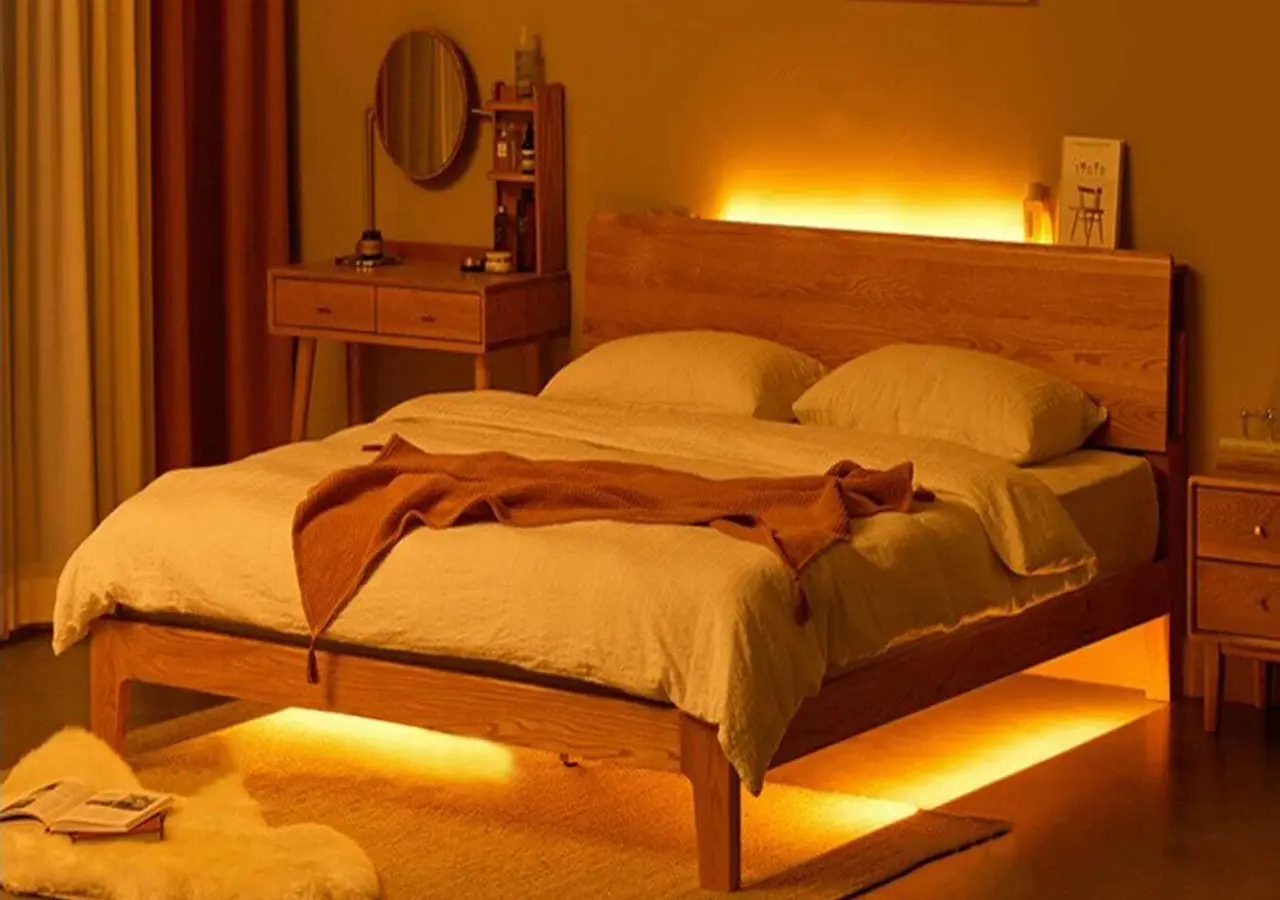
Retreats of personal solitude and bedrooms are our sanctuaries. They are where the world fades away, and we commune with our thoughts, dreams, and restful slumbers. The lighting in this space should pave the way for relaxation and tranquility. A 3000K light provides a gentle, warm embrace that subtly signals the body to unwind. There’s an underlying science: warmer lights, like the 3000K, can promote the production of melatonin, a hormone pivotal for sleep. Thus, not only does this lighting option aesthetically suit bedrooms, but it also aligns with the room’s purpose, fostering better sleep quality.
Dining Areas
Dining transcends the act of consuming food; it’s a ritual. The ambiance is integral, whether it’s a family dinner, a romantic date, or a pleasant gathering of friends. The soft amber glow of 3000K lighting accentuates the colors of food, making it look more sumptuous while casting a subtle golden sheen on the surroundings. Under this luminance, glasses clink a little softer, meals taste more affluent, and conversations easily flow. By adopting 3000K lighting in dining spaces, you are not merely setting a mood but curating an experience.
4000K: Excellence in Functional Spaces
Light’s tonality also evolves as we journey from the snug embrace of warm, cozy nooks to spaces that buzz with activity and precision. Here, the emphasis shifts from relaxation to functionality. The brilliance of 4000K emerges prominently in such spaces. Its neutral white demeanor, poised between the warmth of a setting sun and the crispness of noon, offers a perfect milieu for areas that command focus, precision, and clarity.
Kitchens: 3000K or 4000K?
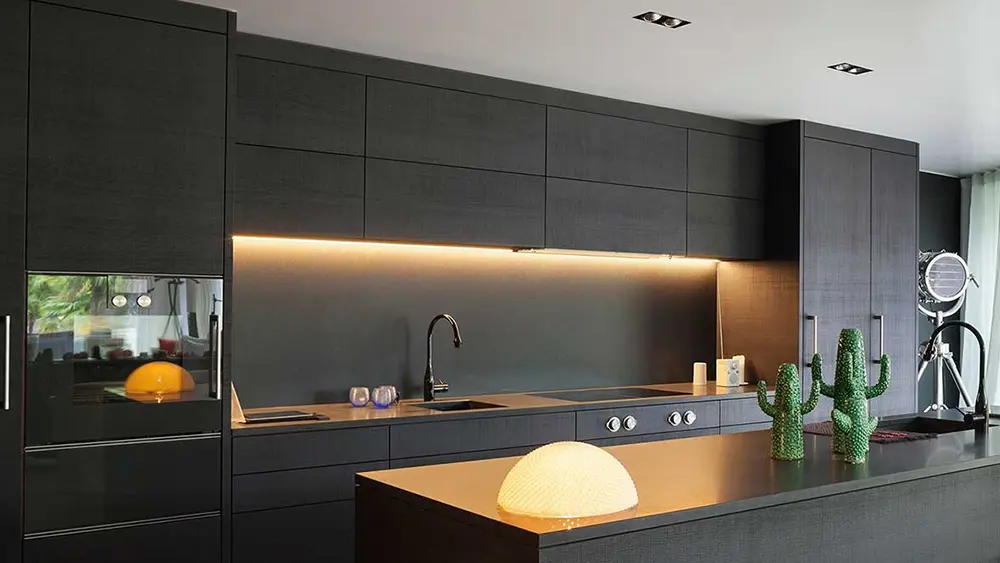
Ah, the kitchen! The culinary theater of every home. While it’s a hub of creativity and artistry, it’s equally a space of utility and function. Modern kitchens are evolving, seamlessly blending functionality with community and warmth. As open layouts become more prevalent, kitchens aren’t just about chopping and sautéing but also about sipping wine, engaging in hearty conversations, or even helping kids with homework.
So, how does one illuminate such multifaceted spaces? A mix is the answer. While the task-oriented areas, like countertops, stovetops, and sinks, can gain immensely from the sharpness of 4000K, the dining nooks, breakfast counters, or islands can be caressed by the warm hug of 3000K. This blend provides optimal visibility for culinary tasks and ensures that the kitchen retains its inviting charm, welcoming one and all.
Home Offices
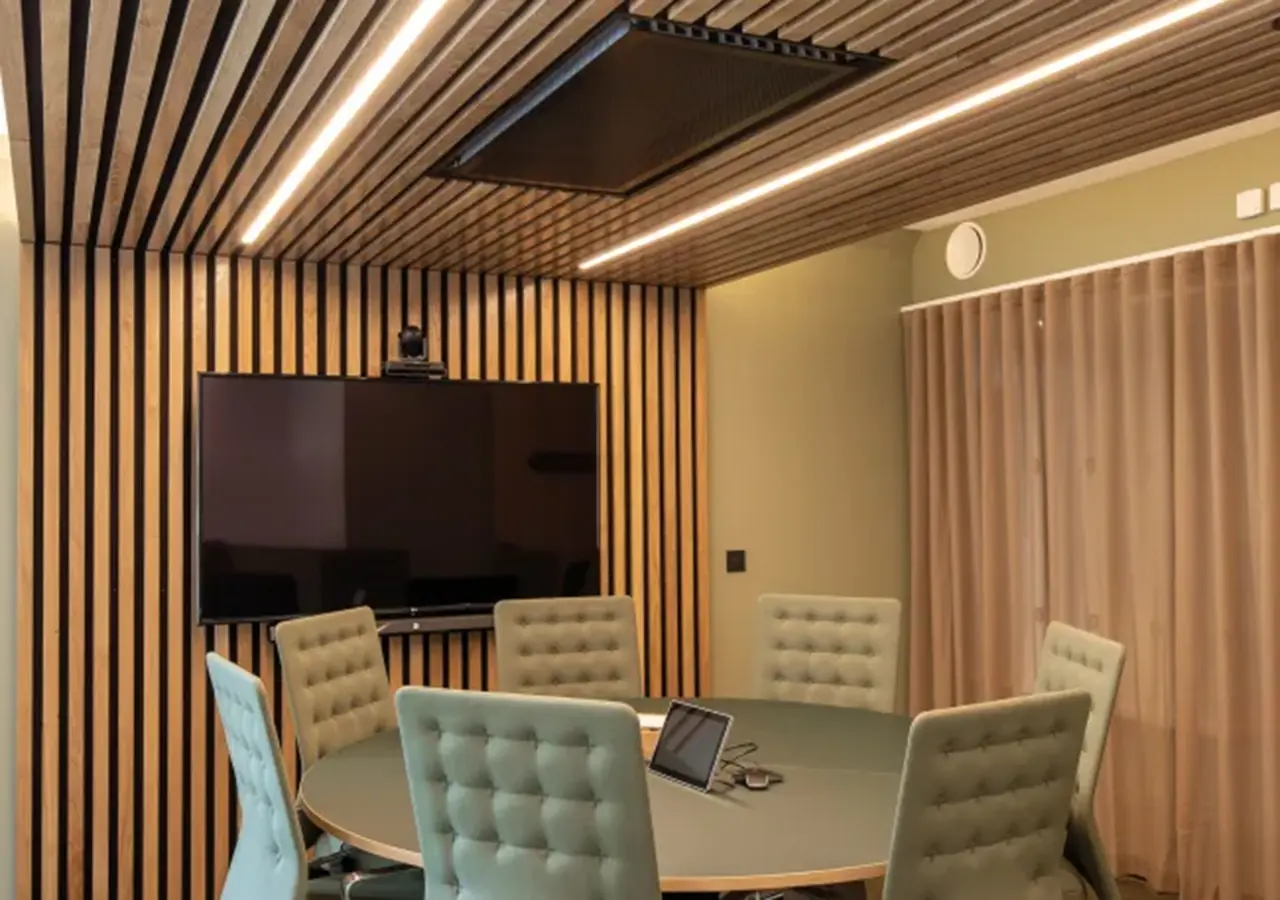
With the remote working culture growing, home offices have become pivotal in modern households. These are spaces where concentration, productivity, and motivation need to be at their peak. For activities like video conferencing, poring over documents, or navigating through digital tasks, a well-lit environment is a boon and a necessity. Enter 4000K. Its neutral, balanced illumination ensures that visual fatigue is kept at bay, even during those prolonged work sessions. Documents appear sharper, screens become less straining, and the overall ambiance fosters a mindset primed for efficiency. In essence, 4000K becomes an ally in your productivity endeavors.
Workspaces and Garages
Precision is paramount in workspaces and garages, whether a DIY project, crafting, woodworking, or vehicle repairs. And precision demands clear, unambiguous lighting. 4000K, with its impeccable balance, offers an environment where measurements are more accurate, the minutiae are discernible, and the safety of tasks is elevated. It’s not just about visibility; it’s about augmenting accuracy, efficiency, and security. So, when you’re in your workshop, tinkering with tools, or in your garage, navigating through the intricacies of machinery, the neutral radiance of 4000K ensures you’re both effective and safe.
As diverse as they are, functional spaces share a common thread – the quest for efficiency, clarity, and safety. In this endeavor, the measured neutrality of 4000K lighting emerges as an invaluable partner.
Energy Aspects and Sustainability
As our global community moves towards a more sustainable future, the energy aspects of every household item, including lighting, are under scrutiny. LED technology has surged, offering longevity and energy efficiency among the many lighting options available. But a question that often comes up is whether there’s a correlation between the color temperature of the light and its energy consumption.
Are 4000K LEDs Less Energy Efficient than 3000K LEDs?
Over the years, several myths have been propagated about lighting. One of the most common misconceptions is that cooler lights, like those operating at 4000K, inherently consume more energy than their warmer counterparts. Let’s bust this myth right away: The color temperature, be it warm or cool, has no direct correlation with the energy consumption of an LED light.
The true determinants of an LED’s energy efficiency are its build, design, and components’ quality. Thus, whether you’re considering a 3000K bulb or a 4000K one, your focus should be on the quality and reliability of the manufacturer. When sourced from reputable brands, both color temperatures can offer exceptional energy efficiency, ensuring that your environmental footprint is minimized without compromising ambiance.
Making the Choice: Factors to Consider
Deciding between 3000K and 4000K is more than just a game of numbers. It involves understanding the intricate dance between functionality, aesthetics, health implications, and adaptability.
The Utility and Functionality Angle
Each space in your home serves a unique purpose, and its lighting should align with its primary function. For spaces dedicated to relaxation or intimate conversations, the soft embrace of a 3000K light is the ideal choice. On the other hand, areas designed for activities that require precision, clarity, or focus might benefit exponentially from the neutral brilliance of 4000K.
Impact on Health and Well-being
The profound impact of lighting on our health is a rapidly emerging field of study. Our internal clocks, known as circadian rhythms, synchronize with external cues, the most significant being light. Exposure to cooler lights, especially late into the night, might signal our brains that it’s still daytime, leading to disrupted sleep cycles. Conversely, the warm hues of 3000K can mimic the natural progression of daylight into dusk, gently nudging our bodies toward rest.
Aesthetic Aspects: Room Decor, Size, and Colors
A room is more than just four walls. It’s a blend of its decor, size, colors, and the emotions it evokes. While the neutral, crisp tones of 4000K could brilliantly showcase contemporary, minimalist, or industrial-themed interiors, the warmth of 3000K could accentuate spaces with a touch of vintage charm, rustic elegance, or bohemian flair. Additionally, for those with smaller rooms, the expansive feel offered by 4000K makes spaces seem larger, while expansive rooms require the intimate touch of 3000K to feel homely and welcoming.
Adjusting Brightness: Delving into Dimming Options
The modern homeowner craves versatility; nothing offers it better than dimmable lights. Controlling the brightness allows one to adapt the ambiance based on mood, activity, or time of day. Whether setting a romantic mood or creating a focused workspace, adjustable lights rise to the occasion, making them an indispensable asset.
CCT Adjustable Lights: Are They a Better Choice?

Imagine possessing the ability to transition from the cozy warmth of 3000K to the neutral precision of 4000K at the flick of a switch. Correlated Color Temperature (CCT) adjustable lights make this a reality. By offering a spectrum of color temperatures, these lights provide unparalleled flexibility. Whether you’re gearing up for a productive day, hosting a dinner party, or winding down with a book, CCT adjustable lights ensure your environment is always in perfect harmony with your mood.
Selecting the perfect lighting goes beyond lumens and Kelvins. It’s an art blending functionality, aesthetics, and well-being into a radiant symphony. And in this journey, knowledge is your most illuminating companion.
4000k vs 3000k: Real-world Feedback
Deciphering the maze of lighting options is one thing, but hearing directly from homeowners who’ve lived the experience brings a level of authenticity that charts and graphs can’t offer. Let’s delve into the personal anecdotes of two individuals who have firmly placed their bets on either side of the 3000K and 4000K divide.
4000K Advocates: What Makes Them Tick?
Conversely, functionality trumps coziness for professionals who’ve molded part of their homes into workspaces. James, a freelance designer with an eye for detail, has dedicated an entire section of his home to his studio. The choice of lighting? A resounding vote for 4000K. “When dealing with designs, color accuracy is paramount,” James elaborates. “4000K bulbs illuminate my workspace, allowing me to perceive colors in their truest form. There’s a sharpness, a clarity that ensures I’m always on top of my game, delivering impeccable designs every time.”
The Lure of 3000K: Success Stories
For many, home is a refuge, a safe space where the world’s weight melts away. Emma, a homeowner hailing from the drizzly expanses of Seattle, has always envisioned her abode as a cocoon of warmth. “There’s a certain magic about coming home,” Emma muses. “Especially after those typically gray Seattle days. With 3000K lighting, my living spaces are transformed into this cozy retreat. It’s like getting wrapped up in a warm blanket, sipping on a cup of cocoa. It’s the gentle embrace I yearn for at the end of a hectic day.”
Broadening the Scope: Additional Comparisons
Moving beyond 3000K and 4000K, there’s a broader spectrum of color temperatures catering to specific needs and environments.
3000K vs 5000K vs 6000K
As we inch closer to the 5000K and 6000K marks, the lights begin to emulate the bright brilliance of natural daylight. These color temperatures shine with unparalleled clarity, making every detail pop. However, a word of caution: while they’re perfect for areas that necessitate pinpoint precision, they might appear too stark or clinical in more intimate settings. Think of spaces like photography studios, architectural drafting rooms, or any place that seeks to replicate the luminosity of the outdoors; these are where 5000K to 6000K lights truly excel.
Understanding 3500K vs 4000K: Bridging the Gap
Between the heartwarming embrace of 3000K and the balanced neutrality of 4000K lies the often-overlooked 3500K. This color temperature marries the best of both worlds. Imagine a space where you wish for the warmth and comfort of a 3000K ambiance but yearn for more clarity. A room where young minds grapple with academics or where crafters indulge in their creative pursuits. The 3500K lights shine brightest in such settings, offering a harmonious blend of warmth and clarity that’s hard to resist.
Lighting, while often relegated to the realm of utility, plays a pivotal role in shaping our experiences, moods, and perceptions. These real-world accounts and nuanced comparisons serve as guiding beacons, ensuring your lighting choices resonate perfectly with your unique needs.
FAQs: Resolving Common Queries
In the dynamic world of lighting, questions are aplenty. Here are some of the most pressing inquiries from homeowners and lighting enthusiasts alike, answered for clarity and confidence in your choices.
What’s the Real Difference Between 3000K and 4000K in Simple Terms?
At its essence, 3000K emits a warm, cozy glow reminiscent of a relaxing evening, while 4000K provides a neutral, clear light that brightens up spaces, making them feel more open.
Does Light Temperature Affect Energy Efficiency?
Not necessarily. The energy efficiency of LEDs is determined more by their build and quality than their color temperature. Both 3000K and 4000K can be energy-efficient when crafted with quality.
How do 5000K and 6000K Compare with 3000K and 4000K?
5000K and 6000K are closer to natural daylight, offering stellar clarity. They are ideal for spaces requiring precise illumination or those emulating outdoor environments. However, they might feel too stark for cozy, intimate settings.
For Home Decor: 3000K or 4000K?
It depends on your decor theme. While 4000K complements modern, minimalist styles effectively, 3000K accentuates the charm of vintage, rustic, or warm-themed interiors.
Is There a Middle Ground Between 3000K and 4000K?
Absolutely! 3500K bridges the gap, offering a harmonious blend of warmth and clarity, making it a perfect choice for spaces like study rooms or crafting areas.
How Crucial is Dimmability in Modern Lighting?
Dimmability offers versatility. You can cater to different moods and tasks with adjustable lights, making them versatile in crafting the desired ambiance.
What Do Real Homeowners Say About 3000K?
Many homeowners, like Emma from Seattle, love the warmth and coziness that 3000K offers, equating it to a comforting embrace after a tiring day.
Are 4000K Lights Just for Workspaces?
While they excel in workspaces due to their clarity, they’re not limited to them. Their neutral brightness can be ideal for any space that benefits from clear illumination, including certain communal areas like modern kitchens.
What’s the Deal with CCT Adjustable Lights?
Correlated Color Temperature (CCT) adjustable lights offer flexibility, allowing homeowners to switch between different color temperatures. They’re excellent for those who tailor their space’s ambiance without committing to a single temperature.
Are Cooler Lights Bad for Sleep Patterns?
Excessive exposure to cooler lights, especially late at night, can disrupt sleep patterns. It’s always good to tone to warmer lights as bedtime approaches to help the body wind down.
結論
Crafting the perfect home lighting experience isn’t about adhering to strict rules but understanding the subtleties of each space and its intended use. Whether you lean towards the cozy embrace of 3000K or the neutral clarity of 4000K, the right choice always aligns with the heart of the space and its inhabitants. As homes continue to evolve, so does the realm of lighting. Being informed allows homeowners to craft areas that aren’t just visually stunning but also emotionally resonant.
In the world of lighting, precision, and quality stand paramount. ユニトップ, established in 2005, has carved its niche as one of China’s most esteemed LEDストリップライト manufacturers. As you ponder your lighting choices, remember that expert advice is just a click away. For all your LED strip light inquiries and needs, trust in the enduring legacy and expertise of Unitop.
関連記事

トムは現在、セールスマネージャーとして ユニトップ(中国)有限公司.になっているそうです。 LED照明 2005年入社。セールス&マーケティング、工場管理の専門家である。ボディビルが好きで、熱狂的なアップルファンでもある!努力家で、新しいことを学び、試すのが大好きです。
電子メール tom@unitopledstrip.com WhatsAppです: +86-18680307140



返信を残す
ディスカッションに参加したい方はこちらお気軽にご投稿ください!