
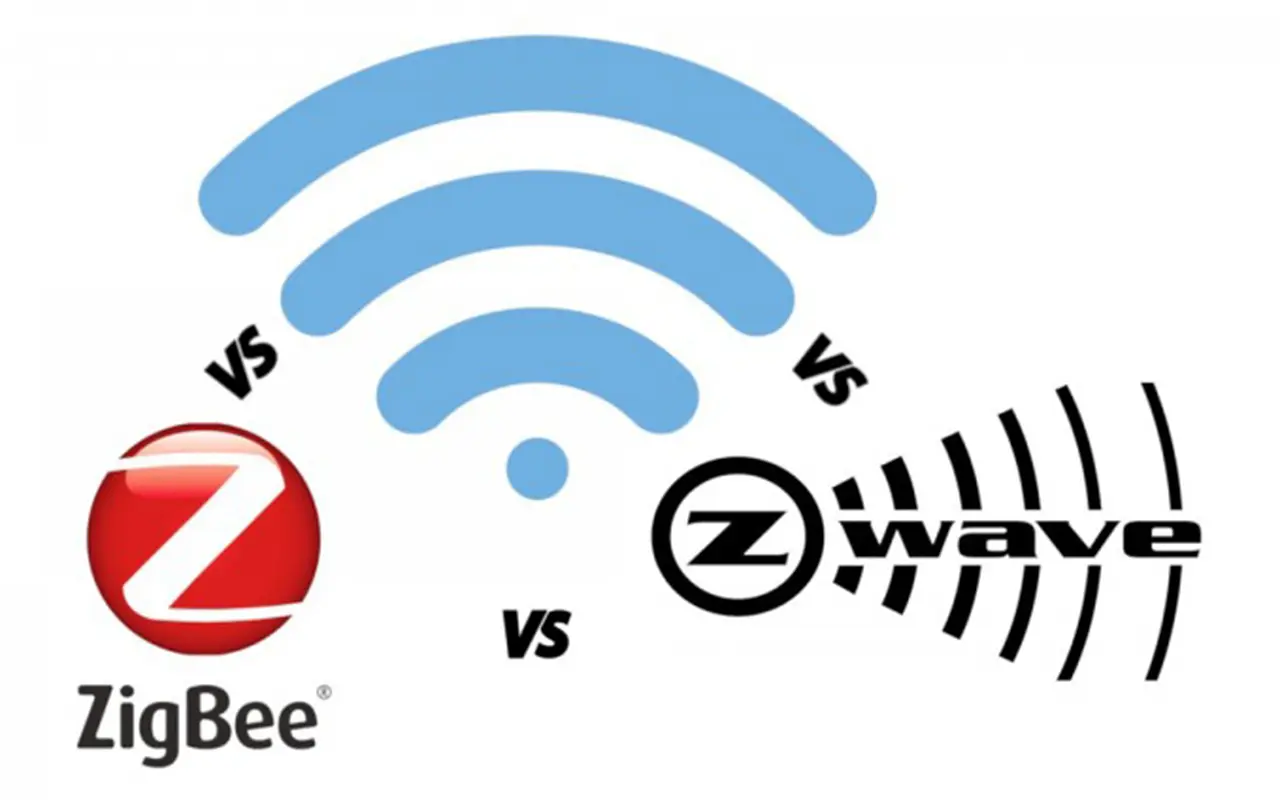
Diving into the smart home realm is like stepping into a futuristic world where convenience, efficiency, and security are at your fingertips. With a tap or a voice command, you can control lights, regulate thermostats, and secure your home. Yet, before you traverse this smart home journey, the road forks at one critical point: choosing the proper communication protocol.
The heartbeats of any smart home are the communication protocols that ensure your devices speak the same language. The decision between Z-Wave, Zigbee, and WiFi can significantly impact your smart home experience, making it a pivot upon which your smart home’s success swings.
Capire le basi
The ABCs of Z-Wave, Zigbee, and WiFi
Delving deeper into the basics:
Z-Wave: Heralding a robust wireless communication protocol, Z-Wave orchestrates a mesh network where each device or node can relay signals across the ecosystem. This mesh network fortifies the communication backbone of your smart home, ensuring signals find their way even in a congested environment. On a sub-1GHz band, Z-Wave avoids the crowded 2.4GHz spectrum, reducing interference and promoting a more stable connection.
Zigbee: While sharing the mesh networking pedigree with Z-Wave, Zigbee operates on the 2.4GHz frequency. It’s an open standard protocol that engenders a broader adoption among manufacturers, fostering a diverse and competitive market. The higher frequency offers an edge in data transmission rates and range, albeit at the expense of potential interference within the crowded 2.4GHz spectrum.
WiFi: The quintessential household name in wireless connectivity. Unlike Z-Wave and Zigbee, WiFi doesn’t naturally support mesh networking, though modern advancements have birthed mesh WiFi systems. Known for high-speed internet connectivity, WiFi is a juggernaut in data transmission rates, making it a suitable choice for bandwidth-intensive smart home applications.
Features Comparison
Speed, Range, and Power Consumption
To encapsulate the differences succinctly, consider the following expanded table:
| Caratteristica | Z-Wave | Zigbee | WiFi |
|---|---|---|---|
| Speed | Low (up to 100kbps) | Moderate (up to 250kbps) | High (up to 1300Mbps) |
| Range | Medium (up to 100 meters) | High (up to 200 meters) | High (variable, dependent on router and environmental factors) |
| Consumo di energia | Low (ideal for battery-operated devices) | Low (excellent for power-constrained setups) | High (more suited for powered devices) |
Ecosystem and Device Compatibility
The smart home landscape is a bustling ecosystem with myriad devices and platforms. WiFi, with its universal appeal, stands tall in device compatibility. Its widespread adoption has spurred manufacturers to craft an extensive array of smart gadgets ready to meld into your daily routine seamlessly.
On the flip side, although Z-Wave and Zigbee might appear as the underdogs, they have carved a niche in fostering a seamless dialogue among devices within a controlled environment. These protocols conjure a cohesive network through dedicated hubs where devices intercommunicate efficiently, regardless of the brand or manufacturer. This orchestrated communication paves the way for a more integrated and reliable smart home experience, albeit with a steeper learning curve for the uninitiated. With the right hub bridging the conversation, Z-Wave and Zigbee can become powerful conduits for your smart home aspirations.
Z-Wave: The Silent Operator
A Deep Dive into Z-Wave
Z-Wave, the unsung hero in smart home protocols, operates with a quiet efficacy that often goes unnoticed. At the heart of its prowess lies the mesh network capability, a feature that amplifies signal reliability across the expanse of your home. This distinctive characteristic orchestrates a symphony of communication among devices, rendering Z-Wave a robust choice for those yearning for a coherent, responsive smart home setup. The network’s ability to self-heal, rerouting communications if a node goes offline, further fortifies its reliability. Moreover, its operation on a dedicated sub-1GHz frequency band sidesteps the traffic common in the 2.4GHz band, thereby minimizing interference and ensuring a smooth dialogue among your smart gadgets.
Pro e contro
Pro:
Mesh Network Architecture: Enhances communication reliability, ensuring signals find their way even in challenging environments.
Dedicated Frequency Band: Operates in a less congested frequency, reducing interference and promoting stable connections.
Contro:
Device Compatibility: While growing, the ecosystem may not be as expansive as WiFi, potentially limiting your choice of devices.
Zigbee: The Efficient Performer
Uncovering Zigbee
Zigbee emerges as an efficient performer in the bustling theatre of smart home protocols. With its open standard framework and high-frequency operation, Zigbee promises speed and invites a broader spectrum of devices into its fold. Much like its counterpart Z-Wave, Zigbee’s mesh network is the linchpin that ensures steadfast communication among devices, establishing a stable, reliable smart home ecosystem. Moreover, its ability to support many devices in a single network makes it a scalable choice for burgeoning smart homes.
Pro e contro
Pro:
Open Standard: Invites many devices, fostering a rich, versatile ecosystem.
Mesh Network Infrastructure: Promotes reliable communication, ensuring a seamless device dialogue.
Contro:
Higher Frequency Operation: Operating in the crowded 2.4GHz band could result in interference, potentially affecting communication quality.
WiFi: The Familiar Face
WiFi Connectivity Unveiled
WiFi, the ubiquitous herald of wireless connectivity, must be introduced in modern households. Its high-speed connectivity is a boon for bandwidth-intensive tasks, making it a quintessential choice for streaming, gaming, and real-time applications within a smart home environment. However, the absence of a native mesh networking feature could wrench the seamless communication dream, especially in a densely populated smart device environment.
Pro e contro
Pro:
High-Speed Connectivity: The hallmark of WiFi, ideal for bandwidth-guzzling applications, ensuring a smooth, lag-free experience.
Ubiquitous Adoption: With a vast sea of compatible devices, WiFi’s extensive ecosystem is a lure for those seeking a hassle-free smart home setup.
Contro:
Lack of Native Mesh Networking: This could be a bottleneck in ensuring seamless communication across a swarm of smart devices, necessitating additional hardware or mesh WiFi systems for bridging the gap.
Security Aspects
Safeguarding Your Smart Home
Security remains the cornerstone of a robust smart home setup. Each protocol, namely Z-Wave, Zigbee, and WiFi, introduces its own set of security frameworks. Z-Wave and Zigbee operate within a centralized hub, potentially minimizing the risks associated with cloud-based operations often seen in WiFi setups. This hub-centric operation adds a layer of insulation against external threats, creating a fortified environment for your smart home devices to interact. Conversely, with its cloud-centric operation, WiFi may expose your smart home setup to many external threats if not properly secured. Ensuring a robust encryption mechanism and employing secure password practices could bolster the security infrastructure of your WiFi-enabled smart home.
Use Cases and Applications: Real-World Protocol Performance
Moving beyond the theoretical, the real-world performance of these protocols showcases their true mettle. For instance, the mesh networking prowess of Z-Wave could be a game-changer in expansive homes where signal reliability is crucial. It shines brightly in environments where obstacles and distances could impede communication among devices. On the other hand, Zigbee’s higher frequency and open standard could be instrumental in settings bustling with a variety of smart gadgets from different manufacturers. Meanwhile, with its high-speed connectivity, WiFi emerges as the protocol of choice for bandwidth-intensive tasks, ensuring a seamless streaming or gaming experience in your smart home.
Deciding the Best Fit: Zigbee, Z-Wave, or WiFi?
Tailoring Your Smart Home Setup
The crux of the decision hinges on your personal preferences and the specific demands of your smart home setup. Are you aiming for a cloud-less control with a mesh network that fortifies device communication? Z-Wave or Zigbee could be your loyal allies. Or are you eyeing high-speed connectivity coupled with broader device compatibility? WiFi might be your go-to protocol. Each protocol carves its niche within the smart home ecosystem, catering to diverse needs and preferences.
Future Trends in Smart Home Connectivity: Upcoming Advances and What They Mean
The horizon of smart home connectivity is aglow with promise. Advancements like 5G and 6E WiFi are poised to redefine the contours of smart home protocols. These technological leaps could blur the existing demarcation among the protocols, ushering in a new epoch of smart home connectivity. The integration of faster, more reliable connectivity options could see a convergence of the best features among these protocols, spawning a new generation of smart home setups that are more secure, reliable, and versatile.
Hub Compatibility and Entry Barriers
Bridging Devices Seamlessly
The compatibility among devices is at the heart of a harmonious smart home setup. The transition towards more universal hubs, capable of communicating with many devices irrespective of the protocol, stands as a testament to a future where entry barriers are significantly lowered. This could open the floodgates to a seamless smart home experience, where devices communicate effortlessly, transcending the boundaries of different protocols.
Evaluating Entry Costs
The initial foray into a smart home setup comes with its own set of financial considerations. While WiFi devices typically entice with a lower price tag, the total cost of ownership could escalate due to potential replacements or upgrades necessitated over time. Conversely, the upfront investment in Z-Wave or Zigbee could be higher. Still, their reliable and stable operation may render them more cost-effective in the long run, presenting a compelling case for their adoption.
Domande frequenti
The journey towards a smart home is dotted with questions. Here, we address some common queries to enlighten your path further:
Which protocol provides the most extensive range for device communication?
Zigbee and WiFi generally edge out with a superior range compared to Z-Wave. With its high-speed connectivity, WiFi often extends a broad range, making it a suitable choice for larger spaces. Meanwhile, Zigbee’s high-frequency operation also gives it a commendable range, ensuring devices stay connected over extended distances.
How do these protocols fare against interference issues?
Z-Wave reduces interference issues thanks to its unique frequency of operation at 908.42 MHz, which is considerably lower than the crowded 2.4 GHz spectrum where Zigbee and most WiFi smart home devices operate. This unique frequency allocation allows Z-Wave to provide a smoother operation without common interference issues.
Is it possible to integrate multiple protocols within a single smart home setup?
Absolutely! With the right hub, you can bridge devices operating on different protocols, creating a harmonious smart home ecosystem. Hubs like Hubitat, Homeseer, or OpenHab are excellent choices for integrating multiple protocols, ensuring seamless communication among your smart home devices.
Which protocol is more power-efficient?
When it comes to power efficiency, Z-Wave and Zigbee take the lead. Both protocols have been designed to be low-power solutions, ensuring your smart home operates efficiently without draining your resources. This is particularly beneficial in a setup with numerous smart devices.
How does WiFi’s high-speed connectivity impact my smart home setup?
WiFi’s high-speed connectivity is a boon for bandwidth-intensive tasks. Whether streaming high-definition videos or maintaining smooth communication among smart home devices, WiFi ensures a seamless experience. However, it’s essential to have a robust WiFi network to handle the load, ensuring your smart home runs smoothly.
Is the lack of a mesh network a drawback for WiFi in a smart home environment?
The absence of a mesh network in WiFi can be seen as a drawback, especially in densely populated smart device environments. Unlike Z-Wave and Zigbee, WiFi doesn’t have the mesh networking feature that enhances signal reliability across devices, which could lead to communication hiccups in a bustling smart home setup.
Which protocol has broader device compatibility?
WiFi generally boasts broader device compatibility due to its ubiquitous adoption. Many smart home gadgets have built-in WiFi connectivity, making it a more universal choice. However, Zigbee’s open standard also fosters a reasonable degree of device compatibility.
How do Z-Wave and Zigbee ensure reliable communication in a smart home setup?
Both Z-Wave and Zigbee employ mesh networking to fortify communication among devices. In a mesh network, signals can hop from one device to another, enhancing communication reliability, especially in expansive or obstacle-rich environments.
What security measures are intrinsic to these protocols?
Z-Wave and Zigbee often operate within a centralized hub, providing a layer of insulation against external threats. On the other hand, cloud-centric WiFi may require robust encryption mechanisms and secure password practices to bolster its security infrastructure.
Are there upcoming technologies that could impact the protocol choice for smart home setups?
The advent of technologies like 5G and 6E WiFi are poised to reshape the smart home connectivity landscape. These advancements could merge the best features among these protocols, quickly leading to more secure, reliable, and versatile smart home setups.
Conclusione
The expedition from a conventional to a smart home is an exhilarating yet meticulous endeavor. The choice between Z-Wave, Zigbee, and WiFi isn’t black and white but a spectrum of considerations, including speed, range, device compatibility, and security. Your unique circumstances, preferences, and the specific demands of your smart home setup will guide your choice.
The roadmap to a smart home is personal. Here’s a breakdown to help tailor your decision:
For the Tech-Savvy: If you revel in tinkering and optimizing, the controlled environment of Z-Wave or Zigbee could be your playground.
For the Budget-Conscious: WiFi’s lower entry cost and familiar setup could be an attractive proposition.
For the Future-Forward: Keep an eye on the horizon. The advent of technologies like 5G and 6E WiFi might bring new players or amalgamate the existing protocols, reshaping the smart home landscape.
Your smart home is an extension of your lifestyle, and the proper communication protocol is the cornerstone that will either elevate or hinder your experience. So, weigh your options, envision your ideal smart home setup, and let your choice of protocol be the catalyst that propels you into a future of endless smart possibilities.

Tom è ora il Direttore Vendite di Unitop (Cina) Co., Limited. È stato nella Illuminazione a LED industria dal 2005. È un esperto di vendite e marketing e di gestione della fabbrica. Gli piace il bodybuilding ed è anche un fan sfegatato di Apple! È un lavoratore instancabile e ama imparare e provare cose nuove.
Email: tom@unitopledstrip.com WhatsApp: +86-18680307140




Lascia un Commento
Vuoi partecipare alla discussione?Sentitevi liberi di contribuire!