
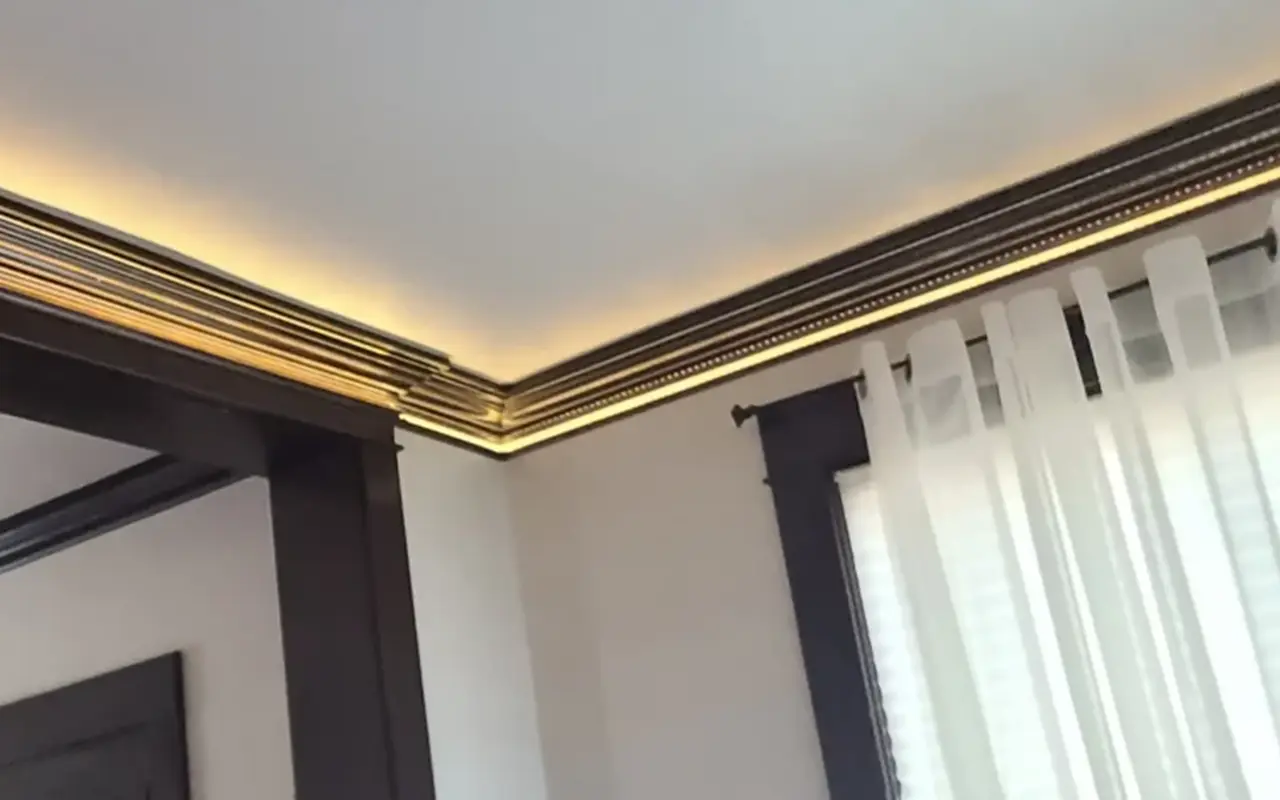
LED strip lights are now an important part of lighting in modern architecture. LED strip lights are flexible and can be used to make homes cozy, improve the look of businesses, or light up big industrial spaces. But even with their brilliance, they face a tricky problem—LED strip voltage drop. This can make your lighting less efficient and inconsistent, causing unnecessary headaches.
This guide looks at the topic and gives solutions for this overlooked problem.
Demystifying Voltage Drop: A Clear-cut Definition
Voltage drop is when electrical potential decreases as electricity moves through a conductor. While this might sound like technical jargon, it has real-world implications. LED strip lights may have uneven lighting due to voltage drop, causing one end to be less bright. Voltage drop affects the strip’s appearance, reduces efficiency, and increases energy expenses.
Why Does LED Strip Voltage Drop Happen?
Resistance Factors
When electricity flows through any material, it encounters resistance. Imagine water flowing through a hose. A longer hose causes more friction, reducing the force at the exit. The same principle applies to electrical currents in LED strip lights. With longer strips, resistance increases, exacerbating the voltage drop. So, it’s not just about the number of LEDs in the strip. It’s also about how far the electrical current has to go.
Electrical Specifications
The size of the wire, known as the wire gauge, affects how much voltage is lost. If you use a wire gauge that is too small for your LED strip’s voltage and current needs, it will have more resistance. This will make the voltage drop worse. However, if you use a thicker wire, electricity flows better and less voltage is lost. To prevent voltage drops, make sure to check the wire gauge needs for your LED strip setup. Consult the product documentation or customer support for guidelines provided by most manufacturers.
Other Contributing Factors
Resistance and wire size affect voltage drop, but other variables also play a role. The speed of voltage spreading on the LED strip depends on its total electrical current. The thickness of the copper tracks in the PCB also has a role. Using thicker copper reduces voltage drop by handling more current effectively. To customize an LED setup or choose a strip for a high-demand application, you should check the copper thickness in the PCB. It can save you from headaches later.
Recognizing Symptoms: Signs of Voltage Drop in LED Strips
Visual Indicators
Not all signs of voltage drop are invisible; many are glaringly obvious if you know what to look for. Uneven brightness along the LED strip is a classic symptom. The first few LEDs look like bright stars while the last ones look dimmer and farther away. You may also notice inconsistent color mixing if you’ve chosen an RGB LED strip. One end has bright colors, but the other end might have faded colors, which can ruin your color scheme’s harmony.
Mesures d'efficacité
If your LED strip gets dimmer over time, it means it uses less power at the dim end. Lower consumption might sound good, but it’s a false economy. If some of your LED strip doesn’t work well because of voltage drop, the setup can be improved. Imagine driving a powerful car that can’t go fast because of a dirty air filter. It saves fuel, but doesn’t perform as intended.
Is LED Strip Voltage Drop Harmful?
Despite being associated with electrical hazards, LED strips typically do not cause safety issues. You won’t experience sparks or short circuits solely from this issue. However, it does pose long-term consequences. Over time, when voltage drops significantly, the strip can have “hot spots.” These spots have higher resistance and can get hotter. Using your LED strip too much can make it wear out faster and not last as long. If you don’t fix this problem, it can damage your lights over time.
How to Accurately Measure Voltage Drop?
The Multimeter Method
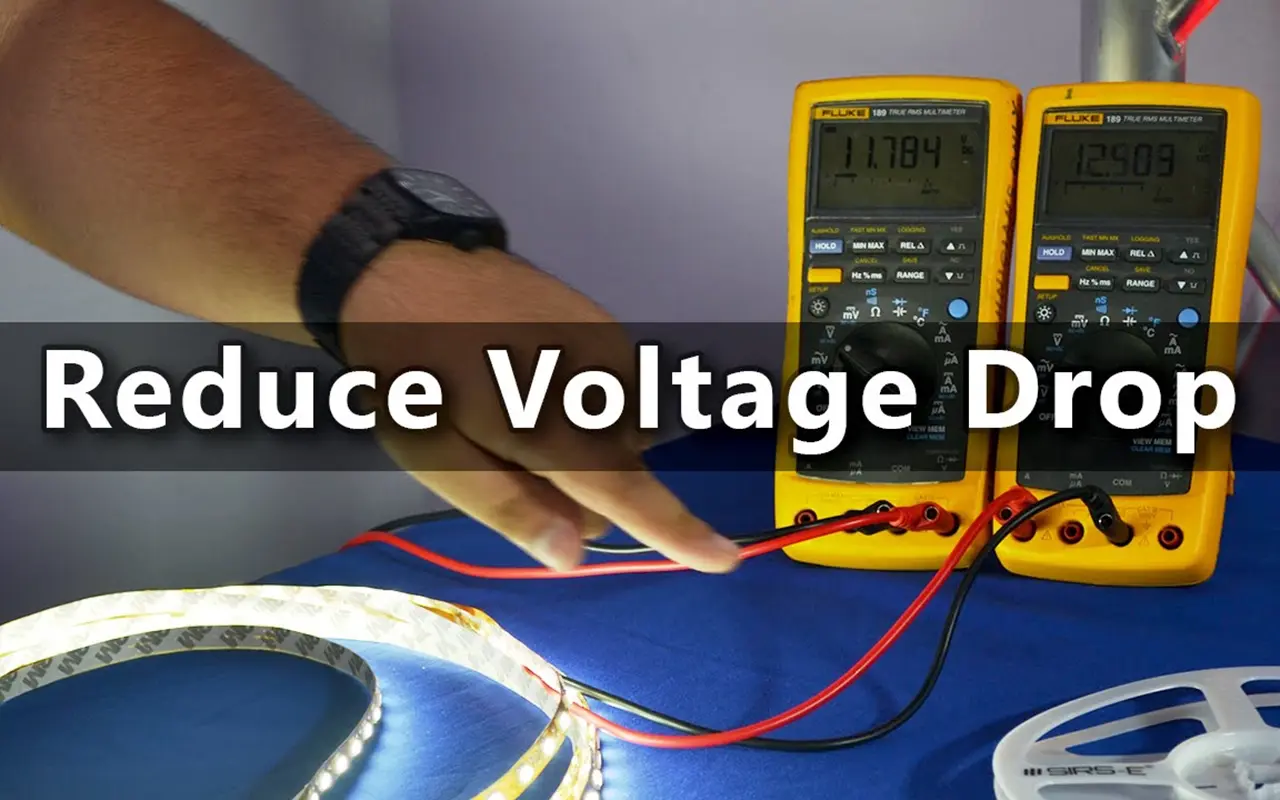
Measuring voltage drop isn’t as complicated as solving quantum physics. You can use a multimeter, a simple and effective tool, to do it. To proceed, connect one probe to the positive end and another to the negative end of your LED strip. Document the reading and compare it to the voltage at the power source. A disparity between the two values is a surefire sign of voltage drop. Multimeters are not just for diagnosing. They measure things, so you can adjust your setup for better performance.
Software Alternatives
If you want a modern way to calculate LED Voltage Drop, there are many online calculators. These tools offer more than just a one-off reading. They provide a detailed analysis, including the things that could cause the problem and how bad it is. Enter the details of your LED strip, such as length, type, and current. The software will do the difficult calculations, so you don’t have to worry about doing them by hand.
Effective Strategies to Minimize Voltage Drop
Power Supply Choices
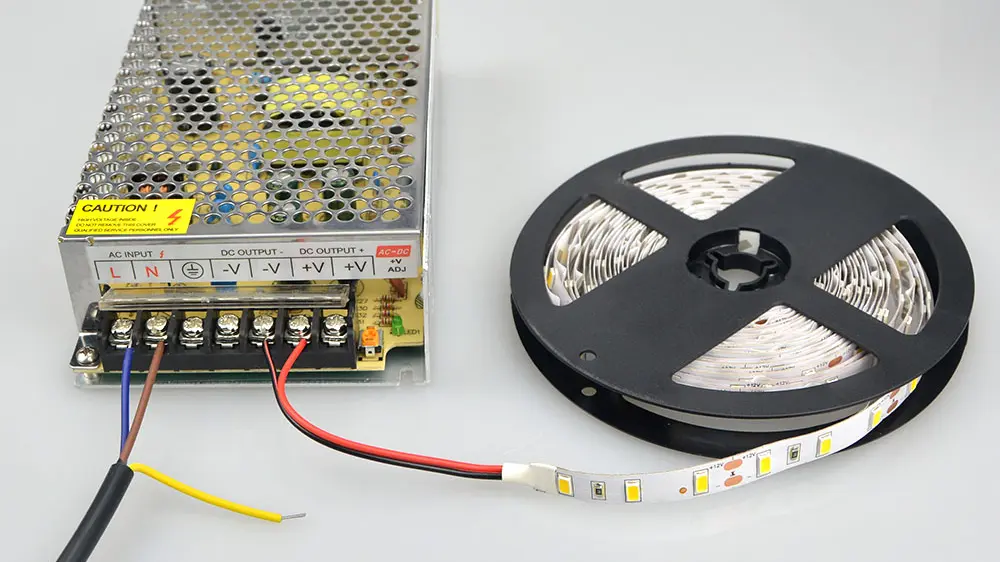
Your LED strip is only as good as the power supply that fuels it. To avoid voltage drop, select a power supply that has a higher wattage than the minimum required for your LED strip. Why? Supplies that don’t have enough power need to work more, which makes the strip more likely to have problems with voltage. Imagine hiring an athlete instead of an average person for heavy lifting. The athlete will complete the task with less effort and better efficiency.
Wire Gauge Wisdom
When mitigating voltage drop, wire gauge is far from trivial. Voltage drop charts are your cheat sheet for selecting the ideal wire gauge. You can use these charts to choose the right wire size based on current, length, and resistance. Remember, if you choose the wrong wire, it might be too weak or too thick, causing problems.
Advanced Techniques
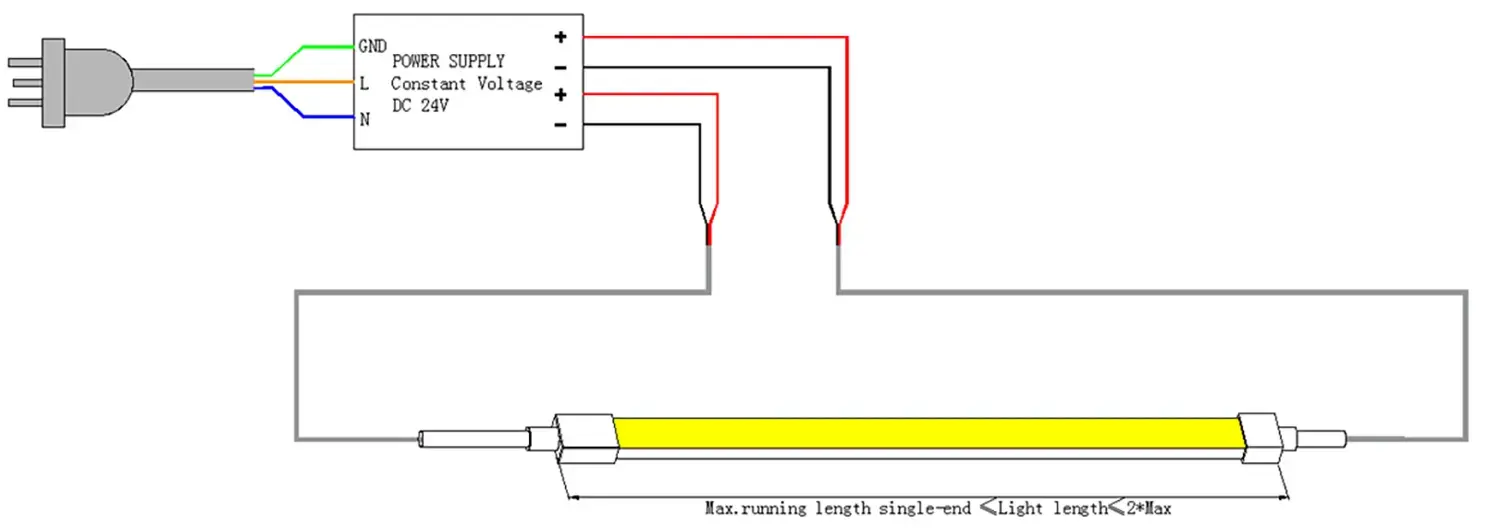
Remember to underestimate the power of advanced wiring techniques. Implementing parallel connections rather than series configurations facilitates a more even current distribution. To balance the load, try using a “dual-end” power strategy for longer LED strip runs. Supply voltage from both ends. Multiple power supplies can also be strategically placed at intervals for extra-long setups. If you can choose, pick a 24V LED strip instead of a 12V one; it costs more at first but has less voltage loss.
FAQs : Les réponses à vos questions
Is Voltage Drop a Universal Issue for All LED Strips?
Yes, the voltage drop phenomenon can affect nearly every type of LED strip to some extent. The severity depends on different factors. These include the quality of the LED strip, how it’s set up, and your installation.
How Often Should I Check for Voltage Drop?
To keep your LED strips looking and working well, make sure to check for voltage drops often. This is important for both how they look and how efficiently they work. Aim to conduct a thorough examination at least every 3 to 6 months.
Can Voltage Drop Affect the Lifespan of My LED Strip?
Absolutely. While it’s not a safety concern, voltage drops can wear down your LED strip over time. Ensuring proper voltage can extend the lifespan of your setup.
What are the Visual Symptoms of Voltage Drop?
If your LED strip dims at the end, has inconsistent colors, or flickers, it may be a voltage drop issue.
Is Software Necessary for Calculating Voltage Drop?
You don’t have to, but using software tools like LED Voltage Drop calculators can help. It gives a more accurate diagnosis and saves time, reducing mistakes.
Are Higher Voltage LED Strips Better for Minimizing Voltage Drop?
In general, 24V LED strips are better than 12V ones at preventing voltage drop. This is especially true for longer installations.
Does Wire Gauge Really Matter?
Yes, it does! Using the wrong wire size can make voltage drop worse and cause LED strip to fail early. To choose the best wire size, it’s important to check voltage drop charts.
Can Multiple Power Supplies Solve the Voltage Drop Problem?
Utilizing multiple power supplies can distribute the electrical load more effectively. It is a helpful strategy for minimizing voltage drop in extensive LED strip runs.
What’s the Role of PCB Thickness in Voltage Drop?
The copper’s thickness in the LED strip’s PCB affects voltage drop. Higher quality LED strips have thicker copper layers, reducing resistance and voltage drop.
Can I DIY My Way Out of Voltage Drop?
Yes, but proceed with caution. To improve your electrical system, use DIY solutions and remember to follow safety guidelines.
DIY Wire Sizing Guide
Calculate Required Wattage
Before you start setting up your LED strip, you need to figure out how much power it needs. Each LED strip type has a wattage-per-foot specification. Multiply this number by the entire strip length you plan to install. By doing this simple math, you can estimate the amount of power you need. This makes it easier to pick the right power supply.
Measure Strip-to-Driver Distance
The saying “distance makes the heart grow fonder” is not true for LED strip lighting. In this context, distance can be a nemesis, as it directly affects the wire gauge you’ll need. To avoid voltage loss, accurately measure the distance between your LED strip and power supply. The power supply is often called the ‘driver’ in LED terms. By knowing the distance and wattage, you can find the right wire gauge for the best voltage.
Select the Appropriate Wire Gauge
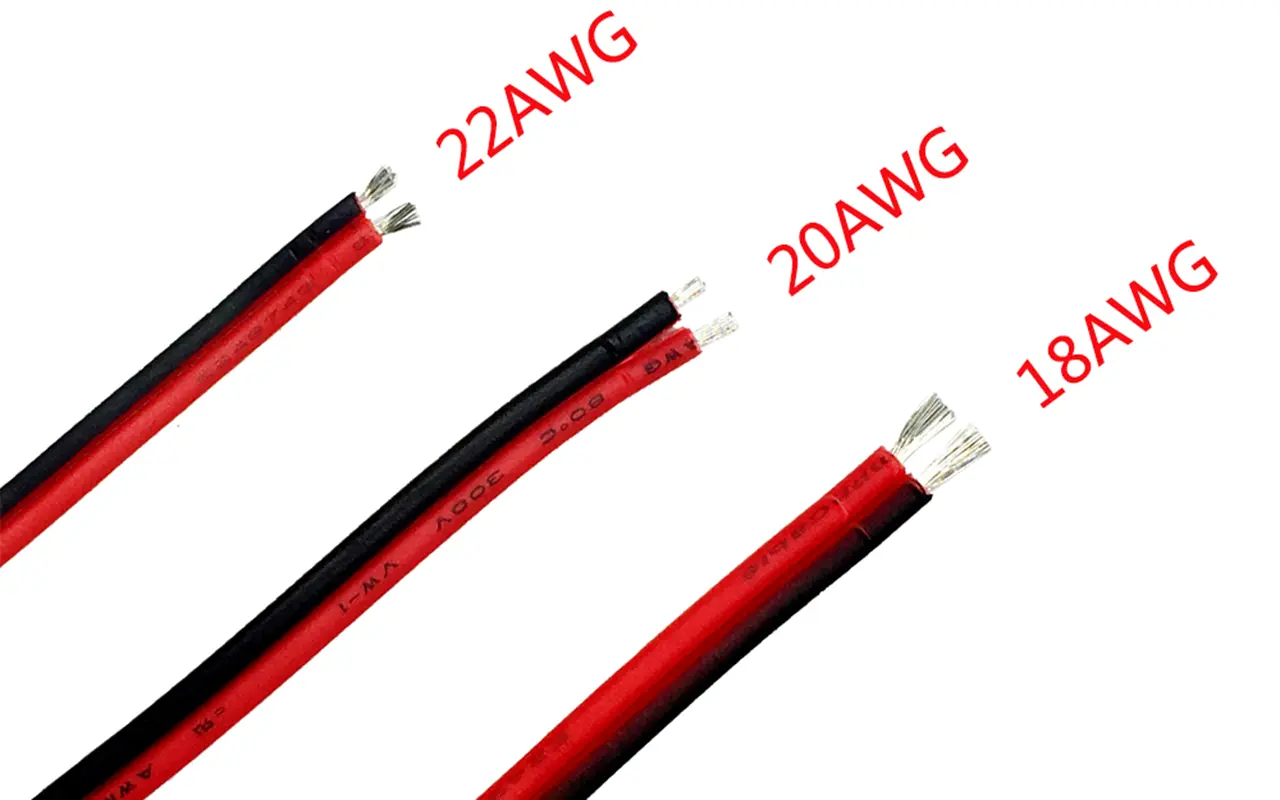
Poring over wire-sizing charts may not be the most exhilarating activity. Still, it’s an essential task for DIY LED strip installation. These charts help you find the right wire gauge size based on the wattage needed and distance from the strip to the driver. When you’ve found the sweet spot on the chart corresponding to your setup parameters, that’s your go-to wire gauge. Incorrect gauge causes problems, such as heat build-up and early LED strip failure. Remember this.
Conclusion
Voltage drop is like a riddle wrapped in an enigma. Understanding voltage drop gives you the power to face it, even if it feels overwhelming. Don’t let voltage drop ruin your carefully planned lighting scheme. You can turn your space into a beautiful haven that matches your vision. Use helpful guidelines and strategies.
Navigating the complexities of LED strip voltage drop need not be a daunting task. With the right knowledge and strategies, you can achieve optimal lighting performance. If you’re still in doubt, turn to the experts. Unitop is one of China’s leading manufacturers in Bandes lumineuses LED et Flexible à néon LED. For any further questions or tailored solutions, don’t hesitate to contactez-nous. Trust Unitop to illuminate your path to brilliant, consistent lighting.

Tom est maintenant le directeur des ventes de Unitop (China) Co., Limited. Il a été dans le Éclairage LED l'industrie depuis 2005. Il est expert en ventes et marketing, et en gestion d'usine. Il aime le bodybuilding, et il est aussi un fan fou d'Apple ! C'est un travailleur acharné qui aime apprendre et essayer de nouvelles choses.
Email : tom@unitopledstrip.com WhatsApp : +86-18680307140



Laisser un commentaire
Rejoindre la discussion?N’hésitez pas à contribuer !