
Embarking on a journey to redefine your space with LED strip lights? If you’ve ever asked yourself, “Can LED strip lights be hardwired?” you’re not alone. This blog post is here to demystify the process, providing a comprehensive guide and a fresh perspective on hardwiring LED strip lights.
Yes, LED strip lights can be hardwired. This process enables a stable and reliable power source for your lighting setup, thereby optimizing its functionality and longevity. Hardwiring enhances the efficiency of your LED strip lights and reduces the risk of connection failures, all while offering the flexibility to fit various settings.
But there’s more to LED strip light hardwiring than the simple answer. As you delve deeper into this article, you’ll gain a more detailed understanding of LED strip lights, why you should consider hardwiring them, where they can be installed, and how to ensure a safe installation.
So if you’re ready to light up your world in a new, energy-efficient, and aesthetically pleasing way, keep reading. You’ll find not only a solution to your query but also a pathway to becoming a well-informed consumer, ready to make the most out of your LED strip lights.
The Art and Science of Hardwiring LED Strip Lights
The beauty of hardwiring LED strip lights lies not only in the glowing outcome but also in the intricate process that precedes it. It’s a journey that extends beyond merely connecting wires. Each step, from selecting the apt LED strips to sketching out your desired setup and, finally, bringing your vision to light through installation, is crucial to achieving an efficient, safe, and stunning lighting solution.
Understanding LED Strip Lights
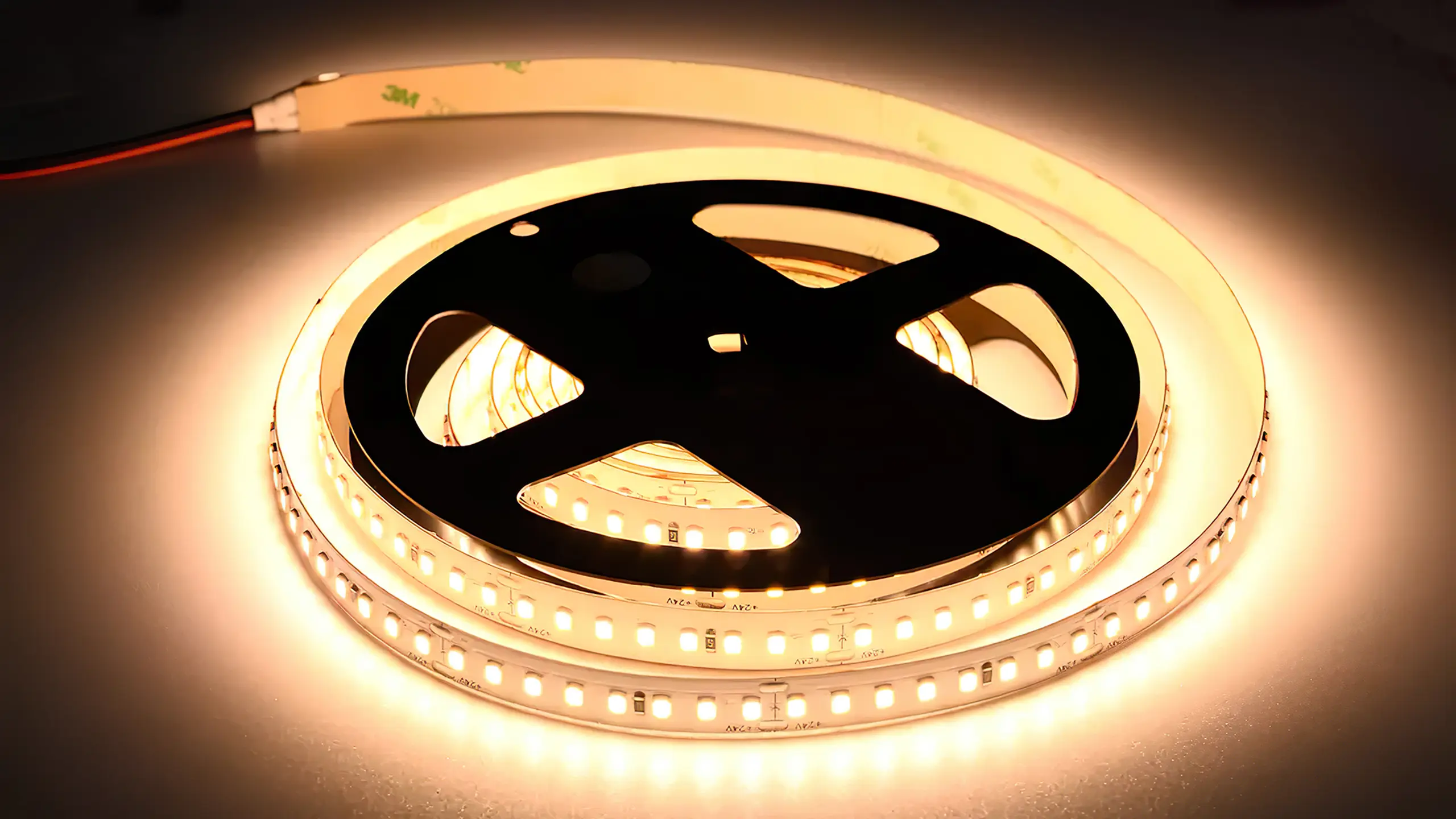
Let’s shine some light on LED strip lights. These lighting marvels are lengthy, flexible circuits teeming with light-emitting diodes (LEDs). Their charm stems from their extraordinary adaptability. Picture a chameleon blending seamlessly into its surroundings, then envision LED strip lights replicating that feat in an urban jungle. These strips adapt to various environments, like a fish to water, your cozy home, or professional office space. They even find their niche in commercial settings, showering areas with ambient lighting that perfectly balances functionality and aesthetics.
Why Hardwire LED Strip Lights?
Perhaps you’re wondering, “Why opt for hardwiring?” The reasons are as illuminating as the LED lights. Hardwiring your LED strips into your home’s electrical system fosters stable connections, reducing the risk of failure attributed to lower contact resistance. Think of these connections as a strong, resilient bridge, connecting your desire for stellar lighting with realizing that dream.
These installations are far from rigid, exhibiting flexibility that allows them to mold seamlessly into various settings. Moreover, they extend the olive branch of energy efficiency and longevity. By hardwiring your LED strip lights, you’re investing in a solution that’s kind to your pockets and the environment. Additionally, these lights can be tweaked for brightness and color, empowering you to set the mood at the flick of a switch.
Where To Hardwire LED Strip Lights?
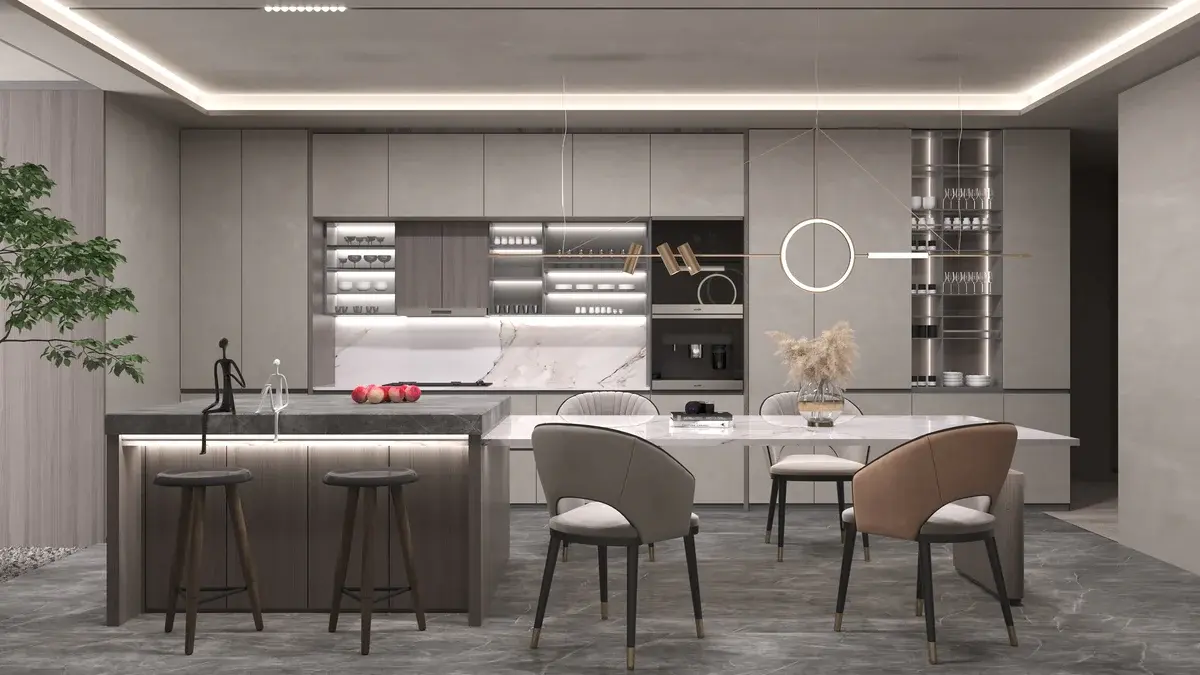
When hardwiring LED strip lights, the world is your canvas. Your creative instincts and practical needs guide you toward the perfect installation location. Suspended ceilings spring to life as the lights subtly highlight their features. Cabinets glow with welcoming warmth, beckoning you towards them. Staircases are cast in a soft light that guides each step you take. Whether large or small, each space is a potential candidate for a dash of LED magic. The beauty lies in your hands – the freedom to choose where you wish to install these flexible strips is yours to enjoy. Embark on this journey of illumination, and let your imagination light the way!
Hardwiring Tools and Process
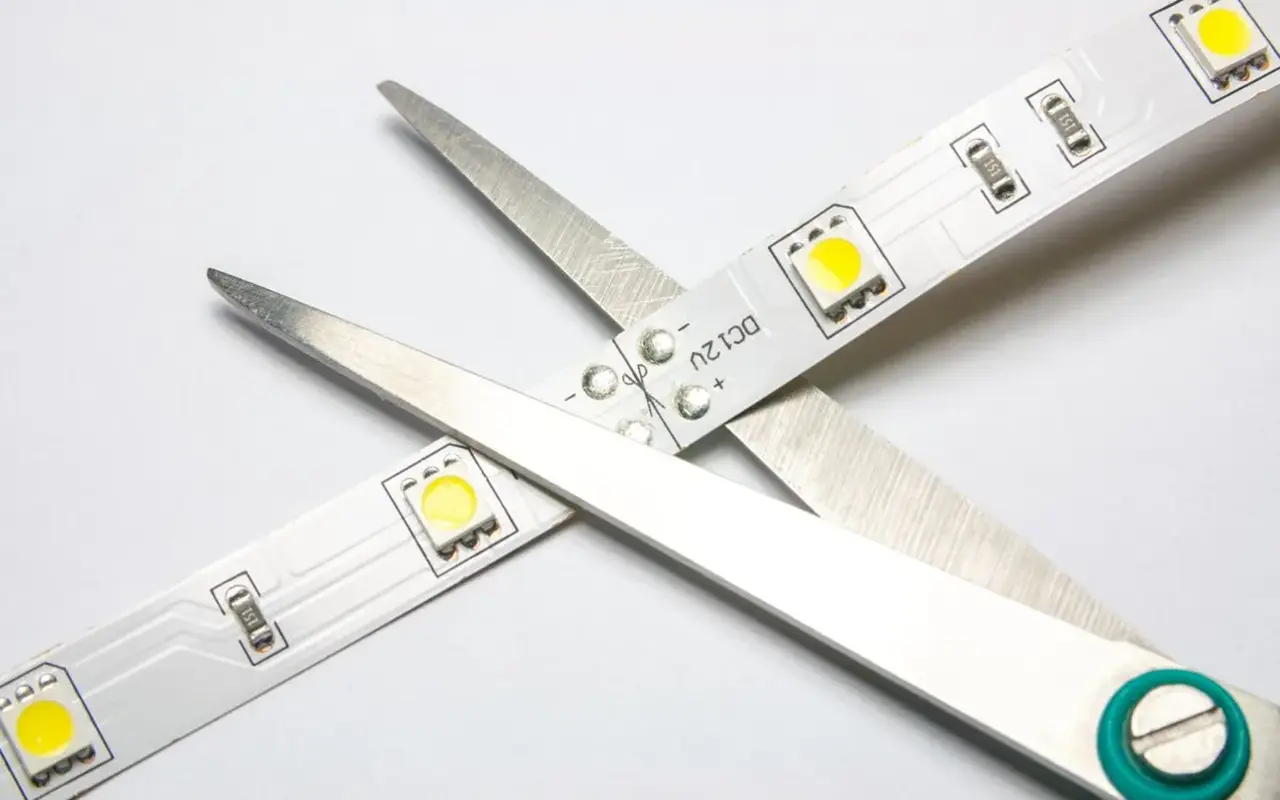
Embarking on the journey of hardwiring LED strip lights is akin to gearing up for an adventurous expedition. It requires specific tools, preparation, and a defined pathway. Start by measuring and cutting your chosen LED strip according to the planned location. Like a seasoned artist, sketch out the masterpiece you wish to create and trim your canvas, the LED strip, accordingly.
The next phase involves gathering your fellow travelers – the power supply, LED driver, wires, and connectors. These companions will join forces to bring your creation to life. Here, you act as an orchestra conductor, connecting the LED strip to the power supply and ensuring a harmonious, stable connection.
Your task doesn’t end here. You’ve got to secure your LED strip firmly, and just as you’d test the waters before diving in, test your installation to ensure proper operation. It’s a labor of love, a meticulous process that combines technical skills and artistic vision.
Managing Voltage Drop During Hardwiring
A critical aspect of any LED installation is the potential challenge of voltage drop. Think of it as a hurdle in a race. But fear not; there are ways to leap over it. Implementing thicker wires is akin to providing a sturdy bridge for electricity to cross. Adding power points midway along a long LED strip breaks up the journey for electricity, easing its passage. Selecting a power adapter that suits your setup, and avoiding connecting an excessive number of LED strips in series, are additional measures to keep the voltage drop at bay. With these strategies, you can navigate the potential pitfalls, ensuring your LED strip lights shine brightly.
Safety First: Ensuring a Secure Installation
As you journey through the process of hardwiring LED strip lights, safety should be your guiding light. Storing strictly to the relevant electrical codes and safety standards is important. This adherence goes beyond using the correct connectors and terminals for a safe connection. It extends to installing a properly rated fuse in the power cord. By adhering to these safety measures, you ensure your safe and secure voyage toward a well-lit space.
Professional vs DIY Hardwiring: A Balanced View
When it comes to hardwiring LED strip lights, it’s a delicate dance between the DIY approach and seeking professional help. It’s a journey versus destination argument. DIY installations provide a sense of accomplishment and can be lighter on the wallet. Yet, they require a level of technical know-how and commitment.
Professional installations, on the other hand, come with the assurance of expertise, experience, and strict adherence to safety norms. They’re the equivalent of opting for a guided tour where experts navigate the intricacies.
The choice lies in your hands. Evaluating the merits and drawbacks of both options equips you with the information needed to make an informed decision that aligns with your abilities, needs, and preferences. The key lies in choosing a path that lights up your space, aligning with your safety, aesthetics, and functionality expectations.
Myths and Facts around Hardwiring LED Strip Lights
While illuminating, the world of LED strip lights is also riddled with a range of myths. These can cast a shadow over the facts, causing confusion and missteps. Let’s dispel the fog and shine a light on these misconceptions.
One common myth is the perceived risk associated with hardwiring LED strips. Many believe it to be fraught with danger and complexities. However, hardwiring LED strips is as safe as navigating a well-lit path when approached with the correct information and tools.
Another myth is that LED strips require special, expensive wiring. However, in reality, LED strips are highly adaptable and can function efficiently with standard wiring systems. There’s no need to dig deep into your pockets for specialized cables!
A third misconception revolves around voltage drops and overheating. While these are potential issues in any electrical installation, they can be managed effectively in LED installations with careful planning and proper equipment. Therefore, with the right knowledge and precautions, your LED strip lights can shine bright without the fear of overheating or voltage drops.
Measuring LEDs Size And Power Supplies
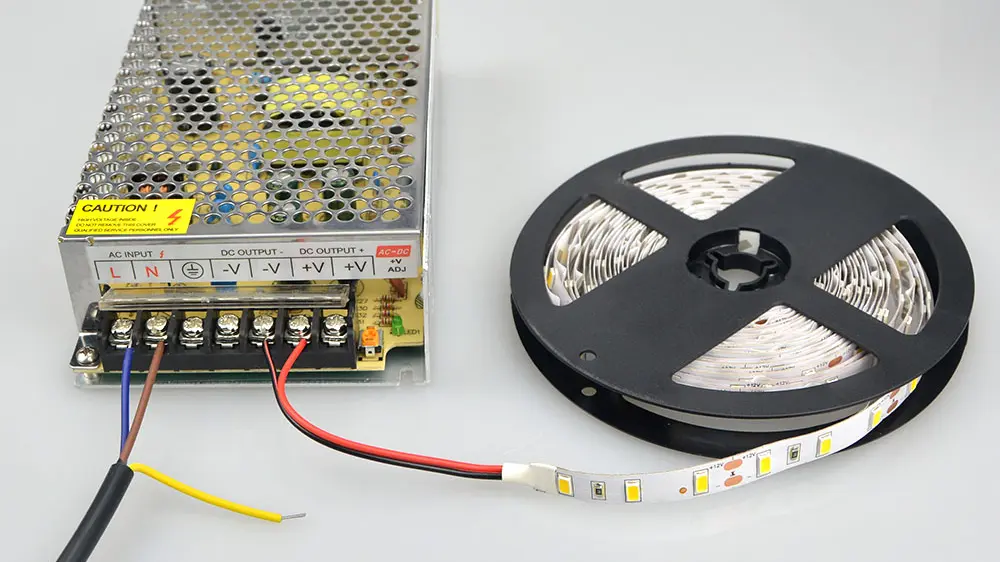
The power supply for your LED strips acts as their lifeblood. Your LED strips’ type, length, and brightness determine their power requirement. Akin to feeding the right fuel to a machine, providing the correct power supply is essential for your LED strips to operate optimally.
In their wide variety, LED strips typically consume between 4.8 and 24 watts per meter. As such, it’s crucial to align the power adapter’s capacity with the needs of your LED strips. Remember, a well-matched power supply is the key to unlocking the full potential of your LED strip lights.
Najczęściej zadawane pytania
Navigating the journey of hardwiring LED strip lights can raise numerous questions. Let’s shine a light on some commonly asked questions:
Do LED strip lights require a specific switch?
No, LED strip lights do not require a specific switch. For greater convenience, you can control them using a regular on-off switch, dimmers, or even smart home systems.
What are the essentials to know before hardwiring LED strip lights?
Before hardwiring LED strip lights, it’s crucial to understand their functionality, choose the right location for installation, gather necessary tools, and be aware of the steps involved in the process. Safety measures are paramount to prevent any electrical mishaps.
Do I need special wiring to hardwire LED strip lights?
No special wiring is required. LED strip lights can be hardwired using standard electrical cables. However, they need a power supply or transformer to convert AC to DC power.
Can under-cabinet lighting be hardwired?
Absolutely. LED strip lights are perfect for under-cabinet lighting and can be hardwired for a clean, wire-free look and reliable operation.
Do LED strip lights get hot after prolonged use?
LED strip lights are designed to be energy-efficient, producing minimal heat even after long-term use. However, like any electrical equipment, ensuring adequate ventilation will extend its lifespan.
How can I make a stronger connection when wiring?
For a stronger connection, ensure you’re using quality connectors, secure the cables properly, and avoid any stress on the connection points. Also, using soldering for the connections can provide additional stability.
What’s the power consumption of LED strip lights?
Typically, LED strip lights consume between 4.8 and 24 watts per meter. It’s essential to select an appropriate power adapter for optimal operation.
Can LED strip lights be adjusted for brightness and color?
Yes, LED strip lights offer the flexibility of adjusting brightness and color, depending on the model. Some even offer features like color changing and dimming.
What are the benefits of hardwiring LED strip lights?
Hardwiring LED strip lights provides a stable connection, reduces the risk of failure due to lower contact resistance, and offers flexibility in installation to fit various settings.
Where can I hardwire LED strip lights?
LED strip lights can be hardwired in various places like suspended ceilings, cabinets, staircases, or any other location according to your lighting needs and creative ideas.
Wnioski
In this guide, we’ve explored the bright world of hardwiring LED strip lights. From understanding their versatile applications to unraveling the complexities of hardwiring, we’ve shed light on each facet of the process. With a clear focus on debunking myths, balancing the pros and cons of DIY versus professional installations, and managing potential challenges like voltage drop, we’ve aimed to equip you with a well-rounded knowledge. As you embark on your LED strip lighting journey, remember that every well-lit room starts with a single strip. Happy hardwiring!
As we close this enlightening chapter on Taśmy LED, remember that guidance from industry leaders like Unitop, a renowned manufacturer in China, can be indispensable. Their team stands ready to assist you with any questions or unique requirements. Discover a brighter world with Unitop’s exceptional LED lighting solutions. Contact us immediately!

Tom jest obecnie kierownikiem sprzedaży w Unitop (China) Co., Limited. Był w Oświetlenie LED od 2005 roku. Jest ekspertem w dziedzinie sprzedaży i marketingu oraz zarządzania fabryką. Lubi kulturystykę, a także jest szalonym fanem Apple! Jest ciężko pracującym facetem i uwielbia uczyć się i próbować nowych rzeczy.
E-mail: tom@unitopledstrip.com WhatsApp: +86-18680307140




Dodaj komentarz
Chcesz się przyłączyć do dyskusji?Zapraszamy do udziału!