
In the dazzling world of LED lighting, the narrative is shifting towards smarter, more efficient, and flexible lighting solutions. At the heart of this narrative is PWM Dimming, a technique tailored to mold light to our whims, seamlessly blending with modern-day lighting systems. As we delve into the realms of lighting, whether as professionals or enthusiasts, mastering PWM Dimming emerges as a requisite to unlocking boundless possibilities in controlling light intensity and color.
This comprehensive guide unravels the science, the practical steps, and the advanced techniques of PWM Dimming, paving the way for an illuminating journey into the heart of modern-day lighting.
The Science Behind PWM Dimming Unveiled
Delving into Pulse Width Modulation
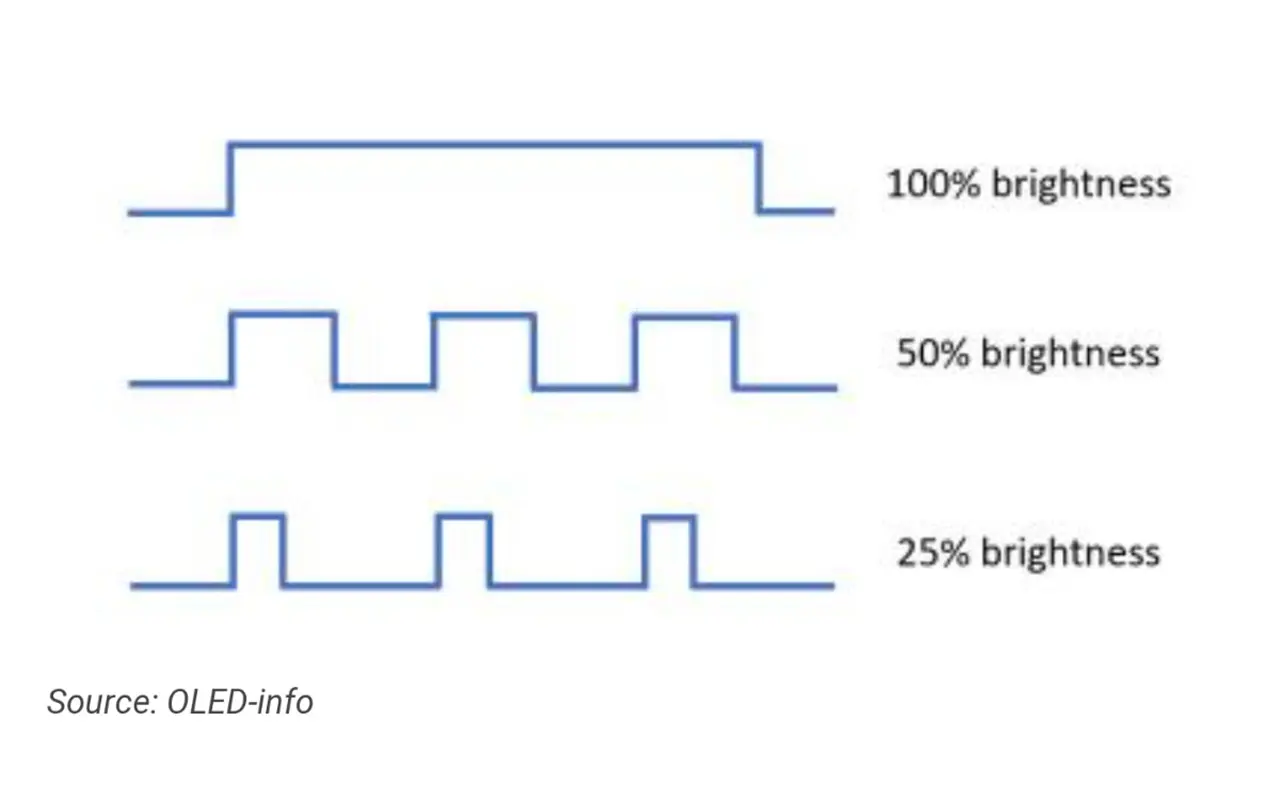
Pulse Width Modulation (PWM) is not merely a technical term; it’s the nucleus of modern LED dimming technologies. This technique operates by swiftly toggling the LED current between on and off states, generating a pulsating wave, often referred to as the ”pulse.” The crux of the technique lies in the modulation of these pulses, altering the ”width” or the duration of the ”on” state, giving birth to the term Pulse Width Modulation. This modulation ingeniously modifies the perceived brightness of the LEDs, embodying a principle that is simplistic in theory but monumental in its impact. The captivating world of PWM is a testament to the adage, “simplicity is the ultimate sophistication,” portraying how a straightforward concept can hold the key to intricate control over light, transforming the LED lighting landscape.
The Mechanism of PWM Dimming in Regulating Light Intensity
The essence of PWM dimming is encapsulated in manipulating the duty cycle—the ratio of the ”on” time to the total time of each pulse. By altering this ratio, PWM Dimming conducts an orchestra of brightness levels, akin to a maestro commanding the gentle whispers and the boisterous roars of a symphony. As the duty cycle ascends, the LEDs blaze with increased fervor, and as it descends, they simmer down to a tranquil glow. This modulation occurs without a hint of alteration in the color or quality of light, preserving the integrity and aesthetics of illumination. The seamless control over light intensity is a hallmark of PWM Dimming, rendering it a quintessential tool in the arsenal of modern lighting solutions.
Bridging Digital Commands to Tailored Illumination
PWM Dimming emerges as a conduit linking digital commands to tailored illumination in the digital epoch we navigate. A mere digital signal metamorphoses into a spectrum of luminosity under the spell of PWM Dimming. The conduits for these digital commands range from simple potentiometers and sensors to sophisticated microcontrollers, each serving as a maestro orchestrating the light’s rhythm. The narrative remains unaltered: crisp digital instructions translate into a cascade of light, painting the canvas of our environment with the hues of our choice.
The Myriad Advantages of PWM Dimming
Energy Efficiency: A Savvy Choice for Eco-conscious Minds
In the tapestry of conservation, PWM Dimming emerges as a vibrant thread, weaving the narrative of energy efficiency. It significantly trims down power consumption by attenuating the average current coursing through the LEDs. The repercussions extend beyond mere monetary savings, translating to a diminutive carbon footprint. This frugality in energy consumption renders PWM Dimming a prudent choice for the eco-conscious, aligning with the global narrative of sustainability and conservation.
Precision and Control: Crafting the Perfect Lighting Ambiance
The realm of PWM Dimming is a confluence of precision and control, where the reins of light are handed over to us. The granular control over brightness levels, from a stark 0% to a brilliant 100%, morphs crafting the perfect ambiance from a mundane chore to an art form. The ability to dial in the perfect mood in a cozy café or invigorate a workspace to boost productivity exemplifies the precision and control bestowed by PWM Dimming. This meticulous control over light crafts an ambiance that resonates with the space’s ethos, enhancing the experiences of those dwelling within.
Versatility: The Various Domains where PWM Dimming Excels
The versatility of PWM Dimming unfurls across many domains, showcasing its prowess in automotive lighting, medical devices, and industrial applications, to name a few. Its adeptness in delivering precise light control is a boon, elevating the functionality and aesthetics of these domains. Moreover, PWM Dimming’s synergy with other digital systems unveils interactive and responsive lighting solutions, propelling the narrative of smart, adaptive lighting. This cross-domain versatility underscores the invaluable role of PWM Dimming in modern lighting solutions, accentuating its significance in the evolving landscape of digital technology and lighting.
Your First Steps into PWM Dimming
Necessary Tools and Equipment
Embarking on the journey into PWM Dimming might seem daunting initially. Still, the voyage becomes intriguing and rewarding with the right tools and equipment. The rudimentary trinity comprises a PWM controller, an LED driver, and LED lights. Yet, as your quest deepens, embracing microcontrollers, MOSFETs, and specialized LED drivers unveils a realm of possibilities, allowing you to harness the full prowess of PWM Dimming. These tools become your companions, facilitating a deeper exploration into PWM’s nuances broadening your horizon beyond mere dimming to a world where light dances to your digital tunes.
A Step-by-step Guide to Setting up Your PWM Dimming System
Your expedition into PWM Dimming commences with a lucid understanding of your lighting requirements. Selecting a PWM controller and LED driver in harmony with your LEDs’LEDs’ specifications is the cornerstone of a robust setup. With your toolkit assembled, initiate by forging the connection between the PWM controller and the LED driver, which, in turn, orchestrates the LEDs. As you dial in the PWM signal, tweaking it to your desired brightness, the magic unfurls right before your eyes. As you step into the vibrant world of PWM Dimming, the moment is enchanting, where a spectrum of brightness awaits your command.
Practical Tips to Master PWM Dimming
Best Practices for Optimal Performance
A stellar performance sans flicker necessitates a PWM frequency usually soaring above 100Hz. In this realm, the human eye sees seamless illumination. A steadfast and pristine power supply and adept thermal management are the bedrock of an enduring and efficient PWM Dimming system. These practices are not merely about keeping the flicker at bay or the system cool; they are about coaxing out the optimum performance, ensuring your setup functions impeccably and thrives over time.
Common Hurdles and Strategies to Overcome Them
Mastering PWM Dimming is akin to learning a new language; hurdles are part of the narrative. You might encounter potential flicker, electromagnetic interference (EMI), or the necessity for more intricate circuitry. However, these challenges morph into stepping stones with a robust comprehension of PWM principles and a reasonable selection of components. Each hurdle surmounted propels you along a learning trajectory, edging you closer to a proficient command over PWM Dimming. This mastery isn’t merely about overcoming challenges; it’s about the understanding acquired, the lessons learned, and the unyielding curiosity to delve deeper, making your PWM Dimming setup functional and exemplary.
Diving Deeper: Advanced PWM Dimming Techniques
Exploring the Boundless Opportunities with PWM Dimming
Delving into the advanced realm of PWM Dimming is akin to stepping into a boundless universe of luminous opportunities. It’s where the symphony of light orchestrates a mesmerizing dance to the rhythm of PWM signals. Synchronizing lights with the cadence of music, crafting responsive lighting systems that breathe life into a space, or choreographing intricate light shows that tell tales in beams and hues, the ambit is as boundless as your imagination. With a profound understanding and a quiver full of the right tools, the domain of PWM Dimming morphs into a magnificent canvas, where light awaits your command, ready to paint your narrative in a spectrum of brightness and colors.
Innovative Applications and Real-world Case Studies
The essence of innovation in PWM Dimming leaps off the pages of theory and melds with the fabric of real-world applications. Take, for instance, the realm of automotive lighting, where PWM Dimming plays a pivotal role in adaptive headlight systems. These advanced systems fine-tune the brightness in response to oncoming traffic, significantly bolstering road safety. Venture into the domain of architectural lighting, and you’ll witness the prowess of PWM Dimming in crafting breathtaking light installations. These aren’t just mere sources of illumination; they’re storytelling mediums, where light, modulated with precision, narrates tales that resonate with the ethos of a space.
PWM Dimming Vs. Other Dimming Techniques
Constant Current Reduction (CCR) Vs. PWM Dimming
The quest for controlling LED brightness has birthed various techniques, with PWM and CCR being notable players. While both seek to reign in on brightness, their methodologies diverge. With its modulation of duty cycle, PWM stands as a maestro conducting an orchestra of light with precision, maintaining the integrity of color quality even as the brightness ebbs. On the flip side, CCR modulates the current flowing through the LEDs, a straightforward yet less precise approach. The juxtaposition of PWM and CCR showcases the nuanced superiority of PWM, especially in scenarios demanding precise color rendering and nuanced brightness control.
Analog Dimming Vs. PWM Dimming
The narrative of LED brightness control unfolds further with Analog Dimming entering the fray. Unlike its PWM counterpart, Analog Dimming navigates the brightness terrain by varying the LED current. However, this method often courts a shift in color temperature. This trade-off might overshadow its simplicity, especially in applications where color consistency is paramount. On the other hand, PWM Dimming emerges as a knight in shining armor, offering linear and precise control over brightness sans affecting the color quality. This delineation between Analog and PWM Dimming accentuates the finesse and control inherent in PWM, making it a preferred choice for applications demanding color fidelity alongside brightness control.
Hardware and Software Considerations for PWM Dimming
Essential Hardware for Effective PWM Dimming
Embarking on the journey of PWM Dimming necessitates a solid foundation built on robust hardware. At the forefront are reliable PWM controllers, acting as the conductors orchestrating the rhythm of light modulation. In tandem, LED drivers step in, ensuring the smooth transmission of these modulated signals to the LED lights. But the entourage doesn’t end here; digital-to-analog converters (DACs) join the fray, translating digital commands into analog signals with finesse. The hardware ensemble doesn’t merely stop at ensuring performance; it transcends into the realms of efficiency and flexibility, laying down a fertile ground for exploring the myriad hues of PWM Dimming. The choice of hardware is thus not a mere procurement step but a decisive factor that propels the PWM Dimming system from a concept to a luminous reality.
Firmware/Software Facets for PWM Functionality
As the curtain rises on the software arena, firmware emerges as the unsung hero in the narrative of PWM Dimming. The essence breathes life into the hardware, generating and modulating the PWM signal with a precision that echoes through the system’s veins. Yet, the narrative transcends beyond mere functionality. User-friendly software interfaces step into the spotlight, offering a realm where control and tuning of the PWM signal morph from technical chores to intuitive interactions. This facet of PWM Dimming is not merely about code; it’s about crafting a bridge between the user and the technology, making PWM Dimming a tale not just for the technically inclined but a broader audience yearning to delve into the world of tailored illumination.
Real and Fake PWM Dimming: A Market Insight
Identifying Genuine PWM Dimming Drivers
In a market replete with myriad options, distinguishing the genuine from the counterfeit becomes a quest of paramount importance. Genuine PWM Dimming is an ode to consistency, where the on-and-off switching of LED currents is a rhythmic dance orchestrated by a microcontroller nestled within the driver. This micro maestro offers a broad spectrum of PWM frequencies, unlocking a realm where light bows to the whims of precise digital commands.
Steering Clear of Fake PWM Dimming Solutions
Yet, amidst the authentic lies, the masquerade of fake PWM Dimming. It parades under the guise of PWM, yet at its core, it veers off, converting PWM inputs into an analog control signal. This deviation strips away the precision and efficiency emblematic of real PWM Dimming, leaving behind a facade that mimics the name. In this narrative, being informed transcends a mere virtue to a necessity. Choosing genuine PWM Dimming solutions is not merely about making a purchase; it’s about unlocking the boundless potential nested within the heart of PWM technology.
자주 묻는 질문(FAQ)
Embarking on the PWM Dimming journey often brings a bag of queries. This section addresses common questions, clearing the fog and providing a well-rounded understanding of PWM Dimming. We have covered you, from the basics of PWM Dimming hardware and software requirements to advanced troubleshooting.
What Exactly Is PWM LED Dimming?
PWM (Pulse Width Modulation) LED dimming is a technique used to control the brightness of LED lights by varying the duty cycle of the electrical signal sent to the LED. The duty cycle refers to the ratio of ”on” time to the total time of each pulse. By changing this ratio, PWM dimming effectively changes the LED lights’ perceived brightness without altering the light’s color or quality.
Why Do LEDs Need PWM?
LEDs require PWM because they offer a highly effective method to control brightness while preserving color quality. Unlike other dimming techniques that might alter the color temperature or degrade the light quality, PWM ensures the color and quality of light remain consistent across various brightness levels. Moreover, it facilitates the creation of dynamic lighting effects, responsiveness, and synchronization with other systems, making it a preferred choice for many lighting applications.
How Can I Dim an LED Using PWM?
You’ll need a PWM controller, an LED driver, and LED lights to dim an LED using PWM. Begin by connecting the PWM controller to the LED driver, which is connected to the LEDs. You can then tune the PWM signal, varying the duty cycle to achieve the desired brightness level. The ease of control and a wide range of dimming levels from 0% to 100% make PWM a popular choice for LED dimming.
Do PWM Dimmers Reduce Power Consumption?
Yes, PWM dimmers do reduce power consumption. By controlling the duty cycle, PWM dimming reduces the average current flowing through the LEDs, leading to lower power consumption. This not only results in energy savings but also contributes to lower heat dissipation, which is beneficial for both the environment and your electricity bill.
Is It Better to Have a Higher or Lower PWM Frequency?
A higher PWM frequency is usually preferred as it helps to eliminate visible flicker and noise, creating a more stable and comfortable lighting environment. Frequencies above 100Hz are often recommended to ensure the flicker is beyond the discernible range of the human eye. Higher frequencies also minimize electromagnetic interference, enhancing the overall performance and user experience of the PWM dimming system.
Does PWM Shorten the Life of LEDs?
When implemented correctly, PWM dimming does not shorten the life of LEDs. In fact, by reducing the average current and thus the heat generated, PWM dimming can extend LED lights’ lifespan. It’s essential to ensure a clean and stable power supply and proper thermal management to maximize the benefits of PWM dimming.
What Is the Best LED Light Dimmer?
The “best” LED light dimmer largely depends on your specific needs, the type of LEDs you use, and the application. However, a genuine PWM dimming solution that offers a wide range of dimming levels, high-frequency operation to avoid flicker, and easy-to-use control interfaces would be a solid choice for most LED dimming applications.
What Is the Ideal PWM Frequency for LED Dimming?
The ideal PWM frequency for LED dimming typically ranges between 100 and 5 kHz, ensuring a flicker-free and noise-free operation. The exact frequency may vary depending on the application, the type of LEDs, and personal or project-specific preferences.
How Can I Minimize Flicker When Using PWM Dimming?
Minimizing flicker in PWM dimming involves choosing a higher PWM frequency, typically above 100Hz, to ensure the flicker is beyond the discernible range of the human eye. Additionally, providing a stable power supply and using quality hardware components like reliable PWM controllers and LED drivers can significantly help in reducing flicker.
What Are the Main Advantages of Using PWM Dimming Over Other Dimming Methods?
PWM dimming stands out for its ability to provide precise control over brightness without altering light color or quality, unlike other dimming methods like analog dimming. It also allows for dynamic lighting effects, synchronization with other systems, and a wide range of dimming levels from 0% to 100%. Moreover, PWM dimming is efficient in terms of energy consumption, making it a favorable choice for eco-conscious individuals and projects.
결론
The journey of mastering PWM Dimming is akin to learning a new language – the language of light. As you venture deeper, you’ll discover that each modulation and pulse narrates a tale of control, efficiency, and endless possibilities. With this guide as your compass, may your journey into the world of PWM Dimming be enlightening, leading to a brighter, more colorful world.
Mastering PWM Dimming is your ticket to exploring the incredible potential of LED lighting. As you light up your world, consider Unitop, one of China’s leading LED 스트립 조명 그리고 LED 네온 플렉스 manufacturers, your go-to partner in this illuminating journey. With a legacy of expertise in the LED industry, Unitop is poised to address your bespoke lighting needs. Do you have further questions or unique requirements? 당사에 문의하기 immediately, and let’s brighten your world effortlessly together.
관련 문서

Tom은 현재 다음의 영업 관리자입니다. 유니탑(중국) 유한공사. 그는 LED 조명 업계에서 2005년부터 근무하고 있습니다. 그는 영업 및 마케팅, 공장 관리 분야의 전문가입니다. 보디빌딩을 좋아하고 애플의 열렬한 팬이기도 합니다! 그는 열심히 일하는 사람이며 새로운 것을 배우고 시도하는 것을 좋아합니다.
이메일: tom@unitopledstrip.com WhatsApp: +86-18680307140



댓글을 남겨주세요
토론에 참여하고 싶으신가요?자유롭게 기여해 주세요!