
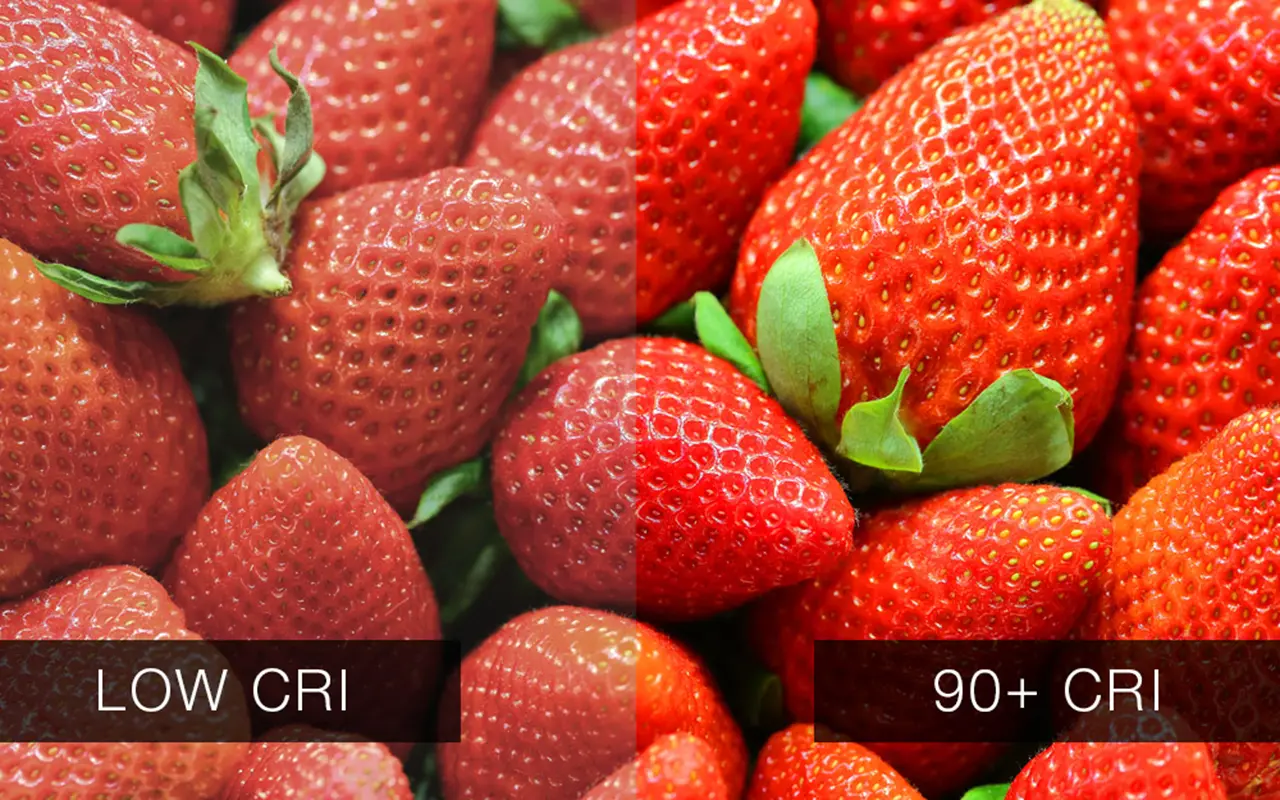
The allure of colors isn’t just a feast for the eyes. It’s a narrative told through the light spectrum, impacting our daily lives more profoundly than we often realize. Whether it’s the vibrant palette of a sunset or the subtle hues in a piece of art, color accuracy is the silent storyteller that breathes life into these visual experiences. At the heart of this narrative lies a critical yet often overlooked actor – the Color Rendering Index (CRI). The CRI isn’t just a technical term tossed around by lighting experts but a vital factor that decides how true-to-life colors appear under artificial lighting, especially LED lighting. Its role is akin to that of a skilled director in a play, orchestrating how the story of colors unfolds before our eyes.
Delving a bit deeper, the Color Rendering Index (CRI) quantifies how accurately a light source illuminates colors compared to a natural or ideal light source. Especially in LED lighting, where the proper illumination can either make or break the visual appeal, understanding CRI is akin to mastering the art of color storytelling. LED lights with high CRI values don’t just light up a space; they enhance, accentuate, and bring forth the true essence of colors, creating a tapestry of visual delight that is as close to natural lighting as it gets.
I am Tom, and my journey in the LED lighting industry commenced in 2005. Over nearly two decades, I have endeavored to delve deeper into the intricacies of LED technology, unravel its potential, and share the wealth of knowledge acquired. The complexities of CRI and its impact on LED lighting isn’t just a topic of professional interest but a realm I have explored extensively to assist individuals and businesses in making informed lighting decisions. This guide is a culmination of years of experience and a deep-seated understanding of LED technology, crafted meticulously to shed light on the significance of CRI and how it intertwines with LED lighting to create the perfect visual narrative.
Now that you’re about to embark on this illuminating journey, let’s dive right in!
Unveiling the Color Rendering Index (CRI)
Definition and basic explanation of CRI
The Color Rendering Index (CRI) measures how colors look in different types of light. This index, measured on a scale from 0 to 100, manifests the fidelity of a light source in replicating colors. A higher CRI value means more accurate colors. A score of 100 is perfect for natural daylight’s colors.
A glance at the historical evolution of CRI
The Color Rendering Index (CRI) was developed based on understanding color perception. It has changed a lot over time. This evolution improved color perception in artificial lighting, making CRI an important tool. Now, many industries greatly respect it. It is a significant milestone in illumination and color accuracy.
Simple explanation of the science of color rendering and perception
The realm of color perception is a riveting concoction of light, object, and the observer. It unfolds as light, a medley of wavelengths, encounters an object. When we meet, we either take in or bounce back specific wavelengths of light, which our eyes see as color. Artificial light tries to imitate natural light’s colors. The CRI value shows how well it does this. A higher CRI means more accurate colors, like in daylight.
CRI Demystified: The Numbers Game
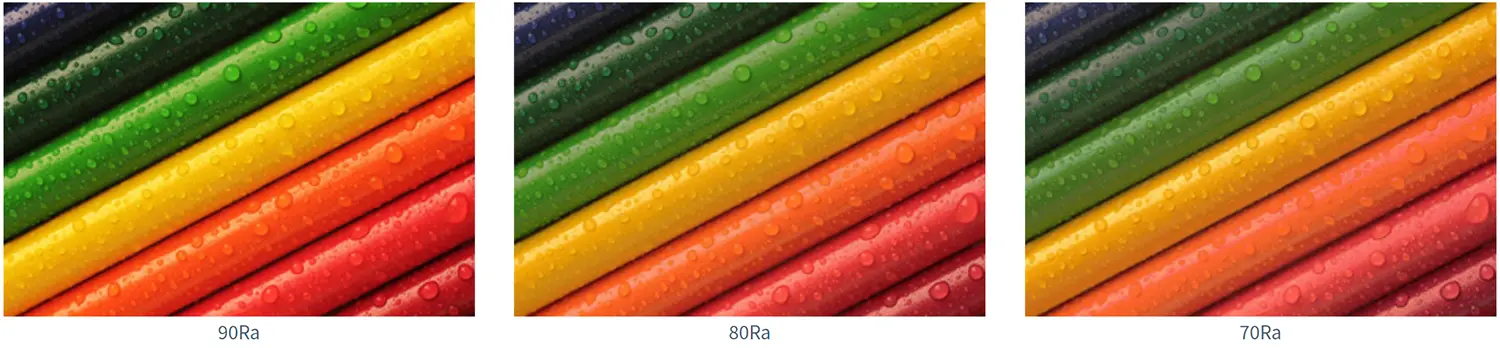
Understanding the CRI scale: What do different values signify?
The CRI scale, an odyssey from 0 to 100, unveils the prowess of a light source in rendering colors. Scores below 80 are often branded as poor, rendering a faded palette. On the other hand, scores above 90 are considered excellent and bring color to life. The difference in scores tells a story about different color accuracy. Each point on the scale shows how well it renders colors.
The methodology behind measuring CRI
We measure CRI by comparing a light source’s color rendering to natural daylight or incandescent light. Here, instruments of precision like spectrophotometers are the protagonists. They measure how colors are reproduced and assign a CRI value to represent the results. The value defines how well a light source shows colors. It is a single digit.
Demonstrating CRI values with real-world examples
Picture a serene sunset, a symphony of warm oranges, soft pinks, and deep purples painting the sky. Under the aegis of a high CRI LED light, this palette retains its vivacity, each hue vibrant and true to life. Now, transition this scene under a low CRI light, and the spectacle morphs into a faded shadow of its former self. The bright colors are now less intense. The show is less charming. It tells why CRI is important.
CRI and LED Lighting: A Perfect Symbiosis
How CRI influences the performance of LED lights
A high Color Rendering Index (CRI) is often perceived as a hallmark of quality in LED lighting. The goal is to light up spaces and show colors accurately, preserving their true essence. When photons from the LED light hit surfaces and reflect into the human eye, they bring colors. A higher CRI makes this story more realistic, improving how it looks and feels.
The significance of high CRI values for LED lights
LED lights with high CRI values are necessary where color accuracy matters, not just a luxury. High CRI values are important in places like stores and galleries. They help engage customers and show artwork by making colors look good. The lighting in our homes can change the atmosphere, making it cozy and appealing.
A comparison of LED lights with varying CRI values
LED lights come in a wide range of colors, each with its own story of color. LED lights are getting closer to a perfect score of 100 on the CRI scale. They show colors that look like natural light, with lots of vibrancy and authenticity. If the CRI values are lower, colors may appear dull and less vibrant. LED lights with high and low CRI values have a stark contrast, making spaces vibrant or lifeless.
The Real-world Impact of CRI
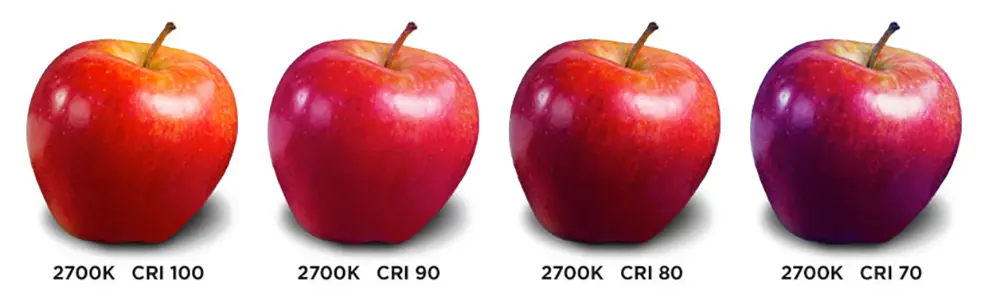
Illustrating the role of CRI in accurate color representation
High CRI lighting in everyday life acts like a clear lens, revealing true colors. You can see the bright green of basil leaves in the morning sunlight. The peach has a gentle blush as if kissed by the dawn. CRI does more than light up a space. It creates a visual show with vibrant colors.
How CRI affects mood, perception, and aesthetics
The way lighting shows colors can affect how we feel, not just how things look. The color has a quiet conversation with our emotions, changing how a room feels. Interior designs often silently reflect the quality of the lighting used. Accurate color rendering affects how things look and our experiences in spaces. The Color Rendering Index (CRI) greatly affects how we interact with things every day.
CRI’s practical implications can be seen in retail, home, and photography settings
High CRI lighting has a significant impact on retail. It makes products look vibrant and attracts customers. Within homes, high CRI lighting morphs ordinary spaces into cozy, color-rich havens. Photography relies on high CRI lighting to capture vivid and lifelike shots. CRI is essential for all lighting solutions, as each setting has unique demands.
Navigating CRI Ranges for Optimal Lighting
Breaking down different CRI ranges. These include 95-100, 90-95, 80-90, and Below 80. Also, understanding their applications.
When you explore the CRI scale, you’ll find a range of color rendering abilities.
Colors look great under CRI values of 95-100 like they do in natural daylight.
In the range of 90-95, colors look great. Almost every hue keeps its true essence. It could be better, but it’s still good.
Colors in the range of 80-90 look good and balanced but a bit less vibrant.
The descent ends at 80, an area with poor color rendering. Colors appear dull and misrepresented.
Insights into choosing the proper CRI range for different lighting needs
The quest for the proper CRI range hinges on the canvas of requirements. In fields like art and design, the top level of color accuracy is essential. If you have an art gallery, retail space, or photography studio, it’s best to aim for the higher end. A CRI range of 80-90 is enough in less demanding situations. This balances color rendering and budget. Selecting the appropriate CRI range involves considering needs, looks, and cost. These three factors shape the lighting narrative of spaces.
CRI Testing and Measurement
An overview of how CRI is tested and measured
The odyssey of measuring CRI is a blend of precision and meticulous comparison. The story starts with a light shining on different colors, showing how well the light makes them look. The colors under the fake light are compared to the same colors in natural daylight. Instruments like spectrophotometers act as judges, showing differences in color rendering. We assess the color rendering ability of a light source by examining it with one CRI value.
Importance of accurate CRI testing in LED lighting
LED lights are often linked to accurate colors, which depend on accurate CRI tests. A linchpin in the lighting industry is important. It makes sure LED lights show accurate colors everywhere. The way CRI testing and LED lighting quality work together shows a commitment to quality. This not only builds consumer trust but also advances the industry.
Future Horizons: CRI and Evolving LED Technology
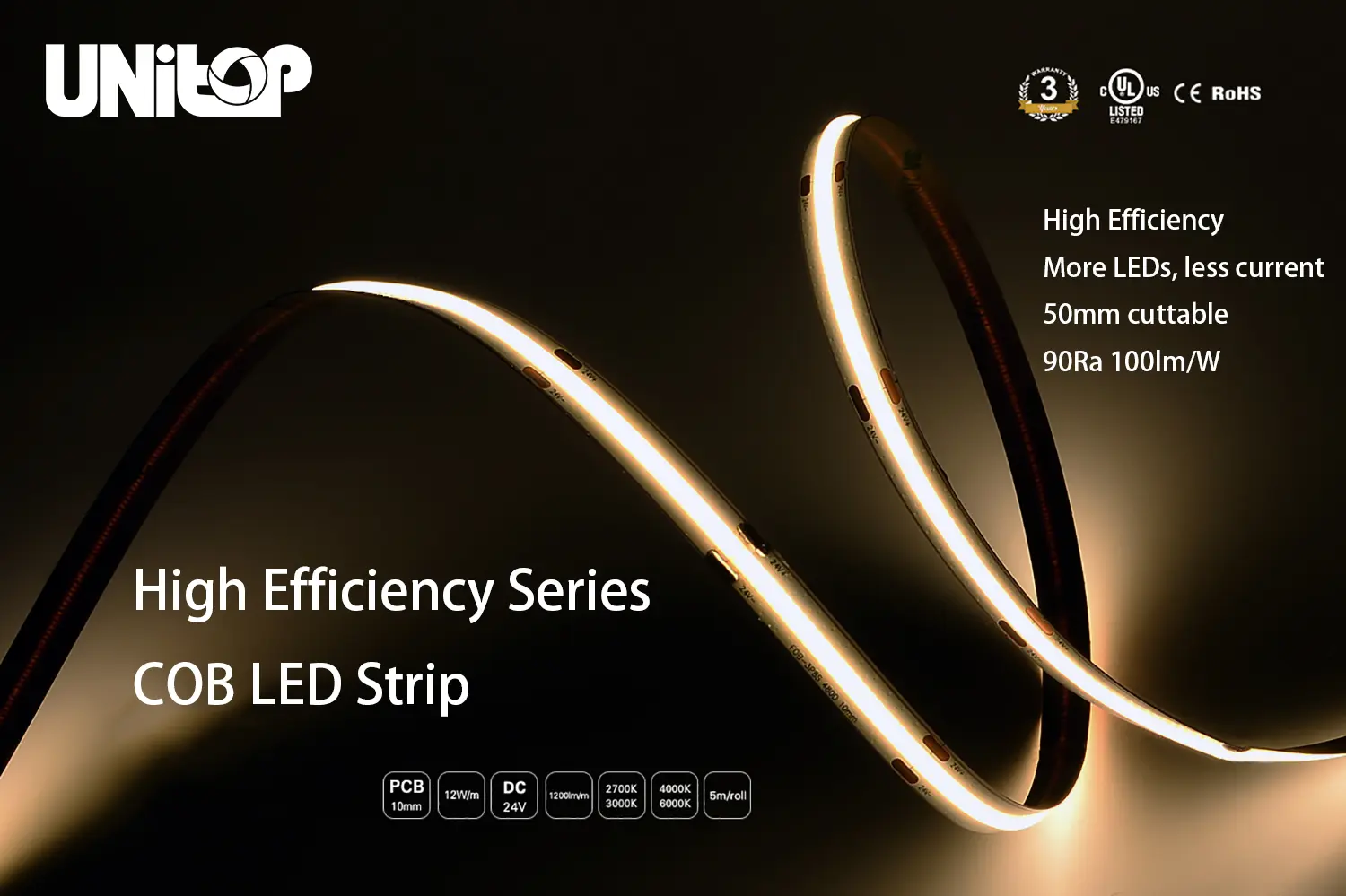
Innovations enhancing CRI in LED lighting
LED lighting’s color rendering performance improves as technology advances. New LEDs have high CRI values, showing the industry’s constant innovation. The goal is to create better lighting that is energy-efficient, eco-friendly, and affordable. The advancements include better color rendering with phosphor technology. There are control systems to change color output and use quantum dots for natural colors. New advancements mix artificial and natural light, blurring the distinction between them.
The journey of LED technology towards mimicking natural light
LED technology’s journey to imitate natural light requires passion, precision, and perseverance. The industry gets closer to recreating the cozy feeling of natural light every day. This journey is not only about matching colors. It’s also about capturing natural light to enhance our experiences. LED technology is advancing to make colors look natural, inviting, and authentic. Tunable white LEDs adjust color temperature like daylight. Innovative materials improve color accuracy.
Making Informed Choices: Selecting the Right LED Lighting
Guidelines on checking CRI values when purchasing LED lights
Embarking on the quest for the perfect LED light begins with closely examining CRI values. This metric helps you choose lighting options that show colors accurately and vibrantly. Opting for LED lights with a CRI value of 90 or above is advisable for spaces where color accuracy is crucial. When picking lighting, remember that high CRI means accurate colors. Learn about lighting’s CRI values to make a space more comfortable and attractive.
Considering other vital factors alongside CRI when choosing LED lighting
While the narrative of CRI is compelling, it’s just one chapter in the book of LED lighting selection. As you explore the many choices, consider brightness, color, and how long it lasts. The brightness of the LED light shows how efficient it is. The color temperature sets the mood. The lifespan shows how long it will last. To get bright colors and save energy, think about everything that affects how good your lighting is.
Fazit
The Color Rendering Index (CRI) is often overlooked, but it significantly impacts LED lighting. The line between artificial and natural light becomes less clear as we move forward. Choosing LED lights with high CRI is an investment in a visually comforting world full of color. When we consider CRI, we’re not just picking lights but how we perceive the world.
To achieve great lighting, it’s important to understand the Color Rendering Index (CRI). Unitop is a top LED manufacturer in China. We make LED-Leuchtbänder und LED-Neon-Flex. Our LED solutions have high CRI and can transform spaces. We have unmatched expertise in the LED industry and are ready to meet your lighting needs. If you have any more questions or needs, don’t hesitate to Nehmen Sie Kontakt mit uns auf right away. Your journey towards impeccable lighting begins with Unitop.
Ähnlicher Artikel

Tom ist jetzt der Verkaufsleiter von Unitop (China) Co., Limited. Er war in der LED-Beleuchtung Industrie seit 2005. Er ist Experte für Vertrieb und Marketing sowie für Fabrikmanagement. Er mag Bodybuilding und ist außerdem ein verrückter Apple-Fan! Er ist ein fleißiger Kerl und liebt es, neue Dinge zu lernen und auszuprobieren.
E-Mail: tom@unitopledstrip.com WhatsApp: +86-18680307140




Hinterlasse einen Kommentar
An der Diskussion beteiligen?Hinterlasse uns deinen Kommentar!