
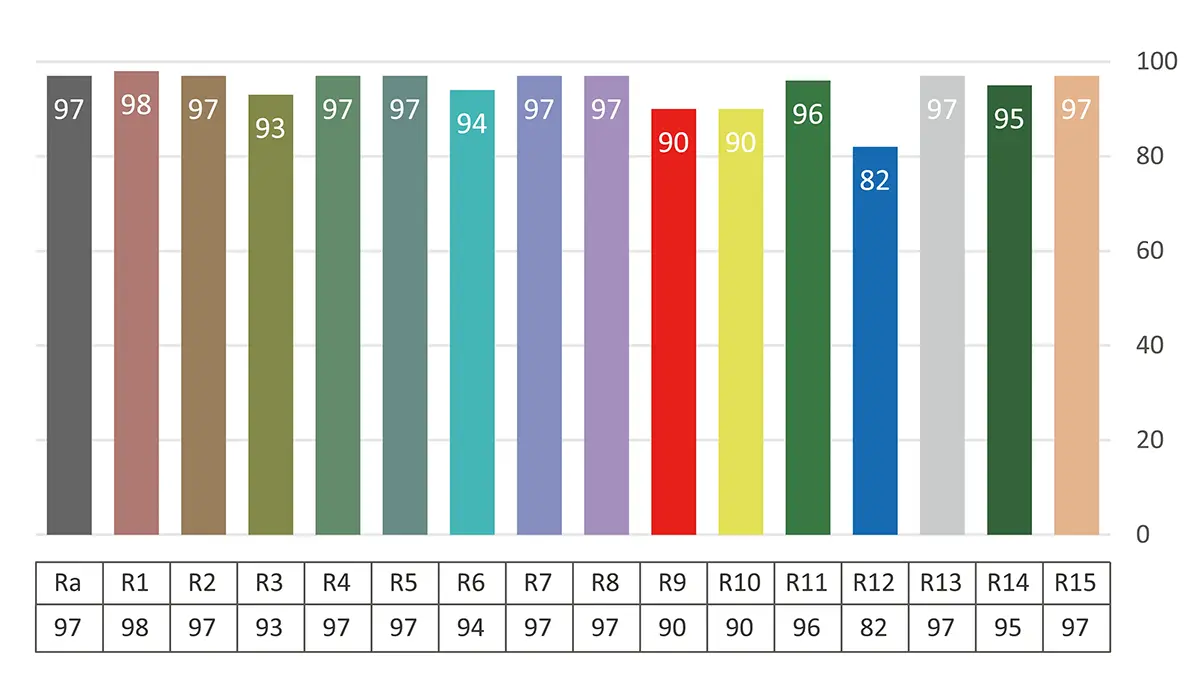
In the realm of lighting, the way a bulb renders color can significantly impact the aesthetics and functionality of the spaces it illuminates. Whether admiring a piece of art or selecting ripe tomatoes at the grocery, the quality of light plays a pivotal role. Hence, understanding the metrics that evaluate lighting quality is indispensable.
Lighting quality metrics are the yardstick to gauge how accurately a light source reveals colors. These metrics have been refined over the decades to keep pace with the advancement in lighting technology, ensuring that light sources cater to our visual and aesthetic needs.
With the proliferation of LED technology, the lighting industry has seen a shift in the metrics, moving from the traditional CRI to more comprehensive metrics like CQS and IES TM-30. These metrics are crucial for manufacturers, designers, and consumers to make informed decisions that align with modern-day lighting requirements.
Preliminary Understanding
Brief on Color Temperature (CCT)

Delving into Color Correlated Temperature (CCT), its essence stretches beyond mere lighting. It’s an art and science, encapsulating the temperature from a warm, cozy ambiance reminiscent of a tranquil sunset at 3000K to a lively and energetic daylight aura at 6500K. Each hue incites a unique emotional response, rendering CCT a critical element in setting the desired ambiance and mood in different settings, from homes to commercial spaces.
Illuminating the path to quality lighting
Quality lighting is a journey that begins with understanding its core metrics. It transcends mere visibility, embedding itself into a space’s aesthetics, mood, and functionality. The path to superior lighting quality is laden with a blend of science, technology, and artistry. It’s about illuminating spaces to enhance the human experience within those confines.
Farvegengivelsesindeks (CRI)
Definition and the maths behind it
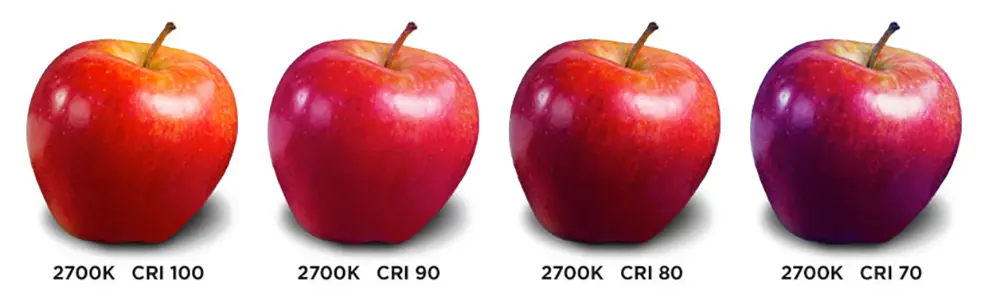
The intricacies of CRI unfold a realm where colors breathe life under different light sources. It’s a meticulous scale that gauges the authenticity of color rendering, with closer scrutiny on eight standard color samples. Each deviation from the reference light unveils the competence of the light source in portraying colors as they are meant to be seen, a quest for color truthfulness that resonates through a scale of 0 to 100.
Its role in lighting design
In the realm of lighting design, CRI emerges as a venerable guide, steering designers and consumers through the labyrinth of color rendering capabilities. It’s a quest for high CRI values, especially north of 80, where spaces demand a rendezvous of accuracy and aesthetics, like in art galleries, retail vistas, and photography studios, each light source auditioned for its ability to portray colors in their true essence.
CRI in action: Real-world examples
In the real world, the tale of CRI unfolds dramatically. In a photographer’s studio, every flash under a high CRI light source is a step closer to capturing the essence of colors, making the vibrant reds and serene blues pop in every frame. Contrastingly, a low CRI light in a dressing room can cast a pall over skin tones, potentially denting customer satisfaction and sales, a subtle yet profound impact of CRI in action.
Color Quality Scale (CQS)
Understanding CQS and its deviation from CRI
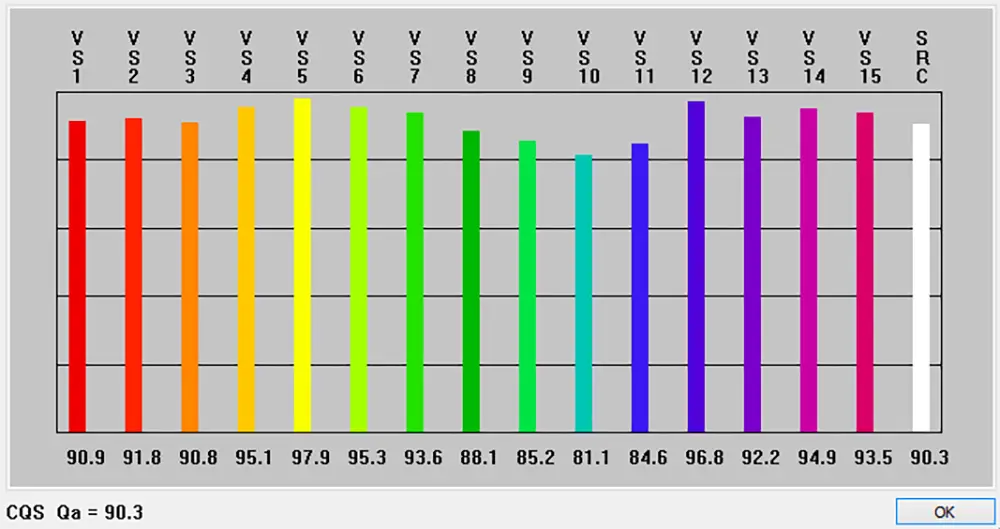
The Color Quality Scale (CQS), an innovation by the National Institute of Standards and Technology (NIST), emerges as a contemporary remedy to the limitations of CRI. Unveiling a spectrum of 15 highly saturated color samples, it transcends the conventional color evaluation, offering a lens to scrutinize the color rendering ability of modern light sources like LEDs with a finer resolution.
Advantages over CRI
By broadening the color evaluation spectrum, CQS diminishes the unsaturated color shortfall inherent in CRI, evolving into a more precise gauge for the color rendering prowess of today’s light sources. It’s a stride towards a more encompassing color rendering evaluation, aligning with the dynamism of modern lighting technologies.
CQS in the field: Practical applications
The retail realm is where CQS shines bright. High CQS lighting transforms merchandise into an enthralling spectacle, potentially amplifying sales. Imagine a clothing store where the rich fabric colors dance under high CQS lights, the vibrancy and true-to-life colors beckon, enticing customers to indulge in a purchase.
IES TM-30-15
An intro to IES TM-30-15
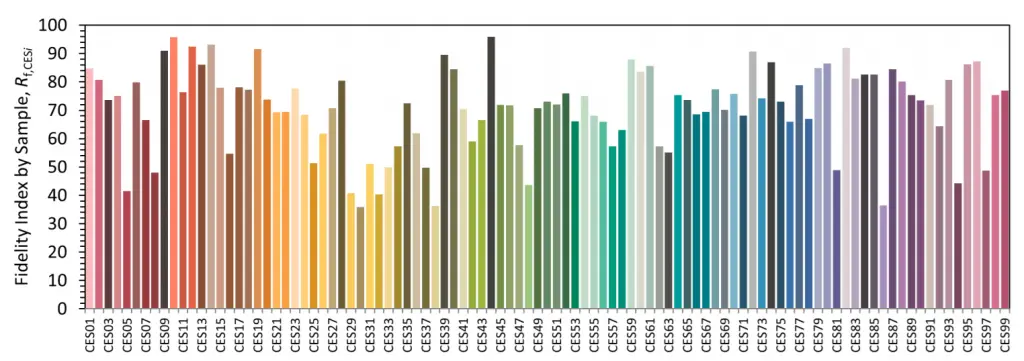
Diving into the genesis, the Illuminating Engineering Society (IES) spearheaded the creation of the TM-30-20 method (previously TM-30-15), a leap in evaluating light source rendition. Rooted in meticulous color science research, it’s a narrative of how modern metrics can offer a closer look at color rendering, subtly phasing out the CRI metric.
Upsides over CRI and CQS
The narrative of IES TM-30-15 unfolds a triumvirate of indices and a more extensive color palette, encapsulating a more reliable and nuanced color rendering metric. It’s a segue to a more informed lighting product selection, fostering a deeper understanding of color rendering dynamics.
IES TM-30-15 decoded: Fidelity Index (Rf), Gamut Index (Rg), and Color Vector Graphic
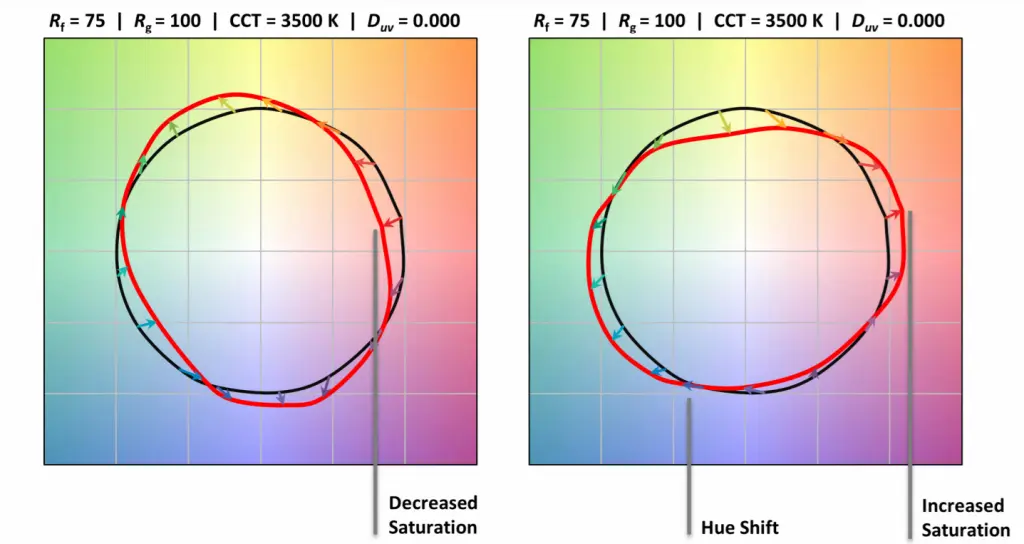
Rf, the precursor of color fidelity, Rg, the sentinel of color saturation, and the Color Vector Graphic, a visual maestro of color deviations, compose the core of IES TM-30-15. It’s a graphical and numerical odyssey that unveils the nuances of color rendering at a glance.
Deploying IES TM-30: Use cases
In the architectural and design tapestry, IES TM-30 metrics are the compass for selecting lighting that amplifies color vibrancy. Whether a chic café or a contemporary art gallery, the metrics guide the way, ensuring the ambiance is in harmony with the aesthetic aspirations, creating spaces where colors narrate the tale.
Sammenlignende analyse
CRI, CQS, & IES TM-30: A side-by-side look
Venturing into a comparative realm unveils the distinct prowess each metric harbors. CRI, with its time-tested simplicity, has served the lighting world faithfully. However, as we transcend into modernity, CQS and IES TM-30 emerge, embodying the finesse of advanced color analysis. Their expansive color sample spectrum and in-depth analytical framework cater to the sophisticated demands of contemporary lighting scenarios. They unveil a broader narrative of color rendition, fostering an enriched understanding and enabling a nuanced evaluation, thus aligning with the evolving architectural and design paradigms. The modern metrics encapsulate a fresh perspective, heralding a new era of color rendering analysis.
Tabular representation of differences
| Funktioner | CRI (indeks for farvegengivelse) | CQS (Color Quality Scale) | IES TM-30 |
|---|---|---|---|
| Number of Color Samples | 8 | 15 | 99 |
| Indices | 1 (Ra) | 1 (Qa) | 3 (Rf, Rg, Color Vector Graphic) |
| Measurement Range | 0-100 | 0-100 | Rf and Rg: 0-100 |
| Applicable Use Cases | General lighting | General and retail lighting | Architectural and design-centric lighting |
| Advancement Over Predecessors | N/A | Addresses unsaturated color issue in CRI | Comprehensive color rendering evaluation |
| Year of Introduction | 1930s, updated in 1970s | Developed by NIST | 2015, updated in 2020 (TM-30-20) |
| Primary Organization | International Commission on Illumination | National Institute of Standards and Technology | Illuminating Engineering Society |
| Core Focus | Color fidelity | Color quality with enhanced saturation evaluation | Holistic color rendering evaluation |
| Preferred For | Initial color rendering assessments | Enhanced color rendering assessments in retail environments | Detailed color rendering assessments in design-centric applications |
The Crux in Lighting Design
Elevating coaccuracy and consistency
Compelling lighting design’s core is the quest for color accuracy and consistency. The right illumination can magnify textures, incite emotions, and craft inviting environments. Thus, a profound comprehension of lighting metrics is indispensable for achieving a harmonious interplay of light and space.
Boosting aesthetic allure and functionality
The essence of exemplary lighting transcends mere luminosity. It orchestrates a delicate dance between aesthetics and functionality, concocting spaces that delight the eyes while serving their intended purposes seamlessly. Whether it’s showcasing exquisite art, catalyzing a sale, or weaving a snug ambiance, the light employed can significantly shape the experience.
Looking Ahead: The Future of Lighting Quality Metrics
The evolution trail and upcoming standards
The journey from the rudimentaries of CRI to the sophistication of IES TM-30 reflects the relentless pursuit for refined lighting quality metrics. As the industry forges ahead, burgeoning standards are on the horizon, ready to unveil deeper insights into lighting quality, reflecting the symbiotic evolution of technology and user needs.
What it spells for manufacturers and consumers
The dawn of nuanced metrics heralds a new era for both manufacturers and consumers. It stimulates innovation in lighting technology, broadening the spectrum of possibilities. For consumers, it unveils a realm of informed choices, promising a future where light sources continually elevate our living and working domains, blending efficacy with aesthetic finesse.
Summary of Terms
Lighting lexicon for easy reference
| Term | Definition | Relevant Metrics |
|---|---|---|
| CRI | Indeks for farvegengivelse | Measures color accuracy on a scale of 0-100 using 8 color samples. |
| CCT | Correlated Color Temperature | Measure of color temperature in Kelvins (K), indicating warm or cool light. |
| CQS | Color Quality Scale | Measures color quality using 15 highly saturated color samples on a scale of 0-100. |
| IES TM-30 | Illuminating Engineering Society TM-30 | Comprehensive color rendering metric using 99 color samples, includes Fidelity Index (Rf) and Gamut Index (Rg). |
| Rf | Fidelity Index | Part of IES TM-30, measures color fidelity on a scale of 0-100. |
| Rg | Gamut Index | Part of IES TM-30, measures color saturation. |
Why the Knowledge of CRI, CQS, and TM-30-20 is Crucial?
Understanding these metrics is not about delving into technical jargon, but about empowering oneself to select lighting that elevates spaces, enhances mood, and ensures color accuracy, making the spaces we inhabit and the products we use appear as they were intended to be seen.
Konklusion
The journey from CRI to the more robust IES TM-30 underlines the industry’s endeavor to keep pace with evolving lighting technologies. These metrics are more than mere numbers; they are the tools that help us navigate the complex landscape of color rendering, ensuring we make choices that enhance our visual and aesthetic experiences.
Armed with the knowledge of these lighting metrics, individuals and professionals alike are better placed to make enlightened decisions, selecting lighting solutions that are in sync with modern-day requirements and aesthetic aspirations.
In the journey of illuminating spaces with precision, Unitop emerges as a beacon of excellence in China’s LED industry. As a leading manufacturer of LED lysbånd og LED neon flex, our expertise is your asset. Your pursuit of quality lighting intersects with our seasoned craftsmanship. We invite inquiries and are poised to fulfill your specific lighting needs. Reach out to Unitop, where your lighting vision transitions from the abstract to the tangible.
Relateret artikel

Tom er nu salgschef for Unitop (Kina) Co, Limited. Han har været i LED-belysning industrien lige siden 2005. Han er ekspert i salg og marketing samt fabriksledelse. Han kan lide bodybuilding, og han er også en vild Apple-fan! Han er en hårdtarbejdende fyr og elsker at lære og prøve nye ting.
E-mail: tom@unitopledstrip.com WhatsApp: +86-18680307140



Skriv en kommentar
Vil du deltage i diskussionen?Du er velkommen til at bidrage!